

No Future Without Water in Yemen: Convening the Government of Yemen and the Southern Transitional Council to Discuss Water Cooperation
09/12/2025
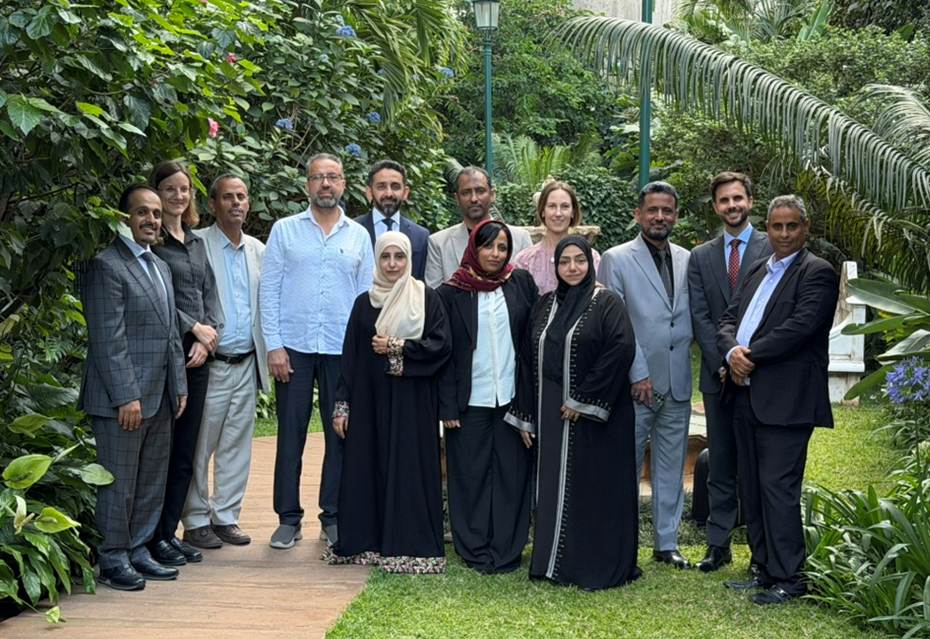
From 28 November to 1 December, the Second Technical Dialogue on Climate and Environmental Peacemaking in Yemen took place in Nairobi, Kenya. The convening built on the success of previous bilateral meetings and the First Technical Dialogue facilitated in August 2025 in Amman, which achieved a joint understanding of water issues, including as a driver of maladaptation, disputes and conflict. During the dialogue in Nairobi, the delegates initiated the development of a common vision and draft roadmap for cooperation to address water scarcity in Yemen.
This was the second joint meeting of technical and political representatives of the Government of Yemen (GOY) and the Southern Transitional Council (STC) convened by the European Institute of Peace as part of an agreed framework of environmental dialogue and cooperation. The process seeks to jointly address issues related to natural resources, environment and climate risks in support of peace benefits on stabilisation, reconciliation, and enhanced resilience. The dialogue included presentations on water governance and management at the national and local levels, providing a nuanced understanding that enabled practical discussions aimed at solving pressing water issues in alignment with the policy priorities of the relevant authorities.
The delegates engaged in in-depth discussions and strengthened the joint understanding on the most pressing water challenges in Yemen and their impact on local communities. Concretely, during the Second Technical Dialogue, strategic areas of action and practical solutions were discussed at the short-, medium-, and long-term to better manage water resources, support the sustainable provision of water services in urban and rural areas, and improve environmental management, all with a conflict-sensitive and peace-positive approach.
On the sidelines of the United Nations Environmental Assembly, the Kenyan capital offered a great opportunity for the delegates to meet international organisations working on addressing climate security risks in the Horn of Africa region and the Arabian Peninsula. In a visit to IGAD’s Climate Prediction and Applications Centre, the delegates explored how hazards emerging from climate change and environmental degradation can develop into disaster and conflict risks, and how to prevent them through early warning and respond to these risks with preparedness programmes. As a case study, IGAD analysed Cyclone Tej, which hit the Yemeni coast of Al-Mahra in October 2023. The delegates also visited UNEP’s Climate Security Advisor to Somalia to learn about a flagship project in Jowhar, Somalia, building resilience to climate change and improving water and food security through an integrated approach combining peacebuilding with climate action.
Water as a ground for conflict and cooperation in Yemen
In Yemen, where about 17 million people – almost half of the population – are estimated to experience water insecurity, physical water scarcity is exacerbated by the effects of armed conflict, which has undermined the capacity of communities and authorities to address environmental risks. In this context, water can exacerbate tensions, but it can also serve as an entry point for cooperation, trust-building, and dialogue. The Institute’s Environmental Dialogue and Cooperation Process seeks to transform environmental issues from a source of contention into opportunities to support peace and stability through joint efforts to foster resilience to climate and environmental risks. The First Technical Dialogue on Climate and Environmental Peacemaking in Yemen, concluded in August 2025, has marked a starting point for exploring these opportunities.
About the project
The Environmental Pathways for Reconciliation (EPfR) project aims to contribute to sustainable peace in Yemen through environmental dialogue and cooperation. With its inclusive approach, the project amplifies Yemeni voices in political and peace discussions, using environmental issues as entry points and elements for peace. The EPfR project is implemented by the European Institute of Peace with support from the German Federal Foreign Office and is part of the Weathering Risk Peace Pillar led by adelphi. You can read more about the project at www.epfryemen.org.


