
Challenges and Opportunities for Women’s Participation in Water Management in Yemen
05/03/2026
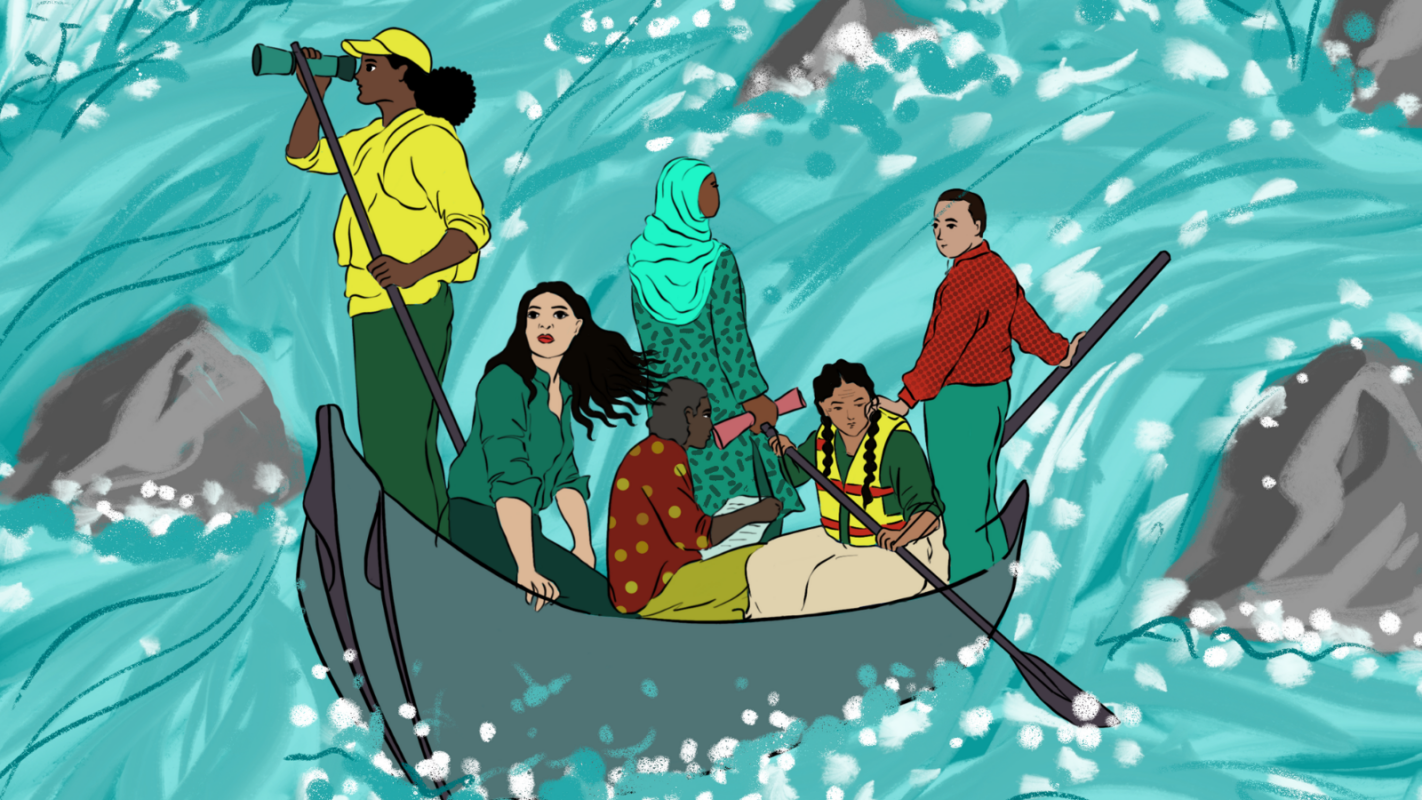
On 24 February 2026, the European Institute of Peace organised an online practitioners and experts dialogue on “Challenges and Opportunities for Women’s Participation in Water Management in Yemen”.This discussion, facilitated by Hisham ِAl-Omeisy (Senior Yemen Advisor) and Camilla Riesenfeld (Senior Advisor on Inclusion and Peace Processes), brought together frontline activists from different Yemeni governorates – including Aden, Taiz, Hadramout, Al-Mahrah and Marib — among them women mediators, environmental engineers, local officials, civil society leaders, legal aid providers, and representatives working with displaced and marginalised communities.
In essence, the discussion made one point unmistakably clear: when women are not merely present but meaningfully included, adequately resourced, and effectively protected, water governance shifts from being a driver of tension and fragility to becoming a powerful vehicle for peacebuilding, social cohesion, and long-term resilience.
Pauline Chauveau (Gender and Peacemaking Programme Officer) opened the dialogue by situating it within the broader Breaking Barriers, Making Peace research initiative funded by the German Federal Foreign Office. She outlined the initiative’s guiding question: what genuinely enables women’s meaningful participation in peace processes — beyond rhetoric? Drawing on the Institute’s most recent research findings, she underscored the persistence of entrenched patriarchal power structures that continue to shape formal peace architectures. She also highlighted a consistent pattern emerging across contexts: when peacebuilding is grounded in local realities — in land, livelihoods, environment, and daily survival — women are not peripheral actors. They are central actors.
Camilla Riesenfeld (Senior Advisor on Inclusion and Peace Processes) framed the discussion by drawing on comparative experiences from peace processes in contexts such as Colombia. She highlighted evidence demonstrating that inclusive peace processes are more sustainable but also underscored that in moments where national-level negotiations are stalled or fragmented, locally anchored initiatives become even more critical. Environmental governance — and water management in particular — offers a tangible entry point for bottom-up peacebuilding. While often not labelled as “peace processes,” community-level mediation over wells, sewage systems, irrigation, or pollution constitutes daily conflict resolution work that prevents violence and sustains social cohesion.
Suaad Abdullah (Local Project Lead) presented key findings from her recent field mission to Aden, Hadramout, and Al-Mahrah, based on interviews with female mediators, environmental officials, civil society actors, and women from marginalised communities, where she examined how water governance, conflict, and women’s roles intersect in Yemen. There, she highlighted that (i) women are successful mediators but still left out, (ii) systematic exclusion is built into institutions, (iii) women-led initiatives work but lack of support halts it, and (iv) marginalized groups suffer in silence.
Participants highlighted both the challenges and opportunities for empowering women-led local initiatives and enhancing women’s participation in water-related conflict resolution and resource management. They also discussed the potential of leveraging water as a tool for peacebuilding, confidence-building, and diplomacy. In addition, participants put forward targeted recommendations for the international community to address these challenges, with particular emphasis on overcoming barriers to women’s inclusion.
Key barriers and challenges
Participants identified a dense web of structural, political, and security-related barriers constraining women’s meaningful participation in water governance and environmental peacebuilding in Yemen.
At the institutional level, women remain largely absent from resource-coordination committees and from planning, assessment, and implementation processes. Where present, their representation is often symbolic — appointments driven by donor requirements rather than leadership. Many women in government lack formal policy or decision-making powers, clear mandates, or defined responsibilities, and face dismissive attitudes when asserting their professional rights. Weak and fragmented public institutions further compound exclusion: inaccurate data collection, lack of transparency from ministries, unclear institutional mandates, corruption, and limited technical expertise undermine both policy coherence and project sustainability.
Social and political structures reinforce this marginalization. Male-dominated power networks, party-based patronage systems, and the absence of political will systematically sideline women without political backing. Marginalized, rural, displaced, young and disabled women are particularly excluded from policymaking spaces. Short-term, project-based interventions fail to address these entrenched barriers, while funding for women-led and feminist initiatives remains insufficient and unpredictable.
Security risks are acute. Women mediators and environmental defenders face intimidation from armed groups, smear campaigns, threats to their families, and, in some cases, arrest. In a context where even senior male officials are attacked, the absence of protection frameworks makes women’s leadership particularly precarious. Even newly appointed female ministers face threats due to the absence of protection frameworks. Moreover, fragile security conditions and widespread weaponization mean that even minor water disputes can escalate into armed confrontation.
Conflict dynamics around water further intensify gendered vulnerabilities. Water has been used as a weapon of war through deliberate cuts and contamination of supply. Climate shocks — including cyclones in eastern governorates — have destroyed infrastructure already lacking resilience. In displacement settings, inequitable water distribution fuels tensions, often disadvantaging widows and women without male support. At household level, environmental stress contributes to rising gender-based violence, while women and girls spend extensive time fetching water, limiting education, income generation, and civic engagement.
Finally, restricted mobility, visa barriers, and elite capture limit women and youth participation in international climate and water forums. Young women environmental activists face credibility attacks from entrenched “experts,” further shrinking civic space. Together, these challenges reveal that women’s exclusion from water governance is not incidental but structurally embedded across institutional, social, and security dimensions.
Opportunities and recommendations
Participants underlined the crucial need for the following measures:
Sustainable Funding and Economic Empowerment
There is a critical need for long-term, flexible, and sustainable funding for women-led initiatives, particularly in climate adaptation, natural resource management (NRM), and the green economy. Funding should support market access, small income-generating programs, and scaling of young women graduates’ initiatives, while fostering cross-sector collaboration and collective action. Organizations must ensure structured exit strategies to avoid disrupting local projects. Financial sustainability should also extend to displaced populations, improving living conditions and equitable water distribution.
Capacity Building, Specialized Training, and Knowledge Exchange
Targeted capacity building in environmental conflict management, NRM, conflict resolution, mediation, and media skills equips women to become effective peacebuilders. Investment in qualified local trainers ensures context-sensitive learning. Establishing women’s expert networks, inter-generational mentorship programs, and partnerships with youth—including environmental literacy initiatives in universities—promotes knowledge sharing, innovation, and best practices across sectors.
Inclusive Participation and Community Engagement
Women—including displaced, rural, disabled, and marginalized groups—must be meaningfully included in project design, decision-making, and local mediation efforts. Community-level awareness raising positions women as active mediators and environmental peacebuilders rather than passive beneficiaries. Participatory approaches, such as data collection, water-harvesting projects, and dialogue between displaced populations and host communities, enhance ownership, transparency, and conflict-sensitive planning. Establishing specialized community mediation centers with women’s participation further strengthens local peacebuilding efforts.
Protection, Rights, and Recognition of Women Activists
Holistic protection for women activists and mediators encompasses physical security, financial stability, labor rights, and recognition within public institutions and beyond. Integrated responses to gender-based violence, including resource-related domestic violence, are essential. Supporting women’s travel logistics and visas for participation in international forums and reinforcing the operation of female advisory councils and local organizations ensures their professional visibility, influence, and participation in national decision-making.
Policy, Governance, and Institutional Strengthening
Strengthening public institutions’ capacity addresses gaps in expertise, reliance on inaccurate data, and ensures adaptive, context-sensitive planning. Upholding human rights frameworks, including the 1949 Geneva Conventions, protects equitable water access and prevents conflict-related resource abuses. Reviving political will for agreements that exist on paper but lack implementation, such as the Al-Huban agreement, and supporting participatory water databases and transparent monitoring, ensures sustainable, rights-based resource governance.
Water as a Peacebuilding Tool
Water management is central to conflict-sensitive interventions. Training water users in resource management, improving infrastructure in displacement camps, and promoting dialogue between displaced and host communities strengthens peacebuilding outcomes. Supporting local projects that generate income through water-related initiatives, establishing legal councils on water, and integrating water as a security pillar in peace talks amplifies the role of women in environmental peacebuilding and sustainable resource management.
Empowering women-led local initiatives and enhancing their participation in water-related conflict resolution is crucial for sustainable water management, as women often bear the primary responsibility for water collection and use in many communities, leading to more effective and equitable outcomes when they are involved. Furthermore, implementing strategies collaboratively with governments, NGOs, and communities can lead to more effective water systems, greater gender equality, and reduced conflicts.


