
From scarcity to cooperation: Water as an entry point for peace in Yemen
17/09/2025
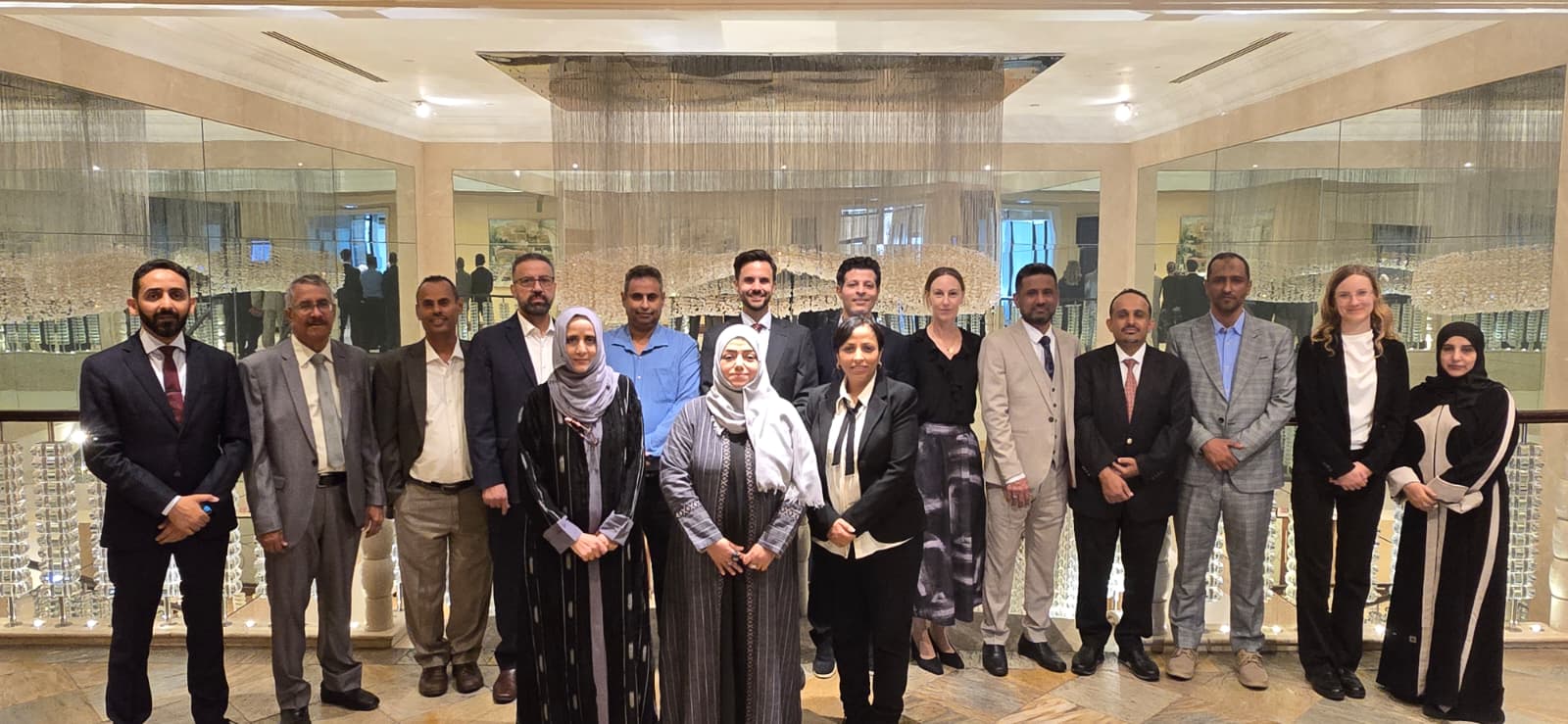
In August, the Institute’s Climate and Environmental Peacemaking Programme convened various parties from the relevant authorities within the Government of Yemen to jointly discuss the water situation in the country. The meeting took place in Amman and aimed to examine concrete challenges in specific governorates and cities, to find a common vision and identify potential solutions on how to address these issues from the water supply and demand sides. After four days of meetings, the delegates jointly developed a strategic list of practical solutions to address the country’s water issues. The group will reconvene at the end of 2025 to continue discussions.
Building on a series of unilateral meetings facilitated by the Institute, the Fourth Technical Meeting on Climate and Environmental Peacemaking in Yemen marked the first joint meeting of the relevant government parties, including the Southern Transitional Council (STC). The initiative is based on an agreed framework of environmental dialogue and cooperation, which recognises that jointly addressing natural resources, environment and climate risks can offer peace benefits on stabilisation, reconciliation, and enhanced resilience against both environmental and conflict risks.
The discussions helped to find common ground by recognising shared interests, values, and goals in a context of water scarcity. This mutual understanding included the need for updated and more accurate assessments of surface and groundwater availability, usage trends, and identification of the region’s most pressing water hotspots, especially where competition may lead to tensions and disputes.
Water, peace and conflict in Yemen
Yemen has long been struggling with water provision for agricultural, industrial, and household uses. With its semi-arid to arid climate, the country is naturally prone to physical water scarcity and largely dependent on non-renewable groundwater resources. After a decade of armed conflict, Yemen’s water situation has developed into a severe crisis, with about 17 million Yemenis lacking access to water for daily needs. Direct impacts of war, such as the destruction of water networks, have paired with financial challenges, a lack of capacity, and demographic growth, all of which have been exacerbated by the conflict. As the impacts of climate change, such as fluctuations in rainfall rates, are showing themselves more clearly, the issue of water scarcity is becoming ever-more pressing.
Not only does the water crisis have humanitarian implications, but it also affects social cohesion, fuels competition, and drives conflict. Already before the escalation of the war, water was identified as a significant factor contributing to tensions in Yemen. As the conflict continues and Yemen’s water resources are depleting, an integrated approach to peacemaking that recognises these connections is becoming indispensable. In this context, the Institute’s engagement seeks to leverage shared environmental concerns as a new avenue for peace, to transform environmental matters from a source of tension to an opportunity for joint action.
About the project
The Environmental Pathways for Reconciliation (EPfR) project aims to contribute to sustainable peace in Yemen through environmental dialogue and cooperation. With its bottom-up and inclusive approach, the project amplifies Yemeni voices in political and peace discussions, using environmental issues as entry points and elements for peace. The EPfR project is implemented by the European Institute of Peace with support from the German Federal Foreign Office and is part of the Weathering Risk Peace Pillar led by adelphi. You can read more about the project at www.epfryemen.org.


