

How Dehumanisation Undermines Peacemaking: Our Roundtable at the Munich Security Conference
11/02/2026
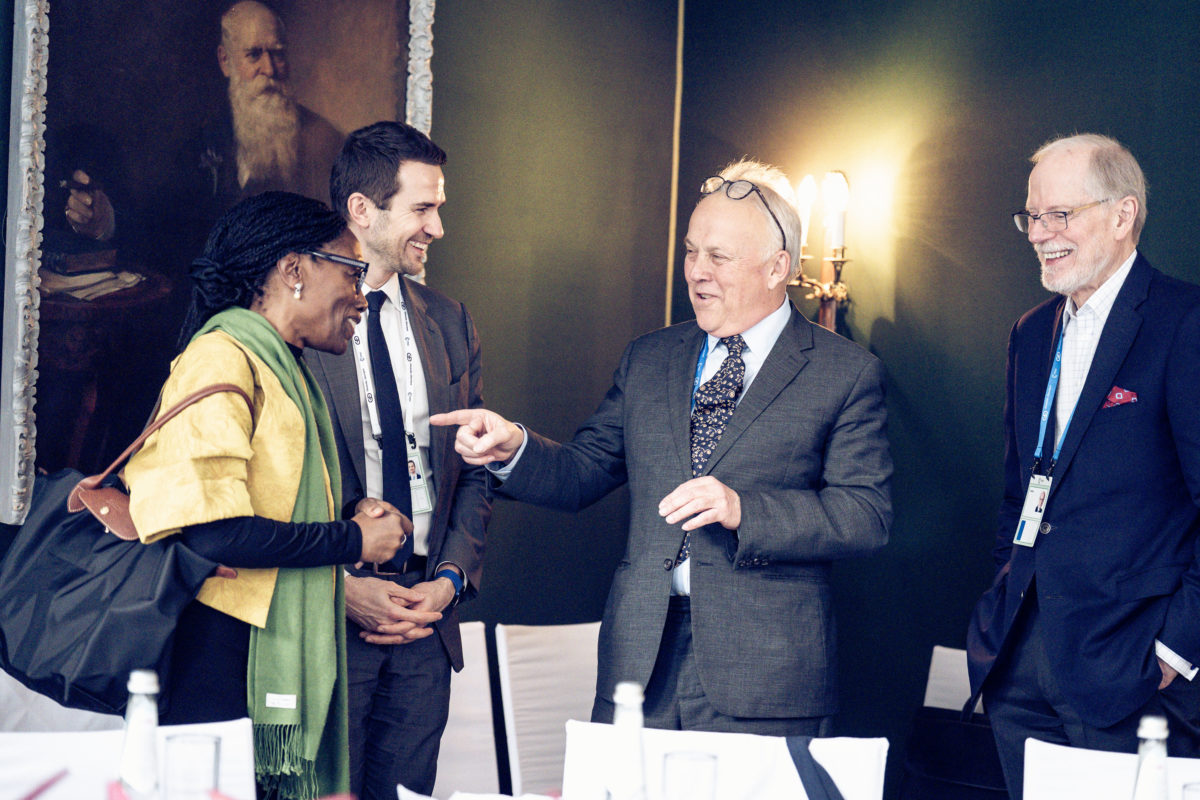
How dehumanising narratives have increasingly been eroding international humanitarian law and undermining peacemaking: this will be the focus of the discussion‘Words as Weapons: Dehumanisation and the End of Restraint.’ hosted by the European Institute of Peace and the International Committee of the Red Cross at the 62nd Munich Security Conference this week.
Dehumanising narratives, which reduce individuals and groups to objects or threats, are used as a tool to delegitimise grievances, weaken humanitarian norms, and make extreme violence easier to justify and repeat. While dehumanising rhetoric has long been used in conflict situations, its impact today is amplified by rapid circulation through social media platforms, algorithms, and AI. Acts once considered unacceptable are becoming normalised, and violations increasingly tolerated, a process which also undermines the credibility of international humanitarian law and diminishes prospects for peacemaking.
In this context, the Institute and ICRC are convening a candid discussion on dehumanisation, bringing together experts, private-sector actors, and policymakers to explore strategies to challenge and mitigate these dynamics and to demystify the “fog of war”. It will be moderated by our Executive Director, Michael Keating, and among its speakers will be Helga Maria Schmid, President of the European Institute of Peace; Mirjana Spoljaric Egger, President of the International Committee of the Red Cross; Archbishop Paul Gallagher, Secretary for Relations with States for the Vatican; and Loubna Hadid, AI expert and CEO of Decenture.
We aim for participants to leave with a clearer understanding of the fundamental damage being inflicted upon the value of international humanitarian law and peacemaking, how it is reshaping the rules of war and exacerbating violent conflict, and how actors can act positively to prevent and reduce such violence. We also hope the discussion will generate reflections that help define concrete actions to support practitioners in mitigating these devastating effects.


