
Peace Mediation in the Age of Power Politics: the EU Community of Practice on Peace Mediation 2026
27/10/2026
This year’s EU Community of Practice on Peace Mediation was an important opportunity to reflect on the importance of peacemaking in the current global political landscape, under the theme “Peace Mediation in the Age of Power Politics”.
Organised by the European External Action Service (EEAS) and the Service for Foreign Policy Instruments (FPI), in partnership with a Steering Group that includes the European Institute of Peace, the two-day event brought together policymakers, mediation practitioners, experts, and civil society representatives from inside and outside the EU to share knowledge, expertise and innovative approaches to peacemaking. The Institute contributed to the conversation with two panel discussions.
Highlighting the role of critical minerals as conflict drivers in Colombia
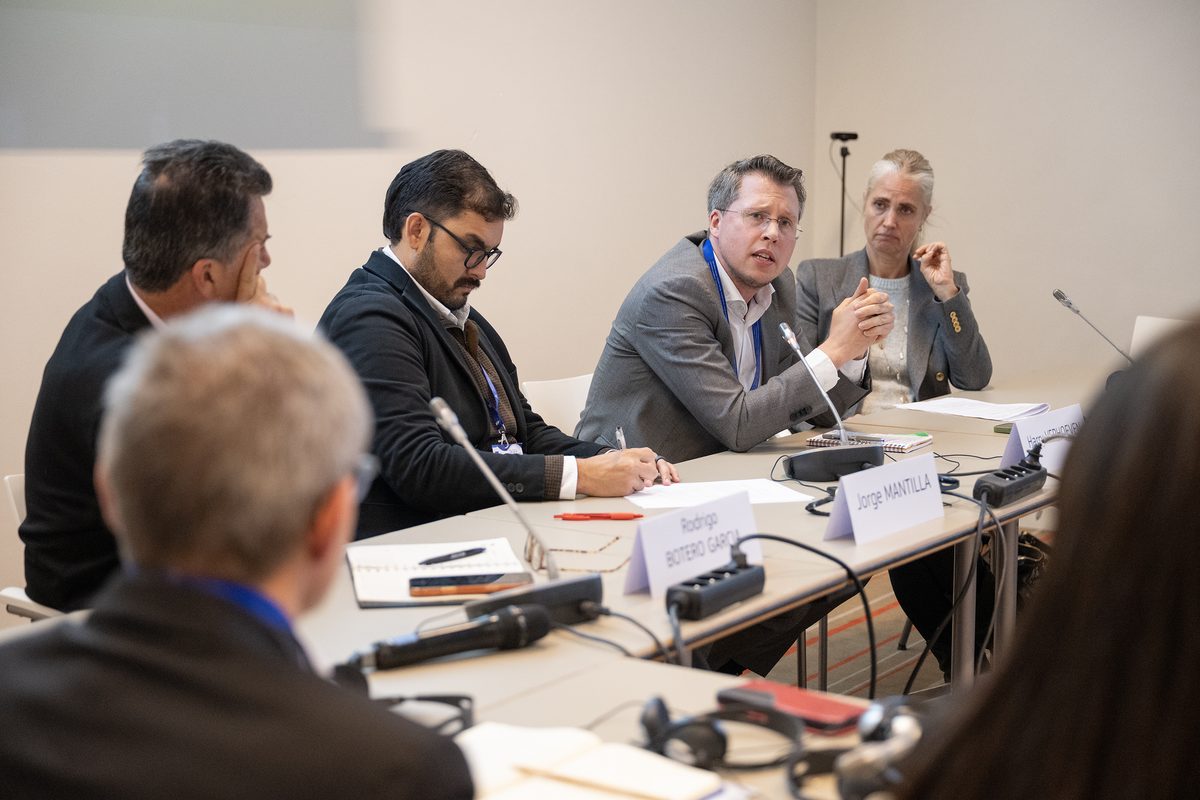
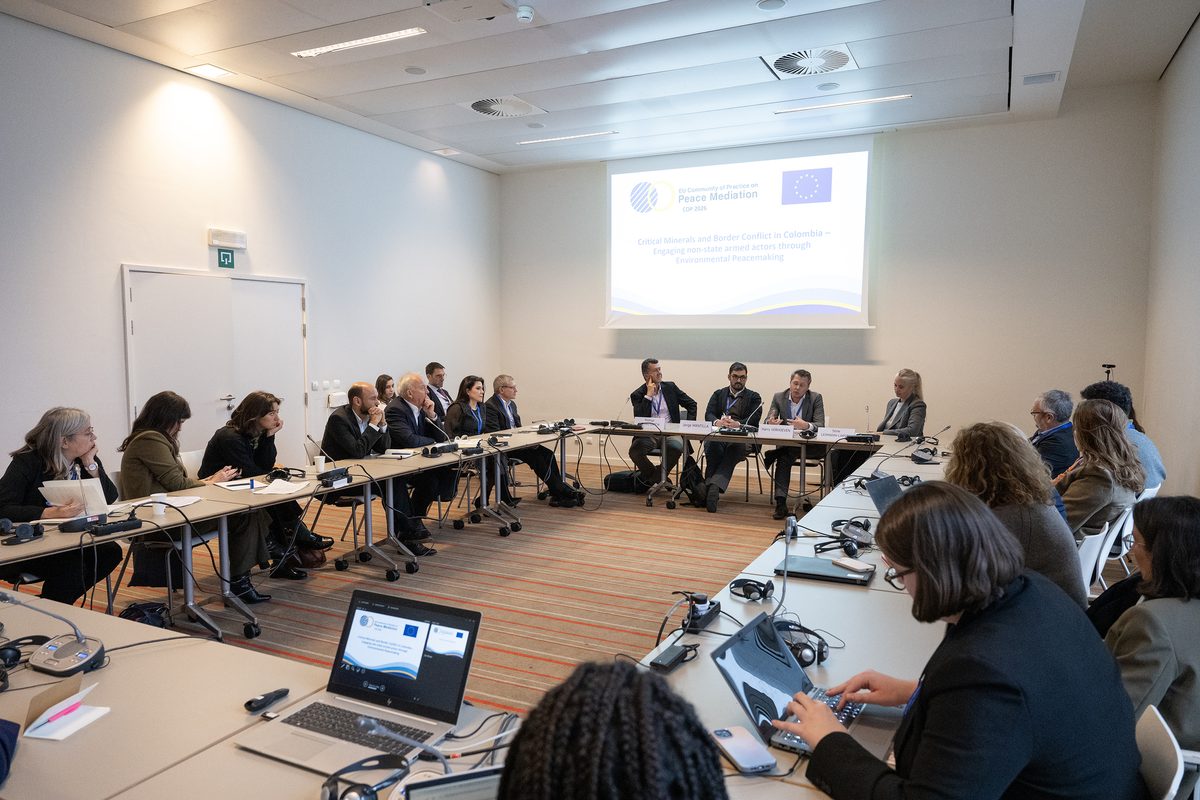
The first panel, titled “Critical Minerals and Border Conflict in Colombia – Engaging Non-State Armed Actors through Environmental Peacemaking,” was moderated by our Deputy Executive Director, Stine Lehmann-Larsen, in conversation with Jorge Mantilla (Expert on criminal governance, borders, and armed conflict), Rodrigo Botero (Director, Fundación para la Conservación y el Desarrollo Sostenible) and Harry Verhoeven (Senior Advisor, Political Economy, EIP).
The discussion explored critical and strategic minerals as drivers of armed conflict in Colombia, where in some regions illicit mining has overtaken cocaine as the main source of revenue for non-state armed groups. It was timely for three reasons: Colombia’s new government is shifting towards a security-focused approach and away from negotiated solutions; these conflict economies cross borders, notably into Brazil, Ecuador and Venezuela, and cannot be addressed by Colombia alone; and as the EU seeks access to critical raw materials, European policies, investments and purchasing decisions risk fuelling conflict economies unless they are designed to help build alternatives.
Participants discussed whether mineral governance can be transformed from a driver of conflict into a foundation for sustainable development and environmental protection, and what could realistically move armed actors and communities towards licit economies.
Three points emerged. First, mineral governance is not just a question of regulation or resource management: controlling mining means controlling how people live on and relate to their territory. In Colombia, it is particularly tied to armed groups’ territorial control, financing and their relationships with communities.
Second, the state cannot defeat the market by force alone; security measures will not dismantle illicit mining economies unless legality becomes the more profitable option. Reducing incentives for violence also requires addressing livelihoods, natural resource governance, and the environmental costs of extraction.
Third, Europe has a role to play, but responsible-sourcing commitments are not enough on their own. Engagement must be grounded in local knowledge, meaningful community participation and a clear understanding of how investment affects conflict and must distinguish itself from transactional bargains between elites and armed actors.
This is why the European Institute of Peace is exploring environmental peacemaking in Colombia, to assess whether dialogue around mineral governance can create alternatives to illicit economies, reduce conflict risks and generate tangible peace dividends.
Ceasefires and peace mediation: the case of Gaza
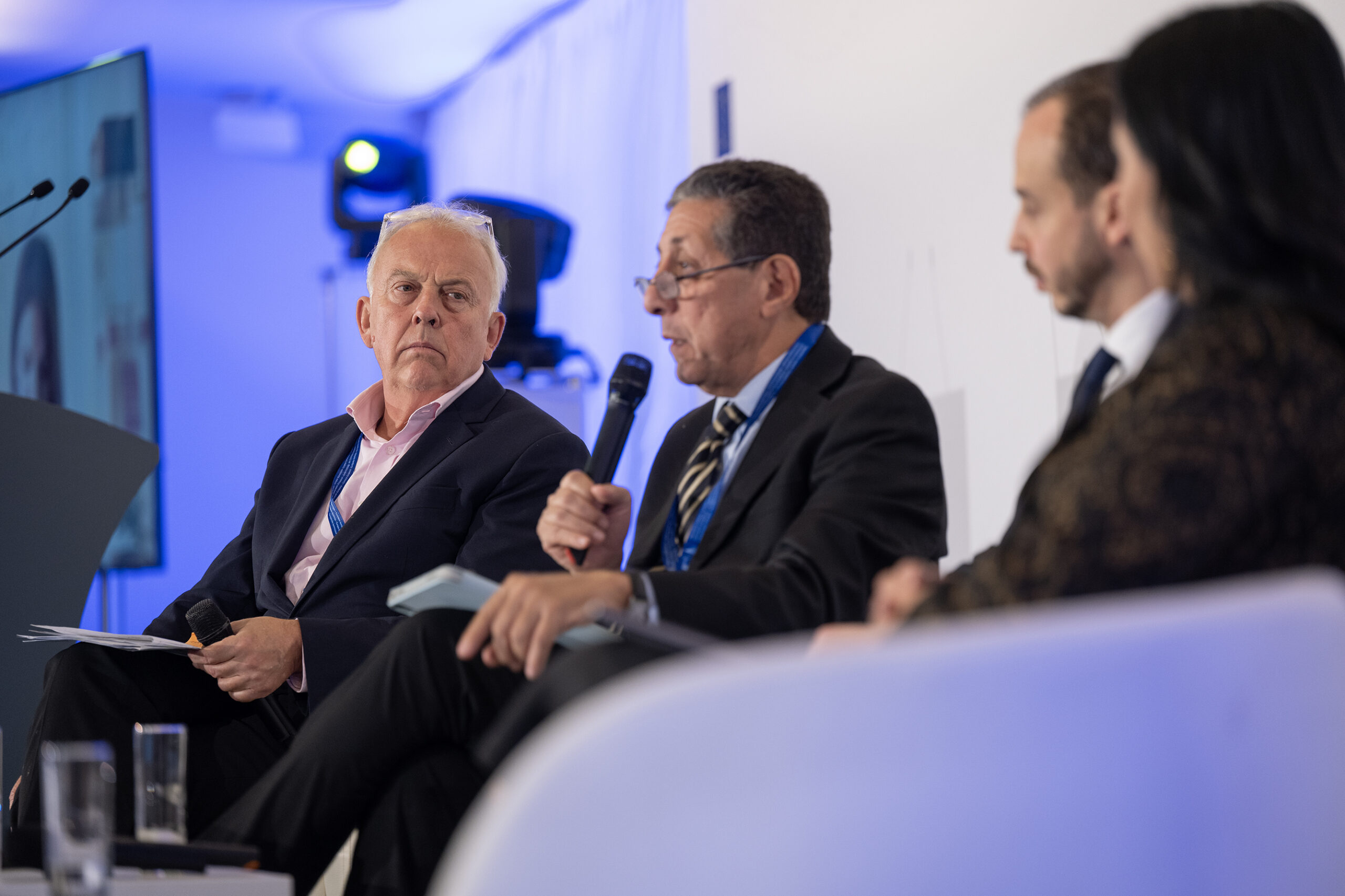
The second session organised by EIP, moderated by our Executive Director Michael Keating, was titled “From Multilateral Frameworks to Deal-Making: Implications of the Gaza Ceasefire Process for Peace Mediation”. The discussion highlighted how, in recent few years, sustainable, dialogue-based multilateral peace processes have increasingly been replaced by hastily negotiated, ad hoc arrangements. These usually lack credible implementation plans, effective monitoring mechanisms and clear means to hold the parties accountable.
One such agreement is the current ceasefire in Gaza, which – rather than bringing an end to the suffering – has changed its nature. In the year since the ceasefire took effect, over 1,400 people have been killed, while deep trauma and severe deprivation continue to affect the population. The Gaza ceasefire is also marginalising efforts to find political pathways towards lasting peace and security. Failure to advance a political settlement between Israelis and Palestinians and ongoing violence is a factor in other conflicts in the region and complicating efforts to resolve them.
Meanwhile, the current Government of Israel is moving quickly to reshape realities on the ground, convinced that security for Israel can be achieved through military means. The continued occupation, settler expansion and violence in the West Bank further threatens Palestinian political and economic viability, and undermines the prospects of reaching a viable two-state solution grounded in international law that would safeguard Palestinian agency, sovereignty and self-determination. Participants highlighted that, in the context of Gaza, humanitarian assistance, governance and reconstruction cannot be treated as purely technical issues detached from the occupation and the wider political reality.
The challenge for conflict resolution actors is considerable. On the one hand, they must push for a well-prepared, principled approach to address long-standing political issues. On the other hand, they cannot ignore the realities on the ground, including the asymmetry in power between Israeli and Palestinians. They need to engage with the existing initiatives like UNSCR2803 and the mandate of the National Committee for the Administration of Gaza (NCAG), while using whatever leverage is available to reverse the damage and advance a meaningful political process.
A common message emerged from the session: despite its shortcomings, multilateralism remains imperative. Fragmented mediation, competing initiatives and transactional diplomacy have struggled to deliver lasting results in Gaza and the Israeli-Palestinian conflict. This underscores the need for greater coordination and political coherence among the EU, the US, Arab states and regional mediators, exercising their respective influence to bridge the gap between ceasefire diplomacy and longer-term political processes.


