Covid-19 Impact Analysis: Afghanistan, Belarus, Iran & Saudi Arabia, Israel-Palestine, Syria, Ukraine
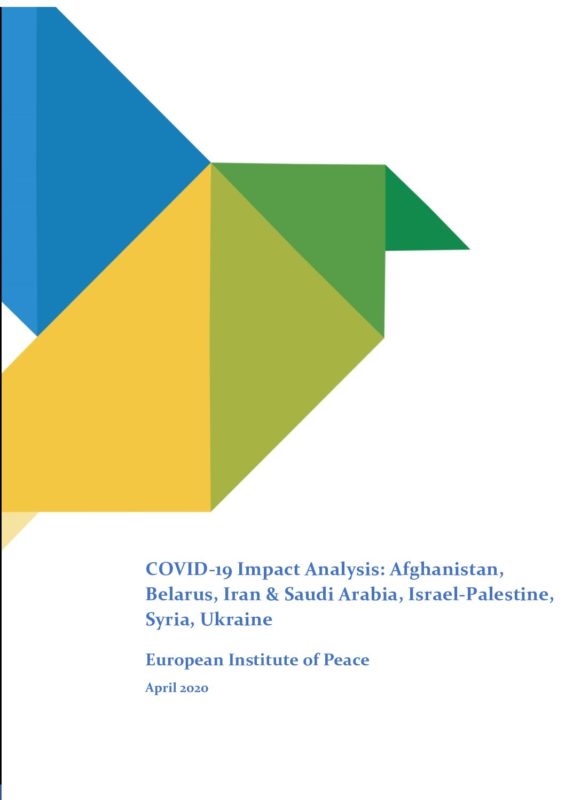
This paper is the second of a series generated by the European Institute of Peace (EIP) to take stock of the impact Covid-19 is having on number of fragile and conflict-affected countries in which it operates. Particular attention is paid to the effects on conflict resolution, peace processes and agreements, as well as key variables to watch going forward. While the situation is evolving quickly, early recommendations are included for European and international actors who in these incredible times are striving to take issues of peace and conflict seriously.
The following analysis focusing on Afghanistan, Belarus, Israel and Palestine, Syria, Iran and Saudi Arabia, and Ukraine is drawn from the Institute’s own expertise and networks on the ground, complemented by a growing body of information from publicly available sources. Preliminary findings are not encouraging. In each of these cases, if Covid-19 evolves at the same pace as seen in many European and other countries, high morbidity and mortality rates can be expected accompanied, by a ‘perfect storm’ of destabilising outcomes. Economic contraction, coupled with a sharp rise in new infections, will almost certainly challenge the legitimacy of governing factions, upset elite bargains and rentier agreements, fuel tension between national and local governments and create opportunities for non-state actors to perpetuate violence.
[ssba-buttons]