Pathways for Reconciliation – Impact of the Conflict on Social Cohesion and Reconciliation in Yemen
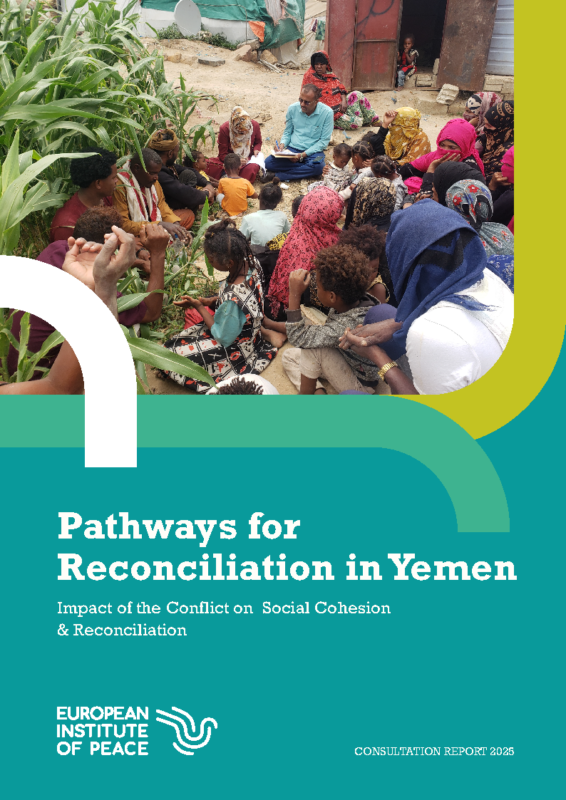
Yemen’s protracted civil war has deeply impacted social cohesion, weakening national institutions and straining local governance and community structures. Years of conflict, economic instability, and limited humanitarian response have disrupted traditional means of trust and societal integration. Yet, despite these challenges, Yemen’s strong community solidarity – manifested through informal networks, collective coping strategies, and parallel socio-political institutions – remains a critical force in sustaining social stability and essential services. Local initiatives, including grassroots peacebuilding and mediation, demonstrate the transformative potential of collective action in addressing conflict.
Understanding and supporting these informal networks is key for fostering long-term stability. Integrating local insights into international aid and peacebuilding efforts can provide a pathway to more robust and effective interventions.
The report presents findings from an extensive consultation conducted by the Pathways for Reconciliation in Yemen initiative and the European Institute of Peace, reaching 1,988 participants across seven governorates: Aden, al-Dhale’e, al-Hodeidah, al-Maharah, Ma’rib, Shabwah, and Taiz. Participants consistently highlighted the importance of social cohesion for personal well-being, community resilience and stability, and conflict resolution. The report identifies challenges undermining cohesion, gaps in current reconciliation efforts, and opportunities to foster sustainable peace through local networks and community-led solutions.
Building on the 2021 Pathways for Reconciliation report, which consulted 15,870 individuals at a granular level, across nine governorates, this report focuses on five key objectives:
- Assessing conflict’s impact on trust, cooperation, and shared values in Yemeni communities.
- Understanding local perceptions of social cohesion in relation to peace, security, and well-being.
- Identifying regional patterns and priorities, including youth engagement, education, economic recovery, and conflict resolution.
- Highlighting gaps and opportunities in current reconciliation initiatives.
- Providing actionable recommendations to strengthen social ties and peacebuilding efforts, tailored to community needs.
The consultations were conducted by the Local Coordinators of the Pathways for Reconciliation Platform, a national initiative representing Yemenis’ voices on reconciliation and peace. The report reflects their commitment to fostering resilient, cohesive communities.
The Pathways for Reconciliation in Yemen initiative is implemented by the European Institute of Peace with support from the Government of the Netherlands as part of the Conflict Justice and Reconciliation programme at the Institute.


