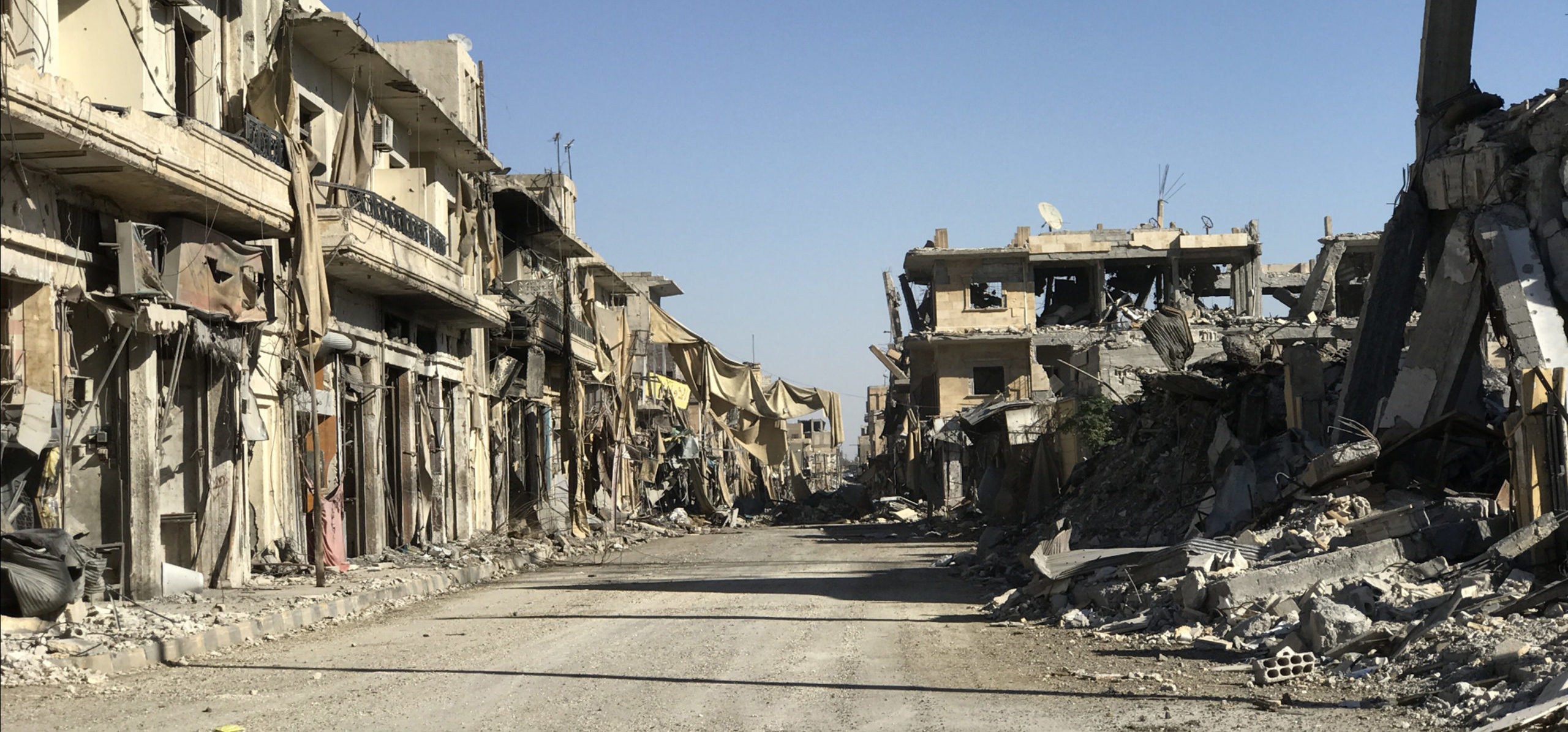
Part Three of this report provides an analysis of the impact of ISIS rule and anti-ISIS conflict through the lens of the economy, education, gender, mental health and psychosocial harm. In investigating these four themes through testimonies and primary material gathered for this report, it provides an in-depth exploration of the breadth and depth of ISIS’ impact and draws out many of the similarities that people in northeast Syria experienced.
The chapter on economy catalogues ISIS’ diverse revenue streams, from oil sales to taxes and fines, and details the devastating impact of the economic programme on ordinary people. The study on the educational system explores the impact of ISIS ideology on students, teachers, curricula, and how this led to school absences, losses in literacy and educational achievement, as well as the destruction of schools. The chapter on gender takes an intersectional approach to investigate the impact of sexual and gender-based violence, including against ethnic and sexual minorities, and the impact of the ISIS rigid social programme on women and girls, but also men and boys. Finally, the chapter on post-ISIS public and mental health impacts highlights the multiple deprivations that the region has undergone in terms of public health and psychological distress. Together, they detail the stifling social effects of ISIS’ governance programme, the effects of which may endure for years to come.
The Economic Cost of ISIS Rule and the Anti-ISIS Conflict in Northeast Syria
‘To Control the New Generation’: Education Under Isis
Gender Dynamics in the ‘Islamic State’
Post-ISIS Public Health, Mental Health and Psychosocial Distress in Northeast Syria