
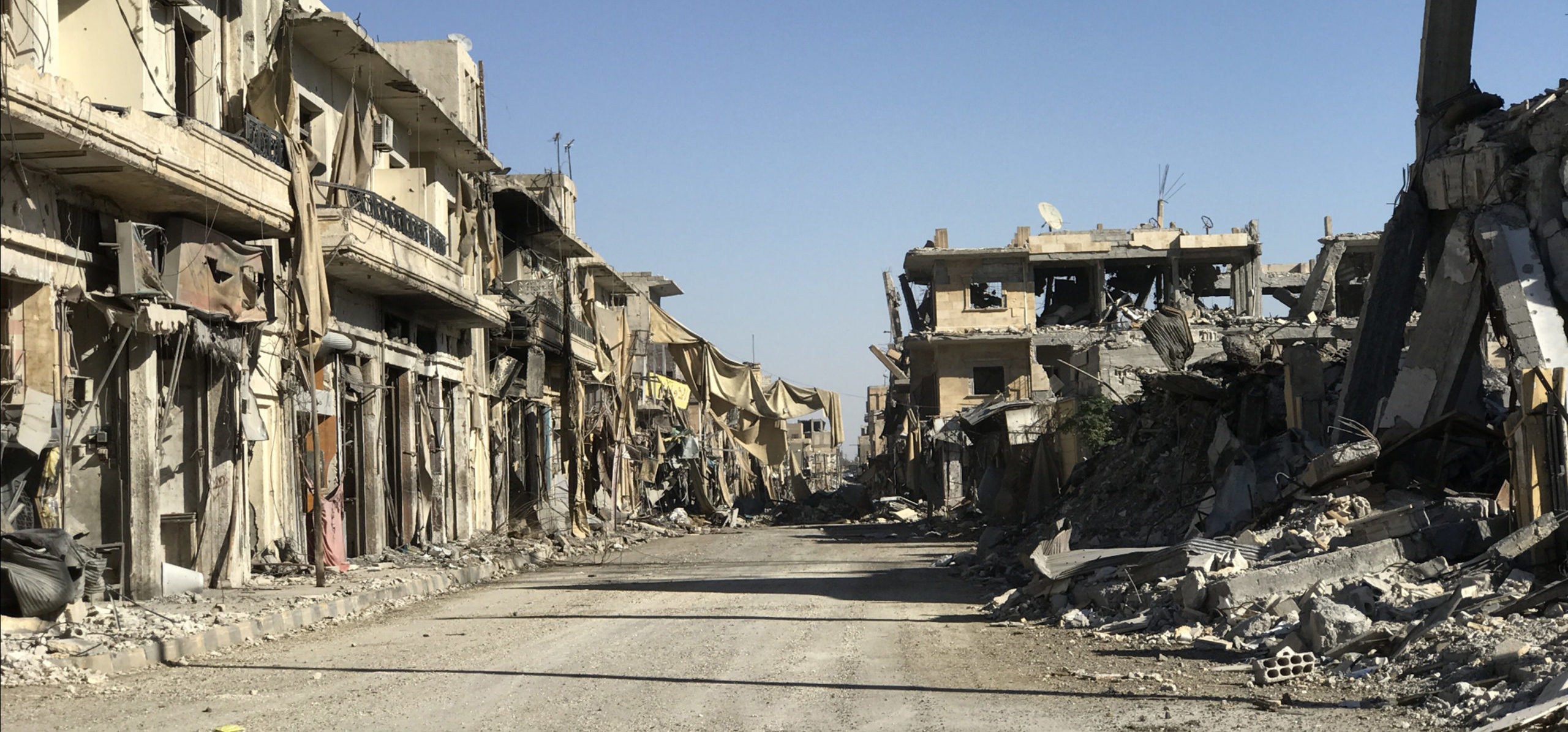
The violence in Syria is not over. While active fighting in the conflict between the Syrian government and opposition groups has mostly subsided in 2023, fighting intermittently continues in northeast Syria between different military actors present there.[1]But the many deep scars from years of conflict are still visible.
Using a combination of desk reviews, key informant interviews and victims’ testimonies, this chapter aims to study the public health and mental health status of northeast Syria’s populations in the wake of the violence and atrocities perpetrated by ISIS. It focuses on the direct and indirect impacts on both adults and adolescents whose right to access to equitable, adequate health services has been—and still is partly—jeopardised ever since ISIS first started seizing areas of northeast Syria, and the critical issue of psychological distress as an impact of the immense violence and human rights violations the group left in its wake.
Background
Nearly half of Syria’s population remain displaced due to the conflict, including more than 6.6 million refugees and asylum seekers in addition to another 6.7 million people internally displaced throughout the country.[2] IDPs live mainly in areas outside of government control, which in recent years have divided into three main areas: one controlled by the Autonomous Administration and SDF in northeast Syria, another controlled by HTS in Northwest Syria, and a third, controlled by Turkey and Turkish-backed armed opposition groups in areas in the north of Syria. In total, the conflict has caused hundreds of thousands of deaths.[3] Nine out of 10 Syrians live below the poverty line.[4]
In particular, the needs for a functioning healthcare system remain enormous. Scarce resources have resulted in significant public health problems across the country. A significant element to this has been the result of deliberate destruction of civilian housing and infrastructure. Physicians for Human Rights (PHR) has confirmed 602 attacks on at least 350 different health care facilities in Syria since 2011, including 149 in Idlib, 30 in Deir Ezzor, seven in Raqqa and four in Hasakeh. According to PHR data, more than 90% of attacks on healthcare facilities were carried out by the Syrian government and its allies.[5]
Disparities between government and non-government-held areas prior to the beginning of the anti-ISIS conflict have only become entrenched. By one estimate, for example, the percentage of caesarean sections in northwest Syria has more than doubled since the start of the conflict in 2011. There, the number of healthcare workers—including doctors, nurses, and midwives—per 10,000 people falls far below the WHO-recommended number of 22, with an average of nine healthcare workers across both (HTS and SNA-controlled) areas of the northwest.[6]
The “double emergency” induced by the Covid-19 pandemic has only further compounded public health challenges in northeast Syria after years of devastation wrought by ISIS and the wider conflict. Healthcare shortages became increasingly pressing as Covid-19 spread throughout the country and critically overstretched remaining healthcare systems.[7] Populations in northeast Syria and other non-government-held areas experienced the lack of a unified health sector and faced barriers to accessing humanitarian assistance. Across northeast Syria, as of February 2021, there were only 718 operational beds in Covid-19 facilities, compared to 1,088 beds in community-based treatment centres for handling Covid-19 cases in Aleppo.[8] The protracted conflict, together with the superimposed burden on health infrastructure and services affected by ISIS,brought the immunisation system in northeast Syria to the verge of breakdown.[9]
Vaccine coverage in Syria is among the lowest in the world. By early 2022, just over 2.2 million doses of Covid-19 vaccines had been administered:[10] only 5.1% of the total population had been fully vaccinated, most with two doses, while 10% had received at least one dose of the vaccine.[11] One WHO official interviewed for this study said that the UN and partners
Increased the Covid-19 vaccination coverage in the whole country but did not advance the restoration of the national routine immunisation coverage to best protect children from vaccine-preventable diseases in critical and deprived geographical areas.[12]
Health resources are reportedly most scarce in northeast Syria, where population health needs far exceed the available facilities and personnel. Some 55% of households reportedly have at least one disabled family member.[13] Raqqa and Deir Ezzor, with a combined population of nearly 1.5 million people, had no functioning hospitals throughout 2021, despite the WHO recommendation of one hospital per 250,000 people.[14] The most recent reports indicate that this situation persisted in 2022.[15] In Hasakeh, there is one functioning hospital for a population of 1,127,309: in effect serving roughly five times more people than the number recommended by the WHO. Crucially, high inequality in access to public hospitals across and within governorates was reported before the conflict, especially in the north and northeastern regions, according to provider to population ratio. Relatively small governorates in the west and the south had higher spatial access and less inequality. Testing variability in catchment size showed that even at a 125-kilometre catchment, 65% of the country had accessibility below the national average.[16] Data indicates that in northeast Syria, there were no functioning hospitals in two areas: Raqqa, which has an estimated population of 707,496, and Deir Ezzor, which has a population of 765,352. In the absence of functioning hospitals, most healthcare is provided at primary health centres and mobile clinics.[17],[18]
Despite the general cessation of all-out conflict in northeast Syria, the legacy of ISIS violence looms large. Tens of thousands of IDPs remain in camps and informal sites, alongside refugees from Iraq and other countries. Ongoing clashes in Deir Ezzor province between multiple parties continue to trigger displacement.[19] As a result, the risk of further outbreaks of disease should not be underestimated in formerly ISIS-held areas, even though the lack of a surveillance system has been addressed.[20] Furthermore, MHPSS assessment of human rights violations, counselling and referral services of mental disorders and psychological distress, which many have suffered during the conflict, remain elusive for the local population. Health services have also, in the words of survey respondents, been affected by structural discrimination: specifically, women and girls face a lack of reproductive medical care, while people with physical disabilities face difficulty accessing repurposed buildings, let alone specialised care.
Transitional justice mechanisms are yet to be implemented: individuals who survived ISIS in northeast Syria have yet to begin receiving consistent and substantive reparations. This stands in contrast to Iraq, where a key institutional framework for addressing the legacy of ISIS crimes against Christians, Shabak, Turkmen and Yazidis now stipulates a variety of rights and benefits—including monthly pensions, rehabilitation support and a plot of land for women and girls who survived conflict-related SGBV and children who survived abduction at the hands of ISIS.[21] The adoption of the law by the Iraqi Council of Representatives in March 2021 represents a watershed moment in efforts to address the legacy of ISIS crimes against Yazidis and other minority groups.
An outbreak of cholera, declared on 10 September 2022, brought further misery; tens of thousands of suspected acute watery diarrhoea cases were reported in all Syrian governorates, but particularly in northeast Syria.[22] The legacy of system decay, essential infrastructure abandonment and lack of regular supply during the years of ISIS rule forced all partners working on cholera in northeast Syria to respond to the outbreak by investing in health and WASH systems, thereby underpinning their importance as essential services desperately needed by vulnerable children and families. It also revealed how partners were forced into investing in immediate priorities rather than enabling investment to strengthen the broader health system in the mid-term. The devastating earthquake that struck Turkey and Syria on 6 February 2023 also had a significant impact on the cholera response by obstructing access to services, reducing partner capacity and diverting already limited funds. It also negatively affected the mental health of the workforce.
While multiple factors have contributed to the current humanitarian crisis—whether conflict dynamics, geographic inequalities or mismanagement of resources—research indicates that comprehensive sanctions are inhibiting the humanitarian response.[23] Despite the existence of humanitarian exceptions to sanctions, international NGOs are persistently running into hurdles when trying to implement their projects.[24]
International donors and aid organisations have attempted to address public health challenges in northeast Syria, including through the northeast Syria NGO Forum, the core coordination body for the humanitarian response that provides support to approximately 40 humanitarian organisations implementing substantial assistance programmes in the region.[25] International assistance by WHO, UNICEF and USAID helped communities across Deir Ezzor, Hasakeh and Raqqa in rehabilitating health clinics, financing capacity to invest in new cold chain technologies to respond to vaccine-preventable diseases outbreaks such as measles, and combatting the Covid-19 pandemic in northeast Syria.[26]
Nevertheless, existing evidence demonstrates that insufficient coordination among the international aid community, NGOs and local actors overseeing health systems has greatly impacted population health.
Methodology
The research team sought to assess the health and mental health impacts of the years of ISIS rule and the subsequent anti-ISIS conflict in northeast Syria by highlighting the multiple deprivations that the region has undergone in terms of public health and psychological distress.
The research was conducted in three distinct stages: a desk review; the identification and selection of key informants covering a wide range of stakeholders (including government, UN, NGO, CSO, academic and private sector sources) in the six selected geographic areas; and primary data collection comprising individual and collective interviews of victims and non-victims and KIIs. Data collection and access to target groups were arranged and overseen by the RDI and its partners on the ground.
Interviews questionnaires were drawn in collaboration with RDI in order to elicit direct and indirect responses linked to respondents’ experiences of ISIS’ impact on health services and mental health. RDI mobilised a national research officer who offered support in identification, selection and interview of key informants, logistics and the actual facilitation of field research. Individual interviews and focus group sessions aimed to gather victims and non-victims’ experiences in ISIS–affected areas. Interviews involved both victims and non-victims; national NGO staff involved in supporting/training service providers or community groups in MHPSS; the WHO; Autonomous Administration departments; and CSO partners. A specific field manual for interviews was used by RDI to facilitate truth-telling and psychosocial support for victims. It was based on: (a) an Informed Consent Protocol used by all enumerators; (b) voluntary participation in the interview process; and (c) trauma sensitive interviewing approaches and techniques.[27]
Specific MHPSS technical definitions and standards were informed by the following sources: the IASC pyramid of MHPSS interventions[28] guidelines of the WHO’s mhGAP Programme Humanitarian Intervention Guide (mhGAP-HIG),[29] UNICEF’s community-based MHPSS quality standards in humanitarian settings,[30] and MHPSS Technical Note,[31] as well as the Psychosocial Support for Children during Covid-19 manual.[32] The Impact of Event Scale Revised (IES-r) scoring system was also used for victims’ in-depth individual interviews.[33] Questionnaire design was guided by questionnaire guides for fieldwork made available through the 3rd EU Health Programme (2014-2020).[34] Victims interview questions were conducted by RDI drawing from the concept of “flashbulb memories,”[35], which hypothesises that major events, such as natural tragedies or traumatic events, should be recalled vividly and reliably, and that these events trigger in the subject memories of the main event in the long term, but also memories of other personal circumstances from the time of the event.
Victims’ individual interviews (Group 1 respondents) explored the health impact by trauma, violence and deprivations deriving from direct or indirect exposure to ISIS. Individual personal traits, key incidents and mental health and psychological distress details were recorded with an account of personal/family coping strategies. Human rights violations were classified into several categories: confiscation/destruction of property and cultural sites; killing; abduction; detention; arbitrary detention; torture; sexual violence; massacre; forced labour; forced recruitment of soldiers/child soldiers; forced marriage; forced prostitution; human trafficking; forced relocation and displacement; and finally, obstruction of freedom of expression/assembly. The inclusion criteria of Group 1 targeted victims as primary informants, including adolescents.
Table 1: General exploratory questions
| 1 | How has the experience of extreme violence by ISIS affected the health status and mental health of individuals and communities in northeast Syria? |
| 2 | What specific mental health conditions have emerged as a result of exposure to violence, and how have people coped with these conditions? |
| 3 | How has access to mental health services been impacted by the conflict, and what challenges have arisen in delivering these services to those in need? |
| 4 | How have families and community groups supported individuals coping with mental health conditions, and what impact has this support had on individuals? |
| 5 | What are the most effective interventions and treatments for addressing mental health issues in communities in northeast Syria affected by extreme violence? |
| 6 | In what ways have cultural and religious beliefs impacted the understanding and treatment of mental health conditions in northeast Syria, and how can these be effectively addressed? |
| 7 | How has ISIS rule impacted access to livelihoods and resources for individuals affected by mental health conditions, and what steps can be taken to ensure that these individuals have access to education and employment opportunities? |
| 8 | What specific policies and programmes should be implemented to address the mental health needs of individuals and communities impacted by extreme violence in northeast Syria? |
Key informants’ interviews (Groups 2 respondents) included seven questions related to the impact on public health systems and services and fifteen fluid questions on levels of awareness and access to MHPSS services and referral mechanisms; gaps and barriers to accessing MHPSS services and the special requirements of interventions; preferred modes of receiving information and awareness messages; and finally, roadblocks to improvement and accountability. The inclusion criteria of Group 2 targeted non-victims as knowledgeable secondary informants.
Table 2: KII questions on public health and MHPSS impacts
| Public Health | |
| 1 | How has the presence of ISIS impacted healthcare infrastructure in northeast Syria? |
| 2 | What impact has the displacement of people had on public health outcomes in certain areas (for example, through increased incidence of diseases, or lack of access to essential drugs)? |
| 3 | What are the challenges encountered by healthcare providers (workers) in the field of primary healthcare services in areas previously under ISIS control? |
| 4 | How has the conflict disrupted the delivery of emergency medical care and referrals, chronic disease management services, and supply of medicines? |
| 5 | Have women faced accessibility problems to essential Reproductive, Maternal, Neonatal, Child Health (RMNCH) services? (For example, could women be assisted before and during labour and delivery by a health worker? Could women access any emergency obstetric care in case of need?) |
| 6 | Has there been a decrease in vaccination coverage or other preventive health measures due to ISIS control in certain areas? |
| 7 | What efforts have been made to provide essential health services to address the gaps in public health in previously ISIS-held areas after ISIS rule? |
| MHPSS | |
| 1 | What has been your direct experience of ISIS’ impact on the health and protection needs of people affected by violence in northeast Syria? |
| 2 | What are the key priorities to address through public health and MHPSS interventions in northeast Syria? |
| 3 | How do you define psychosocial support needs in northeast Syria after ISIS? (For example, what is the importance of PSS for victims and communities more broadly?) |
| 4 | Do existing health and MHPSS projects/interventions in place in northeast Syria reflect a strategic analysis? |
| 5 | Do existing health and MHPSS projects/interventions in place in northeast Syria address the actual needs of strengthening the PHC and health system? |
| 6 | Do communication initiatives exist to meet ISIS victims’ and other groups’ specific health and MHPSS awareness? |
| 7 | What are the three key public health and MHPSS challenges in terms of victims’ support in northeast Syria? |
| 8 | What are the most successful MHPSS interventions offered to trauma victims in northeast Syria? What did/does work and why? |
| 9 | Are the needs of some victims or potential target groups excluded from MHPSS interventions, or are those needs not met? |
| 10 | Do existing MHPSS interventions follow an identified pathway or line of case referral? |
| 11 | Do MHPSS capacity-building activities for service providers exist (such as PSS training for doctors, nurses, social and community workers)? Who is in charge of them? |
| 12 | Did/do you participate in direct PSS capacity-building? What are the strengths and challenges in MHPSS training approaches, content and monitoring? |
| 13 | What interventions should be implemented in the near future under the guidance of the MHPSS Task Forces in Syria? What should be dropped? |
| 14 | What roadblocks or potential risks did you anticipate in implementing MHPSS in the near future? |
| 15 | What approach or method needs to be in place in order to increase MHPSS awareness in northeast Syria? |
The research team conducted ten one-on-one individual interviews with victims and six one-on-one KIIs either in person or online at a site in each selected area. Interviews were carried out in homogenous groups of resident settlements, IDP settlements/camps or among returnee groups, specific persons with disabilities (PWDs), MHPSS groups/associations, and community members to gain in-depth opinions, views and experiences of vulnerable adults and youth.
Important ethical considerations were considered in the survey planning and implementation. The nature of the topic demanded special emphasis on issues of safety and confidentiality because the physical and mental well-being of both respondents and researchers could be at risk if these issues were not adequately addressed. All sources have been anonymised throughout the chapter. Confidentiality of information was also emphasised: all documents and field research materials were treated as confidential and used solely to facilitate analysis.
Findings
The following section outlines the main findings regarding ISIS’ impact on public health and MHPSS as well as the resulting response gaps that were identified through interviews conducted in the six selected geographical areas of northeast Syria. Findings are presented through three sections: 1) public health and MHPSS during and after ISIS rule; 2) the human dimension within victims’ testimonies; and 3) mental health and psychosocial support. Drawn from victims and informants’ own accounts, the conclusion then provides several suggestions to guide a forward-looking process to improve access, coverage and safety in health and MHPSS services within the northeast Syria humanitarian response.
Public health and MHPSS during and after ISIS rule
Conflict is still a dynamic in a purportedly post-conflict context. One of the key challenges for post-conflict stabilisation and recovery in northeast Syria is in recognising and transforming the structures that contributed to the rise of ISIS and the violent conflict to oust the group.
Data and information from the field show that the longer a violent conflict has lasted, the greater the extent to which it transforms the nature of an area’s political interactions, economy, and society. This kind of system may become self-perpetuating if conditions particularly important for health status improvement, food security and reconciliation are not addressed. Roadblocks for the rollout of effective interventions remain in the form of security risks, disease outbreaks, attitudes and stigma related to mental health and psychosocial distress, and low funding.
Impacts on the public health system
ISIS’ impact on healthcare infrastructure in northeast Syria was profound. During its rule over the region, the group attempted to recast the healthcare system in apposition to “western” modes of healthcare. The group heavily restricted and monitored the work of male and female doctors (and restricted gender mixing between medical staff and/or medical staff and patients) and frequently used healthcare infrastructure for military or repressive purposes.
These impacts were visible across all sectors of care. A protection worker reported, for example, how in several ISIS-held areas:
Cancer cases that needed follow-up in specialised hospitals, cardiac catheterisation and other heart surgeries were denied any option. [ISIS] also monopolised medicines supply and limited it to specific people who are not specialised in the field of medicines, resulting in a state of drug chaos, and a great shortage of medicines for chronic diseases.[36]
Another health worker interviewed observed that, while strict restrictions were imposed on any medical case that required treatment outside ISIS-controlled areas:
Many low-quality drugs were imported due to the absence of health and drug monitoring, which allowed many individuals with little pharmaceutical experience to open pharmacies and sell medicines randomly. This led to many medical complications and injuries due to extremely serious medical errors. An extremely absurd matter that I repeatedly witnessed was the sale of drugs in stores and groceries, especially painkillers and anti-inflammatory medication.[37]
Many Health Centres (HCs) were converted into military and service headquarters, which made them vulnerable to bombing and destruction once the anti-ISIS conflict escalated after 2014. A WHO MHPSS coordinator stated that:
Facilities were either destroyed or abandoned and this stopped beneficiaries from accessing health care. The health system collapsed and there was no proper coordination on health delivery even though MHPSS services had no firm footprint.[38]
In Raqqa, once ISIS’ self-proclaimed capital, a project manager for a local Protection/PSS NGO said:
[ISIS] had turned a large number [of health facilities] into field hospitals for its members or military headquarters, which negatively affected the healthcare provided to the people.For example, the National Hospital in the city of Raqqa was completely destroyed.Thechildren’s hospital in the city was partially destroyed, which led to it being out of service. Rural clinics such as the dispensary in [al-Karama], which used to provide primary care services to the eastern countryside of Raqqa city (from an area extending from al-Hamrat village to the al-Jazra area), stopped providing services due to shortages of skilled workers and the unavailability of medicines.[39]
Meanwhile, an NGO health worker observed how “before ISIS withdrew from many areas, they booby-trapped most of the service facilities that they used to [use] as strongholds, including health centres.”[40]After ISIS’ withdrawal, specialised teams were able to either dismantle explosives or detonate them following evacuations of neighbouring residential areas. Even then, the NGO employee added, ISIS also converted some HCs into detention facilities and that by “changing the structure of the buildings (converting many rooms into single cells), [they] made them unsuitable to be used as [HCs]” without subsequent rehabilitation.[41]
Although the research team gathered evidence of extended support to rehabilitate hospitals in Aleppo and Deir Ezzor and to equip primary HCs throughout northeast Syria with critical supplies.[42] The period of ISIS rule and anti-ISIS conflict led to destroyed critical services, including access to electricity and water, which limited opportunities local communities’ ability to earn a living in the post-ISIS phase. According to the WHO MHPSS coordinator:
When ISIS [rule] ended in western Deir Ezzor governorate […] in February 2017, communities faced the challenge of rebuilding and earning [at the same time], so often their health problems could not be attended to.[43]
In one local example of the long-term impacts of destruction, after ISIS sabotaged four wells used by livestock farmers in western Deir Ezzor, a member of the local Agriculture Committee reported that even after ISIS’ withdrawal the “local General Administration of Agriculture and the Department of Animal Welfare were aware of the problem but did not have the material capacity to rehabilitate these wells.”[44]
These issues had concerning health implications. In Raqqa, the prevalence of sewage and sanitation issues, already reported in February 2019 by REACH, continued to rise, prompting warnings that they ‘may have hazardous health effects for residents, especially in the warmer summer months when the breeding and presence of vectors for disease tends to be greater’[45]—a predictive statement at the time, given today’s evidence of a causal link between deficient sanitation/water supplies and the cholera outbreak that followed.
Displacements have also created challenges. In the post-ISIS phase, between December 2018 and March 2019, large numbers of IDPs and refugees from the last ISIS foothold in southeastern Deir Ezzor (around Baghouz) were relocated to camps and large informal sites in northeast Syria. Military operations by Turkey and the Turkey-backed SNA started in October 2019 as a result, residents of camps in Ain Issa and Mabrouka were transferred away from the border area to Abu Khashab and Mahmoudliy respectively;[46] other camps have also seen significant change. The Abu Khashab and Manbij East New camps were reported to be without permanent medical facilities.
Similarly, medical staff fleeing persecution, conflict-related violence, or ISIS’ prohibitive, suffocating healthcare policies (explored in the next section) left the country during and after ISIS rule, aggravating an existent brain drain from the region. The WHO PSS officer summarised the systemic impact that ISIS rule continues to have on formerly ISIS-held areas, stating that in northeast Syria now “there is no certification for existing professionals, no professional bodies to accredit [new] staff” and no quality controls carried out by the Syrian government.[47]
However, barriers to healthcare persist to date in all areas, with the high cost of care and a lack of medicines representing the most reported barriers.[48] In a hospital in Deir Ezzor, neonatal survival rates are still compromised by the lack of sterilisation equipment and scanty provision of therapeutic oxygen as reported at the Neonatal Intensive Care Unit.[49] Also, in part due to large-scale conflict-related damage and destruction, access and movement restrictions for both residents and humanitarian actors have persisted in several urban or peri-urban areas of Deir Ezzor, Manbij and Raqqa. For example, interviews in seventeen Development and Coordination Units (DCUs) reported that just half or less than half (26-50%) of households with a family member in need of treatment had been able to receive that treatment in the two weeks prior to data collection.
The issues of access to the appropriate levels of care, “continuum of care,” insufficient attention to persons with disability (PWDs), and continuity of essential drugs supply all deserve attention. And restrictions on would-be patients’ freedom of movement are not new.[50]
Major concerns and cross-cutting themes affect all aspects and sectors of health care in northeast Syria. Some need to be tackled in an urgent and sustained manner through an agenda for sector quality improvement, something suggested by both WHO and Health Cluster members.[51]Many of these factors are not specific to the health sector; they are also broader problems facing communities in the northeast—but still, these problems have knock-on effects that can further stymie efforts to develop a healthcare system in northeast Syria that is committed to equity, quality and integrity with a special focus on public health and primary healthcare.
Important steps were taken by the Autonomous Administration of northeast Syria to establish institutions in all service fields, including the health sector, since ISIS’ collapse. For example, evidence suggests that the Autonomous Administration established or reopened as many health facilities as possible (including the Raqqa Children’s Hospital) in coordination with international NGOs and local associations in an attempt to bridge service gaps; the research team meanwhile gathered accounts of significant strides made by local authorities and NGOs in assisting formerly ISIS-held communities with activities including rubble removal, restoration of water and electricity networks, sewage system rehabilitation, community and cultural centre refurbishment, and school renovations. A key challenge for the Autonomous Administration and partners is to effectively utilise all resources that are anyway scarce—both in the public and private sector (whether for-profit or voluntary)—and to strategically focus efforts on the delivery of a public health programme, particularly for underprivileged and under-served areas previously under ISIS control.
The international community has taken steps to address both specific and more systemic challenges. The EU Regional Trust Fund[52]—otherwise known as the Madad Fund—was established in 2014 to support children from both Syria and local communities and improve their access to basic services such as education, healthcare, water and sanitation, and protection. Partners started a collaborative approach by facilitating consultations between residents and local government representatives to identify priorities, leading to increased service delivery and infrastructure projects that address community needs.[53] According to one key informant:
Establishing primary health care services in areas with limited health infrastructure, providing equipment to isolation facilities, and promoting effective infection prevention and control practices would have been impossible without donors recognising the relevance of community-based risk education and involvement.[54]
However, underfunding may jeopardise progress made so far. To date, alarmingly, donors have given a little over 11% of the $5.41 billion requested by the UN to adequately assist Syrians in 2023.[55]
Despite the steps already taken by the Autonomous Administration and international partners, community members and officials report the lack of a rational health system structure and corollary services that could ensure equitable access and coverage in several areas.[56]
Impacts on health providers
Key challenges were experienced by all health providers in delivering essential health care services in areas under ISIScontrol, something that several key informants discussed during interviews.
Firstly, a protection manager in Raqqa observed how the migration and displacement of many health personnel affected the status of health services in northeast Syria.With cultural norms dictating that female (and prohibitively not male) doctors provide services to women, the resulting shortages of health workers led to service gaps. There were also reportedly no specialised female doctors in several key areas such as internal medicine, cardiology, orthopaedics or ENT.[57]
Under ISIS, healthcare workers were forced to surrender other hospital work and “were transformed into a different type of ‘[ISIS] healthcare workers,’ changing uniforms, attitudes and habits.”[58] Job titles, descriptions and duties changed. Midwives’ jobs were maintained but heavily scrutinised and not supported,[59] and women faced great difficulties in accessing reproductive health services that led to severe limitations to women’s rights to those services because of the restrictions imposed by ISIS on women’s freedom of movement—restrictions that also applied to nurses and midwives.
Male health care workers faced different challenges: male gynaecologists reported that their profession was suddenly restricted only to females, in line with ISIS’ideology and its strict policies on avoiding mixing between genders, and men were prohibited from providing even emergency obstetric services in life-threatening situations. “In the event of an emergency delivery, if there was no [guardian] accompanying the patient […] no one could provide assistance, even by transporting her to the medical point, for fear of punishment.”[60]
This very real fear of retributions by ISIS among service providers—with cases of health workers killed in both Syria and Iraq—only compounded challenges. According to one key informant:
Some health workers experienced a state of fear for their personal safety in case they refused to work under [ISIS’] laws and supervision. Some were forced to work in [ISIS] hospitals and cure the wounded, which prompted many medical personnel to risk their lives and try to escape outside areas under [ISIS] control.
I personally know of […] a paramedic and an assistant surgeon who faced qasas punishments for refusing to cooperate and trying to escape.[61]
Impacts on health outcomes
Because of the ongoing lack of security in northeast Syria, access to healthcare is still limited throughout the region. People are often forced to travel long distances just to access healthcare. Informants reported that health outcomes are therefore impacted by the decreased availability of health services, blocked or restricted access to health facilities, or changes in affected populations’ attitudes towards seeking healthcare.[62] These findings are consistent with several reports from medical organisations and health workers in Syria stating that the lack of access to healthcare remains a key public need and a key factor in local morbidity and mortality rates.[63]
Critical to this narrative is the breakdown of routine immunisation systems and maternal and neonatal health services. Under ISIS, strict regulations limited patients’ ability to seek treatment outside ISIS-controlled areas, while the displacement of a significant number of doctors and nurses and drugs shortages only made matters worse. The rapid decline in routine immunisation coverage has been a cause of serious concerns in recent years in Syria, particularly in previously ISIS-controlled areas. Coverage plummeted in ISIS-controlled areas due to the politicisation of the healthcare system, antagonism towards “western” models of medicine, and almost non-existent health planning; immunisation campaigns either “decreased or stopped completely.”[64] Although Covid-19 presented health workers with a profoundly challenging opportunity to redevelop a post-ISIS immunisation infrastructure, it is still a high priority, in the words of one WHO officer, “to protect children from vaccine-preventable diseases [such as measles] in critical and deprived geographical areas.”[65]
Mental health disorders and psychosocial distress have gained attention in the post-ISIS period. The systemic nature of specific morbidity reported by key informants is nowadays characterised by high rates of PTSD, depression and anxiety, a lack of supply of psychotropic medications and a lack of referral facilities for specialised care.[66] In addition, the lack of services in certain locations, the non-reporting of cases due to insufficient knowledge among healthcare workers and, as one specialist interviewed observed, “the difficulty in managing referral pathways,” are only compounding post-ISIS health sector hardships.[67]
The magnitude of the impact on children and adolescent health is revealed by individual interviews among victims. Interviews uncovered a recognition of the link between mental health andthe ability of a child to participate in school, and the beneficial psychosocial role that school attendance can provide. The expansion of schooling improves not only household income and welfare, it also supports mental health in children affected by conflict.[68] However, the WHO officer stressed that “participatory approaches such as psychoeducation and group interventions for youth are lacking” at present, adding that a “dramatic rise in psychosocial support needs for children and adolescents in [northeast Syria] is being compounded by a lack of skills and resources in both the health and education sectors.”[69]
When looking at MHPSS interventions as part of the public health sector crisis, referral and case management options for severe cases depict a grim picture. At the Autonomous Administration’s Ministry of Health, there is no mental health unit reportedly in charge of referral and admission at secondary levels of care, where serious cases demand attention and specialised management. All MHPSS services lie within the PHC system: one mental health unit is available in Raqqa in addition to two beds in a general field hospital and al-Hol camp. The WHO officer described this situation as “catastrophic,” and “compounded by a lack of staff, stigma and huge shortage of psychotropic medications.”[70]
All informants agreed, however, that access issues were a result of service gaps, operational challenges and community dynamics rather than deliberate acts of exclusion. A protection/PSS worker for an NGO stated that:
No victims or groups are excluded; however, interventions are limited in proportion to the existing numbers, and the excluded cases are those who have distanced themselves due to a low level of awareness. Some may consider [mental healthcare] a sensitive and shameful topic, leading to fear of stigmatisation.[71]
The human dimension: The cases of victims and survivors of ISIS violence
In northeast Syria, the aftermath of conflict has created significant psychosocial challenges and widespread trauma experienced at individual, family, community and societal levels. During interviews with victims in northeast Syria, the research team uncovered pervasive experiences of PTSD throughout local society.
PTSD was first introduced to psychiatric nomenclature in 1978 by the WHO with the publication of the International Classification of Diseases, Ninth Revision, Clinical Modification (ICD-9-CM),[72] which documented the cross-cultural recognition of typical symptomatic response to exposure to traumatic life events.
There are several ways to measure and analyse trauma and conditions emanating from experiences of trauma. However, the Impact of Event Scale Revised (IES-r) scoring system was used in victims’ in-depth individual interviews. [73] Since the Kessler-10 questionnaire predominantly includes symptoms of depression and the Harvard Trauma Questionnaire consists of 40 questions[74] (considered too time-consuming in a fieldwork setting), the research team instead selected the IES-r as a simple but powerful self-reporting measure for assessing the magnitude of symptomatic responses to a specific traumatic life event.[75] It measures responses between a scoring range of 0 to 88. During the course of research, respondents were asked to identify a specific stressful life event and then indicate how much they were distressed or bothered during the past seven days by each “difficulty” listed.[76] Table 3 sets out the characteristics of the three different scoring brackets.
Table 3: The IES-r scoring system
| Category | Score | Characteristics |
| 1 | 24 or more | PTSD is a clinical concern. Those with scores over 24 who do not have full PTSD will have partial PTSD or at least some of the symptoms. |
| 2 | 33 or more | This represents the best cut-off for a probable diagnosis of PTSD.[77] |
| 3 | 37 or more | This is high enough to suppress the functioning of an individual’s immune system (even 10 years after an impact event).[78] |
Major depressive symptoms were not measured, although technical and validated instruments for this do exist, such as the eight-item module from the Patient Health Questionnaire.[79] Generalised anxiety is also measured through the two-item Generalised Anxiety Disorder scale.[80] Finally, in the analysis there was no attempt to look at comparisons among pairs or sub-groups, defined by patterns of PTSD symptoms over time.
Qualitative data for this chapter was obtained through interviews conducted in Kobane, Hasakeh, Manbij, Raqqa and Deir Ezzor. Out of the 10 victims interviewed, five were females and five were males, with an age range of 17 years’ old to 50 years’ old. All victims were residents in the survey area at the time of the interview. However, more than half reported that they had been displaced at least once during the period of ISIS rule.
Female symptom reporters shared a secondary report of children affected by trauma (because they witnessed terror attacks, killings, abductions or beatings, for example).
With respect to socio-economic status, the symptom reporters were mainly heads of households (widows, married women or male heads of households) who had completed primary-level education. One respondent was a secondary school graduate.
Each individual interviewee accepted to undergo the short IES-r questionnaire at the end of an in-depth interview, answering a series of 22 questions exploring the three areas of intrusion, avoidance and hyperarousal. Table 4 summarises the respondents’ characteristics from this process.[81]
Table 4: Individual interview respondents’ characteristics
| # | Location | Level of experience | Sex | DOB | Civil status | Profession | IES-r score | Main violations |
| 5 | Kobane | Direct | F | 2006 | Single | Unemployed | 65 | Killing, massacre |
| 11 | Manbij | Direct | M | 2000 | Married | Daily worker | 54 | Massacre |
| 12 | Manbij | Relative of victim | F | 1984 | Widow | Housewife | 50 | Killing |
| 32 | Hasakeh | Direct | M | 1985 | Married | Teacher | 67 | Massacre |
| 40 | Deir Ezzor | Eyewitness | M | 1967 | Married | Farmer | 60 | Torture, forced relocation/displacement |
| 41 | Kobane/Tabqa | Direct | F | 1997 | Single | Housewife | 77 | Torture, forced marriage, SGBV |
| 57 | Kobane | Relative of victim | F | 1973 | Widow | Housewife | 56 | Killing, massacre |
| 92 | Raqqa | Direct | F | 1973 | Married | Unemployed | 57 | Denial of freedom of expression |
| 95 | Raqqa | Direct | M | 1992 | Married | Tailor | 71 | Arbitrary detention, torture |
| 195 | Deir Ezzor | Direct | M | 1990 | Married | Unemployed | 78 | Torture, forced relocation/displacement |
Three key findings emerge from analysis of the cases.
Firstly, the interview process uncovered evidence of consolidated signs of PTSD in all selected individual interviews according to the IES-r scores. However, a nuanced characterisation of PTSD trajectory over time should be more reflective of PTSD symptomatology than simple diagnostic status at one point in time. All IES-r scores belonged to category 3, with scores of 37 or more, therefore illustrating the nexus between a prolonged status of mental suffering and possible severe impact on physical health (even 10 years after the impact event). Even when considering recall bias or emotional reinforcement as confounders, low-intensity psychological interventions that tackle depression, anxiety, problem-solving skills, and resilience in adults as part of behavioural interventions might be inadequate in re-establishing a sense of balance.
Secondly, specific symptom profiles emerged following exposure to trauma and loss. These profiles are associated with distinct types of traumatic experiences, the degree of closeness to the person lost, the amount of social support perceived and gender. These results have implications for identifying distressed sub-groups and informing interventions in accordance with the patient’s particular symptom profile.
Thirdly, rather than being characterised by symptoms specific to a diagnostic category, respondents were marked by highly intense emotional distress. Elevated inflammation has been repeatedly observed in PTSD and may drive the development of both psychiatric symptoms and physical comorbidities.
Individual interviews were characterised by the typical core of PTSD, which includes a distressing oscillation between intrusion and avoidance. Intrusion may include nightmares, unbidden visual images of the trauma or its aftermath while awake, intrusive thoughts about aspects of the traumatic event and sequelae, or self-conceptions. In most victim interviews, avoidance was typified by deliberate efforts to not think about the event, not talk about the event, and avoid reminders of the event. Another commonly observed characteristic was the attempt to push specific memories and recollections of the event or its aftermath out of mind by overworking or employing other strategies designed to divert attention or so exhaust someone that s/he is temporarily untouched by the intrusive thoughts. One such strategy, increasing smoking, was reported in male subjects, while no reports of drugs or alcohol use were evident.
In addition to frank avoidance, there was evidence across all individual interviews and geographical areas of “emotional numbing” which several authors identify as a not-uncommon sequel to exposure to a traumatic life event.[82] In all case analysis, there is empirical evidence supporting three of these four phenomena. Feelings of shame and, in one case, self-destructive behaviour were reported. Severe distress was associated with difficulties in performing household duties (all women interviewed), working or studying (two men), and caring for family (three women) but not with difficulties in performing social activities.[83]
The following sub-sections deal with several categories emerging from trauma suffered by individual respondents: loss of physical health, income and home, or disability; sustaining indirect but close experiences of violence; repeated exposure to trauma, by phases; PTSD and comorbidity; displacement (single and multiple); severe trauma resulting from experiences of targeted mass killings; and multiple traumas experienced through multiple, consecutive rights violations.
Loss of physical health, income and home, or disability
Loss of physical health, income and home, or disability were associated in all interviews, to varying degrees, with reported psychological distress; however, they were more articulated in cases 11 and 57. Respondents described factors that contributed to mental health difficulties after a terrorist attack (such as fear, loss or trauma) and types of mental health conditions that can arise after a terrorist attack (such as severe PTSD, anxiety disorders and/or depression). One woman from Kobane described the constant burden of her trauma:
Wherever I turn around, I remember my husband at harvest time and how he used to prepare himself and head out into the fields. These days, my burden is heavy. I became both a mother and a father to my orphaned children, who always feel inferior and hurt over the loss of their father, no matter what you do to try and make them feel otherwise.Sometimes, I genuinely feel as if I have regressed psychologically. When I feel down, I feel as if I could kill myself.[84]
This case suggests that a significant number of individuals experience persistently distressing grief symptoms after the loss of a loved one—in her case, after the death of a beloved husband. Such testimony is a case of prolonged grief disorder (PGD), as a maladaptive reaction to loss marked by separation distress, feelings of emptiness and difficulties in moving on over a long period of time. Evidence suggests that losing someone from a violent cause, for example through homicide, suicide or an accident, is associated with an elevated risk of both PGD and PTSD.[85]
Irrespective of a specialist’s uptake of the case, the victim’s condition did not show signs of remarkable improvement. Her testimony also pointed to attempts at “quick fix” methods by local service providers due to a lack of staff and/or huge workloads:
I visited a psychiatrist […] at the Red Crescent several times. She prescribed me sedatives because I couldn’t sleep, but they didn’t do anything to improve my condition. That’s why I decided [to see] another psychiatrist who asked me to stop taking that medicine, so I did.[86]
Also, of note here is the fact that the severity of trauma and disability deserves attention. Compared to the general population, persons with disabilities (PWDs) are at increased risk of poor mental health and functional impairment. PWDs with mental health issues and disorders are among the most vulnerable and socially excluded citizens, who are often overlooked and excluded from socio-economic activities and from exercising their fundamental human rights. Recent studies on psychological distress in PWDs show a significant proportion that will likely experience mild-to-moderate psychological distress associated with pathological worry, rumination and facets of mindfulness.[87],[88]
In cases of trauma impacting both physical and mental health, respondents indicated that over time they reported “feeling detached” and experiencing a “loss of interest.” In general, if these symptoms are pervasive, they may limit the individual’s social contacts and hence the perception of social support from others, including family members.
The following case of a young worker from Manbij, illustrative of the association between trauma, disability and functional impairment, indicates that symptom severity may increase when no effective or functional family network is available to process such stressful events.
The accident occurred on 10 October 2016, when I heard a very loud explosion and went to look for my family and relatives. I saw my uncles’ bodies; there was blood everywhere. Among the victims was my 20-year-old brother. I tried to help him and tried starting the car, but I couldn’t. I went back to the site of the explosion to find my mother and my other brother, [who were] also injured. I was trying to pull them out of the [rubble], when the second explosion took place. Then I was injured.
Later, [I was] rushed to Manbij hospital and then transferred to one of the hospitals in Qamishli. My eyes were badly injured. I lost my eyesight after the operation. After that, I travelled to Damascus, stayed there for four months, and visited doctor after doctor, but none of them gave me any hope.
My mother, both brothers and all my uncles were killed in the explosion; my father, sister and brother-in-law were injured. I was in total shock afterwards. I kept silent for a long time and could not speak from the shock. Then I started crying so hard. I couldn’t do anything other than cry for my family.
After that, I started to isolate myself from people and stay alone. People’s voices became so annoying to me. My isolation made me think over and over about my family and why this happened to me. I was 17 years’ old when it happened, and now I suffer from a lot of psychological problems because I lost my vision. I still die of fear anytime I hear a loud sound, like the sound of thunder, and I feel panicked and immediately go back to the explosion. I still see my family in my dreams constantly and have detailed nightmares about the explosion time and time again.
I cannot work because of my injury and disability. I began to hate everything around me and no longer trusted anyone. I feel that I have reached the point of madness. Sometimes I laugh at myself. I try to escape mentally from all sounds and thoughts, but with no results. I take tranquilizers so that I can fall asleep, smoke a lot and get angry over the smallest thing.
I can’t get over my pain and my loss. I lost my values and my dignity in the prime of my youth, to become a beggar who just wants to die every single day.[89]
Sustaining indirect but close experiences of violence
The extent and severity of trauma may also be recorded in people who sustain indirect but close experiences of violence perpetrated by ISIS. In this case, the type of loss (for example, death versus enforced disappearance) did not have any effect on PTSD class categorisation, something possibly attributable to the fact that relatives of disappeared persons and bereaved individuals—in the following case, the brother of the respondent—may not differ from each other with regard to their mental health responses to similar events.[90] Evidence regarding the differences between the mental health responses of relatives of disappeared persons or bereaved individuals is, however, still inconclusive.
In the case that follows, a man from Raqqa recounted how his nephew was detained by ISIS because of his involvement in the “illegal” tobacco trade, deemed so after ISIS prohibited smoking and trading in related goods. The man’s nephew later disappeared and was not found. His brother’s two other sons were also arrested and beheaded within the space of 48 hours as an act of “retribution,” a form of indirect punishment often meted out by ISIS.
The most affected was my brother [H.], the father of the three victims, because those who were beheaded after being accused of being spies were his only [remaining] sons. He lost his mind after and he no longer realised what was happening around him.
After a while, ISIS came back to harass us again, this time by forcing [H.’s] daughters [S. and T.] to marry ISIS members. In 2016, two patrols came to our house with male and female hisba officers, and they arrested the two girls. [T.] was married off to a Tunisian ISIS member, and [S.] to a young man from Raqqa city who also belonged to ISIS. My brother’s family tried to leave, and […] I prayed for them to arrive safely, waiting all day without hearing any news from them. [We later learned that] they were shot [at] and forced to go back, and the next day they died in a mine explosion.
One of my relatives living in Turkey suggested we send my brother [H.] to Turkey for treatment with a well-known professional doctor with positive recommendations. I started preparing his papers and passport and collecting money to send him there. His doctor in Turkey told me that he suffers from “retrograde amnesia.” My brother couldn’t remember anything before starting the treatment except his daughter [S.’s] name, but after a long period of time he began to remember his family members such as his oldest son and his wife.
ISIS forced people to attend religious courses. Teachers in particular were forced to undergo [repentance] courses. I went to one of those courses to avoid punishment like my relatives. We witnessed a lot of massacres, beheadings [or] people having their hands cut off daily at the roundabout.
I started to go out less and less to avoid witnessing these scenes and felt no interest in anything.[91]
Another case depicts similar mental health outcomes. One woman recalled how her husband witnessed a public execution by beheading in front of the local mosque, after which he broke down and some villagers took him home:
Afterwards, he started to become ill. He lost his speech after witnessing the retribution incident. He was transferred to Manbij hospital, and later to Damascus, for treatment. The doctors told us that he had a severe nervous breakdown and we should take him home. They said: “He is at the mercy of God.” For months, he lived exclusively on liquids for food.
I didn’t attend the retribution incident, but since that time and until this point, when I hear the words Allahu Akbar [God is great] I feel terrified. I cannot forget the place of the crime. We are still suffering now from anxiety and panic. Even now, you see, while I’m talking about it, I feel shivers through my body because all the victims who had been executed that day were our relatives; they had agricultural land and used to herd their livestock near our place. We are like brothers and sisters of one family here in the village, so the impact on my husband was extreme. This series of incidents had a very big impact on everyone—men, youth and children.
What made matters worse was the fact that my husband was the only breadwinner. Our lives were stable and he never suffered from any disease. But after the incident, we sold our car and our livestock to provide treatment for my husband, and even then, his health hasn’t improved. We lost a lot of money and now my son and I are breeding the cattle we have left.[92]
Repeated exposure to trauma
Repeated exposure to trauma increases the risk of severe PTSD and other common forms of mental distress in a well-established causal relationship. Furthermore, the nature of ISIS rule and the anti-ISIS conflict—and what both mean to affected individuals through, for example, a sense of persistent injustice—might be instrumental in determining mental health responses.
One male victim from Hasakeh recounted to the research team how he witnessed an explosion in a local wedding hall in 2016 while his family were celebrating a neighbours’ wedding. “I had amnesia after the incident,” he said, “why is why today I don’t remember any details from before the explosion.”[93]
The man’s wife recalled how her husband was rushed to the hospital and medicated but, because his case was critical, he was eventually taken for treatment in the KRI. He had sustained head trauma and had shrapnel lodged in his head. The man remained comatose for 40 days. He recounted how trauma emerged after that:
A year later, I started to have [flashbacks] about that day. My memory […] has become volatile and my whole life was turned upside down in one moment. I also suffered from sudden fainting for two years afterwards.
Our living conditions have been seriously affected, as I was the only breadwinner for the family. My wife supported me and stood by my side to help me get over my misery; she helped me to improve my memory and to feel better psychologically and emotionally.
Schools were closed, and people stopped sending their children to school for fear of similar explosions. I want to migrate as soon as I can, but my financial situation stops me from doing that. I was a teacher, and I had a shop before my injury, but I lost everything.[94]
The victim’s wife added that she too had suffered severe mental distress:
I was pregnant at the time of the explosion. Now I’m mentally exhausted and emotionally burdened. I have a phobia of gatherings and crowded places, and I stopped going to weddings and celebrations as well, for fear of explosions. I’ve been suffering from disturbing nightmares until now.[95]
PTSD and comorbidity
The following case of a woman in Raqqa demonstrates how the violence of ISIS may have had such an impact. ISIS tried to arrest her for not sufficiently covering her face while in a car:
Individuals reporting a loss of physical health showed a higher level of symptoms of psychological distress, a finding consistent with the epidemiological literature on the relationship between physical symptoms and mental symptoms. In fact, PTSD is commonly comorbid with a range of physical conditions, some of which can be highly disabling. There is a body of evidence that demonstrates significant associations between life-threatening illnesses and cancer, digestive disorders and neurological conditions. Significant associations emerge between psychological trauma and musculoskeletal and neurological conditions.[96]
They insulted me and cursed me with horrible words, and they arrested my husband as a result. He stayed in detention for a while. Then they released him but forced him to join a Shari’a course. After this incident, I no longer left the house for fear of arrest. This was the situation for all women in the city.[97]
It would not be the only traumatic incident the woman suffered. What happened to her son had a deep impact on her mental health:
In 2016, my son [who did not study in an ISIS school] was about 13 years’ old. One day, he was joking with his friend, and he unknowingly uttered words insulting [God] that were considered blasphemous. One of the people present reported him to ISIS, and they arrested [him] as a result.
He was detained for about a month, but I no longer knew anything about him. We asked every detention facility and hisba centre to find out where he was, but to no avail. After a while, I was told that somebody I don’t know had smuggled my son to Turkey, and not long ago, I received a voice message from him. I don’t know where he is. I no longer recognise or even remember his voice.
At that time, I witnessed [executions] committed by ISIS […] against people who were accused of the same charge as my son [blasphemy]. My health deteriorated over my disappeared son, about whom I don’t know anything.
As a result of my son’s detention, I became gravely sick, because of the constant fear and anxiety. My mental state deteriorated. I became paralysed and got […] multiple sclerosis.
Because of the travel ban imposed by ISIS, I could not travel to Damascus for treatment. Recently, I went to Qamishli city to receive care and afterwards I was referred to Damascus. The doctors and therapists in Damascus told me that my health condition is hopeless, and that I have permanent paralysis and multiple sclerosis, both of which are difficult to treat.
Pain and sorrow became part of me. I cry all the time. On top of it all, my husband left me and married another woman.[98]
At this point, the victim stopped giving additional information. Her caregiver, who accompanied her to the interview, continued:
Her situation is awful. She is the mother of five children and is now alone. She cannot move properly since she is paralysed. A younger child helps her. I help her in my free time. Her son [A.] was killed in 2016, but in her condition, she cannot bear the truth. We even let a random person record a voice clip and send it to her, pretending he is her son. All her relatives know [A.] was arrested […] and died, but we don’t know [when or] where. We were all living in a state of terror and now hide the truth from her—to give her some hope to hang on to life.[99]
Displacement
Another specific risk category includes displaced individuals, with displaced children or families particularly vulnerable. The loss of community cohesion and continuing feelings of insecurity and internal conflict after displacement and/or return may create a general vulnerability to mental disorders in the community.
For example, a woman from Kobane recounted how:
Our life as a family was good and stable before the massacre and the killing of my parents. When ISIS attacked Kobane in 2014, we went to Turkey as refugees. We were displaced and our situation worsened. We stayed for periods of time out in the open. After the liberation of Kobane, we returned to our city and our house. We resumed our life and repaired and fixed our house because it was severely damaged, like other houses across the city.
Several months later, on 25 June 2015, the massacre took place. It was in the month of Ramadan. Suddenly, a car exploded at the border crossing with Turkey. Our house is near the crossing. We knew that ISIS had entered the city. My father and uncle, who would later also be killed, went to the border gate to find out what was happening. My father came running towards us to tell us to hide inside the house. He was unarmed, and ISIS members were standing far away and shot him. My mother had just prepared milk for my nine-month-old brother. She left him in my arms and ran to my father. I stood at the door of the house and saw my mother trying to pull my father, but she couldn’t. She left him to come back later, but ISIS shot her [as well]. My uncle took me into the house, and I took my siblings to the room and locked the door on them. I went to my father and mother, who were still alive [lying] two metres apart. My mother held my hand, but she told me to go back to my siblings.
We were all deeply affected and damaged by the pain we experienced—my uncle, all of us, and the city. It was a great ordeal. We suffered a lot and continue [to suffer].[100]
Severe trauma from targeted mass killings
A few case studies from interviews shed light on individual experiences of protracted, severe trauma after witnessing deliberately targeted mass killings of members of specific ethno-sectarian groups that were perpetrated by ISIS.
The following testimony refers to the mass killing of members of the al-Shaitat tribe, during which ISIS executed several hundred tribal members during its summer 2014 advance through Deir Ezzor province.[101] The man recalled his and his family members’ trauma:
When the conflict with [ISIS] broke out, as they infiltrated the village threatening to slaughter the young, in front of their older relatives, I was among the first [of my tribe] to engage [them].
The battle lasted for about 10 days. Subsequently, we found ourselves besieged from all directions, without enough weapons and only a small number of fighters. [ISIS’] forces included fighters from various Arab and foreign countries, encompassing nearly 50 different nationalities. They ordered all the residents to evacuate the village for a period of one or two months, and to surrender all weapons.
Afterward, people returned to their homes, only to witness a wave of raids, arrests and brutal massacres. My family and I were displaced to [another] city […] where we faced daily raids and were pursued relentlessly—not just me and my family, but every individual from the al-Shaitat tribe became a target for [ISIS]. They committed the most horrific massacres, and afterwards we discovered mass graves in some of the villages affiliated with ISIS.[102]
The man described how his family was targeted by ISIS, and the impacts that these atrocities had on his mental health:
ISIS arrested my four children and took them to Iraq, and we’ve had no information about them even until now. I received news that they were taken to Iraq, while other reports suggest they were returned to Syria. There are even rumours that they were brutally slaughtered in the city of Albu Kamal [on the Syrian-Iraqi border].
My siblings, relatives and cousins searched extensively for my children among the bodies and mass graves. […] My children never leave my thoughts. They are always on my mind, and I vividly imagine how they were killed or slaughtered. I’ve experienced nightmares and dreams since the day they were taken. Their mother and I suffer immensely; we go through profound pain and suffer from the constant stress, anxiety and depression. Since 2014, we have been trying to forget them and accept the idea that they died, but we have not been able to accept it until now.[103]
While the dismay for his children’s loss is attributable to the uncertainty of their fate and the circumstances surrounding their alleged death, the man still asserted his right to justice:
Nobody can understand the sorrow, grief and pain I’ve gone through since losing my four children at the hands of [ISIS]. The overwhelming emotions and the desire for retribution are still in my heart, as you feel a profound sense of injustice. However, it is important to seek justice through legal and peaceful means; resorting to violence will only further perpetuate the cycle of [violence and] harm.[104]
Even so, he questioned current policies regarding ISIS fighters and called for robust transitional justice mechanisms to account for the crimes perpetrated by ISIS:
Why have they not been held accountable and brought to trial until now? Every day, a portion of [ISIS fighters or ISIS-affiliated individuals] are released and they cross the borders freely to Turkey and return to their home countries. This is an unprecedented situation. We demand that the UN, human rights organisations and the International Criminal Court address this matter, restore our rights and hold them accountable. They came in the name of religion, but religion is innocent of their actions. We insist on their prosecution as well as the accountability of the countries that supported them.[105]
There are countless victims and survivors with similar stories. ISIS also executed hundreds of tribesmen in Iraq in October 2014, killing around 335 members of the Sunni Albu Nimr tribe in Anbar’s Ramadi district.[106] The group also targeted ethnic and religious minorities, as well as anyone it deemed to be in opposition to its hardline ideology, during its rule in northeast Syria and neighbouring Iraq. This testimony supports a 2020 study based on 220 in-depth interviews with captured ISIS fighters, defectors and relatives,[107] in that it documents how ISIS perpetrated gross abuses and violations of international humanitarian law—including collective punishment and ethnic cleansing—in a systematic way that has led to deliberate community-based traumas.[108] The survivor’s calls to reclaim justice and accountability meanwhile add a strong voice to the current debate on transitional justice in northeast Syria.[109]
Severity of multiple traumas and multiple violations
PTSD symptom severity generally diminishes over time. However, in northeast Syria there are cases where multiple traumas associated with multiple violations of human rights have been experienced consecutively over time by the same individuals.
While recognising traumatised individuals’ adaptive capacities, research underscores the continued psychiatric and medical morbidity associated with extreme traumatisation. A failure to expect resilience and adaptive capacities stigmatises survivors by labelling them as irretrievably damaged at the social level. Sometimes, conversely, a traumatised individual may either deny or hide the long-term consequences of exposure to multiple traumas, which may result in reduced standards of care.
The following case depicts the various combinations of traumatic incidents and human rights violations over time. A series of clustered incidents started with a local dispute between a victim’s father and a foreign ISIS fighter:
At night, a patrol came to our house and arrested my father, following a complaint filed by [the foreign fighter] against my father on charges of being a Kharijite and killing ISIS members.[110] My father disappeared for more than a month. We didn’t know anything about him. We could not even ask about him; all we knew was that he had been sentenced to [death].
During that time, three women working in the women’s hisba came to our house sent by [the foreign fighter] and clearly told us that one of us had to marry a British foreign fighter who worked under […] a high-ranking ISIS member, or they would execute my father. My sister was too young, so I decided to sacrifice myself to save my father from retribution. Fear of [ISIS] filled my heart and mind. I was experiencing a devastating psychological state, as killing people was a normal thing for them.
[Once I agreed], an armed group brought my father to the house only to show us that he was still alive. We were under heavy security throughout the engagement period until the marriage contract [was signed] in the Shari’a court. Then they finally let my father go. My days were full of fear, terror, discomfort and anxiety.[111]
The woman’s agony, however, had only begun. She recounted how on the first night after the marriage:
I was convulsed and terrified. I would not let him approach me, but he forced me. I could not help myself. He threatened me and told me, “No one can help you whatever you do.” After an hour I was rushed to the hospital, where I stayed for one day [because of a haemorrhage]. He treated me very badly, even days after I was discharged from the hospital. All he cared about was satisfying himself, as if he had enslaved me or that I was an animal.
Shortly thereafter, he married for the second time. He accused me of talking to strangers even though he had the key and he used to lock the front-door whenever he went out. I was about to explode. At the beginning of his second marriage, I became pregnant with twins. When he was getting angry over any trivial reason, he hit me with whatever was in his hand. My body was always covered with bruises and wounds. Not a day passed when I was not beaten.
During that period, I was forbidden to associate with or visit people, [even] my family. I could see them barely twice every year, and when he was going out, he would accompany me to some of his [ISIS foreign fighters] friends’ houses to sit with their wives. But I did not recognise their languages or understand what they were talking about.
I gave birth in an ISIS maternity hospital because it was free. After a short period of time, I moved with him to [another] city, and all connections with my family were completely cut off. He began to take advantage of the fact that I knew nobody in the new place […] and [had] nowhere to go to. The beating and humiliation became more frequent. I tried to escape more than once, but my attempts failed. Later, we moved to the countryside, where he married again.
My young son [J.] was injured by shrapnel in the head. He is still suffering from the injury until now. Occasionally, he needs expensive treatment, and my financial situation doesn’t allow me to get treatment for him. My children aren’t recognised now, they have no origin, no family, and no civil registration. They are only known by the fact that their father is [name withheld]. My poor children are outcasts.
After some time, we moved to [another] area, which was our last destination. The battles began, so he joined to fight and left me in the so-called guesthouses, which are like collective homes for the women and children of ISIS. Then I learned that he had died. During those difficult days, we reached a stage where we dug our graves with our own hands. ISIS fighters forced us to dig our graves and live inside them. They told us there was no hope of getting out and that it was forbidden for us to try to escape. We—my children and I—stayed [hidden] inside that grave.[112]
Even then, the family’s ordeal was not over:
After a short period of time, we were transferred to al-Hol camp. Throughout the three-year period [we spent there], I managed to communicate with [my family] once, seven months after my arrival in al-Hol camp. I left the camp under the sponsorship of a sheikh, mediated by the Public Relations Office of the Autonomous Administration. I returned to my family’s house, but my suffering only increased after my return, because my family forced me to marry an old man who promised that the children would be registered under his name.[113]
The old man died not long after they married, leaving her children once more unregistered. Until now, the woman has trouble providing for the family, and although she has a high school diploma, she has been rejected when applying for jobs. The years living under ISIS left a deep physical and psychological impression on her:
These were profoundly tragic years: my life was defined by terror, fear and anxiety. I didn’t have the opportunity to live a decent life like all young women of my generation—only to be a victim. What would my destiny be, what would happen to me, and what is the sin I committed? What would the fate of my children be, what does society want from me, and when would my tragedy end?
Everybody now links me to that era and treats me as if I belong to ISIS. I am rejected by every party, including the [Autonomous] Administration, but most of all [by] all the people who still follow the ideas and beliefs of ISIS. I am rejected by Arabs and non-Arabs wherever I go. My children and I are victims of this society, and I believe that the future of my children will be worse than what they are living now. My financial situation is very bad. I live on the good deeds of charitable people who help me because they know that I am raising orphans.
My tragedy accompanies me, day and night. During the day, I face society and my family, seeing my children sleeping next to me, thinking about them all the time. At night, I get nightmares about the heinous acts that were practiced on my body and my femininity.[114]
Clearly, mental health and psychosocial support should be considered as vital and ongoing adaptation processes to adverse and traumatic events, some of which are profound and extreme.
Mental health and psychosocial support
ISIS’ prolonged presence has had direct impacts on all areas of northeast Syria, and these effects appear clearly in society through a range of mental health and distress symptoms. The direct impact of ISIS violence on the population was described by all KIIs as “shocking.” For example, the protection/PSS worker in Raqqa said:
It really is shocking to see, the huge number of people I meet during my workday suffering from PTSD, because of ISIS forcing families to attend field executions.[115]
Most of the children who witnessed executions suffer from psychological trauma. Urinary incontinence because of the fear they were exposed to, during battles or other forms of violence, is now reportedly widespread. Women were also subjected to severe violence by ISIS.
And yet, despite many attempts to mitigate the severity of these effects, limited or no progress was reported during research. For example, a healthcare worker for an NGO in northeast Syria reported that:
The psychological aspect does not yet receive the required attention: this may be due to the difficulty of counting cases in all areas and measuring the extent of [their] impact. We need to acknowledge that psychological damage is not limited to [an individual], but extends to their family, their community, and the environment as well.[116]
A MHPSS strategy?
There is no conclusive evidence as of whether MHPSS interventions in northeast Syria are guided by an effective strategic analysis.On the one hand, the WHO indicates projects are implemented in line with the analysis of needs found in the 2022-23 Humanitarian Response Plan (HRP) and Humanitarian Needs Overview (HNO). However, due to the emergency nature of the context, the health system pillars have not been implemented as intended.
According to the WHO officer, “projects are in line with strategic goals as generated from the Health Working Group” and “different assessments have been […] recommending strategic goals which NGOs utilise.”[117]
On the other hand, there is a perception that, as a specialist observed:
Most of the current projects promote primary health care. Psychological departments rely on non-specialised psychological support, which doesn’t lead to effective and meaningful treatments, because most of the initial effects have turned into advanced disorders. Non-specialised interventions cannot develop adequate long-term solutions and treatment plans.[118]
Similarly, the Raqqa-based healthcare worker added:
Most of these projects are short-term and depend on the availability of financial support. They are not enough to have any [meaningful] psychological impact, whether for individuals or communities.[119]
Other informants reported that current projects do not address actual needs to strengthen integrated primary healthcare. While the first stage for a plan to integrate mental health into primary healthcare would be to carry out an analysis of the preparedness of a local healthcare system, several informants reported that the integration of MPHSS into primary healthcare should be a collaborative process requiring the engagement of all stakeholders—including primary healthcare, mental healthcare specialists, caregivers and service users, and agencies—that ultimately produces far-reaching, coordinated, realistic and practical decisions, with all parties invested in the groundwork. Unfortunately, the lack of integrated care, which is key to advancing both primary healthcare and MHPSS side by side, meant that “some [partners] focus on primary health services and ignore the mental health aspect” while “others focus on the psychological aspect over [attention to] physical health.”[120]
Coordination across the board remains an area in need of urgent improvement. A WHO representative pointed out that:
A cross-border platform for MHPSS service delivery exists and the MHPSS Working Group is effective in discussing the in-depth analysis of local needs. However, the acute need in [northeast Syria] is to re-build services considering that there is no MHPSS department at [Ministry of Health] level, which implies a structural loophole—no governance nor strategic planning for the time being, but only ad hoc operations.[121]
Key mental health priorities
There is an ongoing disagreement on the relative importance of different risk and protective factors when looking at health outcomes.[122]
Firstly, mental disorders are shaped by various social, economic and physical environments operating at different stages of life, and the situation is no different in northeast Syria. Risk factors for many common mental disorders are heavily associated with social inequalities. The poor and disadvantaged in northeast Syria suffered disproportionately, but those in the middle of the social gradient were also affected. As mental health disorders are fundamentally linked to several other physical health conditions, ISIS heavily influenced the social determinants in areas they controlled, with broad impact on inequalities across age groups (in terms of access to health services, schooling and livelihoods). As one informant said: “[ISIS] influenced the social determinants of mental health” as well.[123]
ISIS’ impact on mental health started emerging once severely distressed individuals started narrating their stories and receiving initial support. The PSS officer at an international NGO said:
It was communication with beneficiaries, and the simultaneous provision of psychological and social support services, that allowed for [the discovery] that the percentage of cases of GBV increased, which caused a negative impact on the psychological well-being of the survivors.[124]
Secondly, tools for assessing the psychological needs of those affected by ISIS encompass referral reports for existing MHPSS services, tribal assessments for problem management, community surveys to measure the severity of psychological distress, and reports that are shared by service providers in northeast Syria’s MHPSS-TWG and WHO fora. Importantly, informants point to one critical shortcoming:
Until now, services provided in northeast Syria have not been able to cover most of the mental health and general health needs, and there are still gaps in terms of the type of health services available and the sites that are covered.[125]
There is also evidence that quality of MHPSS interventions still falls short of adequate quality standards. Barriers to integrated care lie in the different reporting requirements among providers, digital systems, challenges in collaboration, bureaucracy, and variability in opening hours.[126] Not only is delivery fragmented by NGOs’ outpatient clinics, prescription drugs and other behavioural interventions, but informants’ views—as seen in victims’ case reports—indicated the questionable effectiveness of MHPSS services unsupported by clinical evidence. In fact, in terms of treating severe psychological distress and depression, the service landscape was clinically equivalent to there being no treatment at all.[127]
WHO officials acknowledge the geographical and social limitations when it comes to access to MHPSS services:
WHO is working [around the clock] to prepare operational interventions in northeast Syria by supporting community cohesion and several NGO projects. It remains clear that WHO access is linked to the availability and capacity of NGO partners; it used to be approved by the Syrian [Ministry of Foreign Affairs] and government authorities in Hasakeh.[128]
Thirdly, cases of depression, depressive moods and PTSD are widespread. Family roles and social pressures seem to aggravate anxiety and severe psychological distress, accompanied by feelings of fear. In northeast Syria, multiple informants stressed that some of the most successful activities were those interventions provided to victims who were diagnosed with moderate or mild degrees of depression, since they relied heavily on cognitive behavioural therapy (CBT) and the developed problem management sessions for individuals and groups (PM+) introduced by the WHO.[129]
Table 5: MHPSS key challenges and successful interventions in northeast Syria
| Key challenges | Most successful MHPSS interventions |
| Insufficient strategic planning | Peer groups: This involves giving clients therapeutic sessions and ensuring that they process their traumatic experiences and acquire new skills. |
| Lack of qualified human resources | Case management: Individualised care using CBT and behavioural techniques. |
| Limited access to some affected areas | Providing integrated services: Awareness services (health and PSS awareness-raising sessions); reproductive health services; literacy and livelihood programs; case management programme for cases exposed to GBV. |
| Lack of psychiatrists and clinical psychologists | Widespread mhGAP consultations. |
| Low awareness about psychological and mental health needs | Psychoeducation: Sessions that involve discussions about trauma and trauma-related effects. |
| Lack of inpatient facilities for severe cases | Safe space projects for women and girls with counselling services. |
| Lack of colleges offering services on MHPSS training | Improvement in low and medium depression cases, with significant improvements noted in patients’ social, physical and emotional lives after participating in PM+ (Problem Management Plus) programmes. |
| Lack of essential psychotropic medication | Widespread counselling and options to teach relaxation techniques, deep breathing exercises and other practical exercises. |
| No comprehensive programmatic approaches specifically for trauma victims as prescribed by the Centre for Victims of Torture (CVT) | Acceptance of mental health services within conservative communities. |
| Most staff-level employees have no psychological/counselling background | Psychological resilience sessions; individual therapeutic sessions; justice and healing sessions; collective awareness sessions; special support programmes; advanced and updated training programmes and new psychological treatment methods; availability of centres designated for these services. |
| Shortage of necessary logistical and technical supplies to develop and support projects[130] | – |
| Poor coordination | – |
Ultimately, many informants agreed on the main, underlying issues. When assessing whether existing MHPSS interventions follow an identified pathway or line of case referral, multiple responses characterised the situation in terms of service scarcity:
Some organisations and centres have an identified line of referral and follow-up for the case. However, the major problem lies in the scarcity of available services, which hinders the process of [service provision]—even for the limited numbers that occasionally overlap in some areas.[131]
In addition, as one local care worker added, “the lack of integrated services is the main impediment to the referral pathway.”[132]
Similarly, an interview with a specialist from a local foundation summarised the post-ISIS MHPSS priorities in need of addressing,[133] and similar ideas were repeatedly raised by other informants as well. Those priorities included: awareness-raising and psychological and health education; work on establishing a “service map” for psychological services provided by different organisations; a need to establish specialised centres concerned with mental health; and a commitment to train specialised MHPSS team (especially given the sensitivity of dealing with victims and survivors and the multifaceted nature of violations committed under ISIS and during the anti-ISIS conflict).
MHPSS capacity development
In the words of one health worker in northeast Syria, “mental health has not yet received real noticeable attention [but] deserves traction, funding and coordination.”[134]
MHPSS capacity-building activities for service providers in northeast Syria do exist (for example, in the form of PSS training for doctors, social and community workers and organisations). Most protection and MHPSS service providers provide trainings and capacity-building plans for health staff, CHW, PSSWs and protection outreach workers.[135]
However, the WHO officer said that “only health workers in international health and local humanitarian organisations with partnerships and international financial support can benefit from” these activities.[136] In fact, specialised trainings are very rare. Training packages differ across MHPSS service providers and a variety of training techniques exist, notwithstanding the IASC standards and proactive role played by the WHO and MHPSS Working Group. An inherent criticism of higher-level institutions providing capacity-building emerged, though. A protection/PSS worker for an NGO in northeast Syria testified how they “often encountered a low level of competence and awareness of the culture of the place, as international approaches were adopted [that] did not adequately address existing psychosocial problems.”[137]
On-the-job supportive supervision was not frequently reported, and the research team was not able to obtain data or evidence on current processes of monitoring regarding: (a) MHPSS training (for example, through pre and post-assessment tests, skills demonstration exercises and observation during training); (b) techniques for measuring knowledge retention and job performance (for example, feedback from supervisors and managers, performance evaluations and periodic follow-up assessments); or (c) behaviour change assessments for measuring whether MHPSS trainings led to behaviour change in trainees (for example, through job observations of trainees and their MHPSS referral skills). Reports converge that health workers who work independently or in formal healthcare institutions do not receive such trainings. In addition, there was no data available on satisfaction and feedback from among trainees to measure their satisfaction with training programmes through surveys, feedback forms and/or interviews.
Emerging roadblocks and recommendations
The research team’s data shows that the emerging systemic roadblocks for MHPSS in northeast Syria are:
- Limited awareness of MHPSS among beneficiaries (such as a lack of recognition of the need for support and treatment or non-response by some victims due to fear of stigmatisation);
- Failure to attract or mobilise beneficiaries (due to fear of stigmatisation or social restrictions such as a refusal of gender-mixing between the sexes);
- Difficulty in assessing and measuring (because of the extent of harm and the number of affected individuals as well as the large geographic scope of northeast Syria);
- Security risks, disease outbreaks and low funding leading to the closure of healthcare facilities; and
- The transition from humanitarian to resilience and victim-oriented initiatives in northeast Syria that require international partners to invest in evaluations to determine which programmes or strategic interventions are considered essential for the long-term future.
Several informants also commented on the role of the MHPSS Working Group and the need to attribute a higher priority to integrated service projects. They recommended the following changes to service provision:
- MHPSS services and case management programmes in all healthcare projects;
- A psychiatric and mental health specialist available to treat medical model conditions in all projects;
- Specialised interventions and properly equipped hospitals necessary for patients with disorders that require continuous care;
- Planning for addiction rehabilitation centres; and
- Specialised training, increased numbers of specialists and effective treatment programmes.
Finally, one informant provided a “to do list” to overcome some of the challenges explored in this chapter.
There are no dedicated mental health centres, and the psychosocial support services are very limited compared to the vast geographical area and large number of affected individuals. To ensure the success of these interventions, it is necessary to: establish specialised mental health centres supervised by experts; establish dedicated shelters for people with mental disabilities affected by the conflict and its aftermath; and [consider] whether a patient is the breadwinner of a family, [providing] assistance to their families.
Additionally, awareness-raising about psychological and mental illnesses and [treating these illnesses] as any other disease […] is crucial.[138]
Conclusion
ISIS was responsible for countless human rights violations and traumas impacting individuals, families and local communities throughout northeast Syria during the years of ISIS rule and the subsequent anti-ISIS conflict. Civilians—and particularly women and children—have been and still are among the most affected. While ISIS remains a threat across northeast Syria, prevailing post-ISIS issues such as displacement, return, lack of security and insufficient access to livelihood perpetuate the risk of poor psychosocial well-being among local communities. Still, a lack of clarity remains around the effectiveness of commonly implemented psychosocial support interventions focused on preventing mental disorders and psychological distress and also promoting well-being.
During its engagements with key informants and victims, the research team uncovered several key findings about public health and MHPSS in northeast Syria:
- Damaged health infrastructure and poor essential services have heavily constrained access and equitable coverage of essential health services—including routine immunisation programmes and reproductive, maternal, neonatal and child health (RMNCH) services. In some areas, electricity and water are not consistently available, and many health facilities remain damaged or destroyed, with gaps in staffing wherever they exist. Authorities have failed to provide compensation for destroyed homes and businesses.
- All respondents are conscious of the urgent need to enhance MHPSS capacities—a vast problem even before ISIS’ territorial collapse. Capacity is needed to detect, assess, notify/report and respond to major mental health and psychological distress cases. The confluence of UN agencies, government institutional departments and NGO partners has sometimes led to an unclear delineation of responsibilities.
- The most prevalent and significant mental health conditions in northeast Syria are PTSD, prolonged grief disorder and depression in addition to various forms of anxiety disorders. The family dimension of psychological distress impairs children’s development. Suicidal ideation should be assessed in more depth.
- While humanitarian and development partners have invested significantly in the design and implementation of their programmes, there has not been requisite investment in evaluating their long-term suitability and sustainability vis-à-vis health and MHPSS needs in northeast Syria.
- Support initiatives to “close the feedback loop” and inform communities about their input are being used to adapt the health sector and MHPSS response, but they are not enough. Community members and healthcare workers both expect more community engagement.
Data and analysis explored in this chapter indicates that assessment priorities on ISIS’ impact on public health and, importantly, mental health in northeast Syria ought to continue—something that can be done by building on existing research and launching new lines of inquiry regarding crimes committed by ISIS. The vast accumulation of distress and resulting senses of injustice among victims and survivors is contributing to the burden of negative mental health outcomes at both individual and community levels.
It is therefore crucial that assessment and investigation continue and that violations perpetrated against children are given particular importance when working to end impunity and improve standards for support interventions and coordination.
[1] Human Rights Watch (HRW), ‘Northeast Syria: Turkish Strikes Exacerbate Humanitarian Crisis’ (7 December 2022) <https://www.hrw.org/news/2022/12/07/northeast-syria-turkish-strikes-exacerbate-humanitarian-crisis> accessed 3 August 2023; Lucas Chapman and Ali Ali, ‘How Syria’s self-administered northeast intends to bring captured foreign Daesh fighters to justice’ Arab News (30 June 2023) <https://www.arabnews.com/node/2330621/middle-east> accessed 3 August 2023.
[2] UNOCHA, ‘2021 Humanitarian Needs Overview: Syrian Arab Republic’ (31 March 2021) <https://reliefweb.int/report/syrian-arab-republic/2021-humanitarian-needs-overview-syrian-arab-republic-march-2021-enar> accessed on 3 April 2023.
[3] Reuters, ‘Syrian Observatory says war has killed more than half a million’ (London, 12 March 2018) <https://www.reuters.com/article/us-mideast-crisis-syria-idUSKCN1GO13M> accessed 8 March 2023.
[4] UN Secretary-General António Guterres, ‘As Plight of Syrians Worsens, Hunger Reaches Record High, International Community Must Fully Commit to Ending Decade-Old War, Secretary-General Tells General Assembly’ (UN, 30 March 2021) <https://press.un.org/en/2021/sgsm20664.doc.htm> accessed 3 April 2023.
[5] Physicians for Human Rights, ‘Illegal Attacks on Health Care in Syria’ (n.d.) <https://syriamap.phr.org/#/en> accessed 3 April 2023.
[6] World Health Organisation (WHO), ‘Annual report: Health Sector Syria, 2022’ (n.d.) <https://www.humanitarianresponse.info/sites/www.humanitarianresponse.info/files/documents/files/health_sector_syria_annual_report_2022.pdf> accessed 3 August 2023; Sara Basha and others, ‘Protracted armed conflict and maternal health: a scoping review of literature and a retrospective analysis of primary data from northwest Syria’ (2022) 7 BMJ Global Health <https://gh.bmj.com/content/bmjgh/7/8/e008001.full.pdf> accessed 3 April 2023
[7] KII: male, WHO officer.
[8] UNOCHA, ‘Syrian Arab Republic COVID-19 Response Update No.15’ (16 February 2021).
[9] WHO & UNICEF, ‘Syrian Arab Republic: WHO and UNICEF estimates of immunisation coverage’ (2021).
[10] Ibid.
[11] More than three million doses of single-shot COVID-19 vaccines arrived in Syria, through the COVAX facility, at the end of January 2022. See: UNICEF, ‘No One is Safe until Everyone is Safe’ (1 February 2022) <https://www.unicef.org/syria/stories/no-one-safe-until-everyone-safe> accessed 3 April 2023.
[12] KII: male, WHO officer.
[13] UNHCR, Humanitarian Needs Assessment Programme (HNAP) Syria, ‘Summer 2020 Report Series Disability Overview’ (7 April 2021) <https://reliefweb.int/report/syrian-arab-republic/humanitarian-needs-assessment-programme-hnap-i-syria-summer-2020-report> accessed 3 April 2023.
[14] WHO, ‘GHC Guidance: People in Need Calculations’ (3 November 2020) <https://www.humanitarianresponse.info/sites/www.humanitarianresponse.info/files/documents/files/ghc_pin_guidance.pdf> accessed 3 April 2023.
[15] WHO Health Cluster Türkiye, ‘Health Resources and Services Availability Monitoring System (HeRAMS), July-September 2022’ (WHO, n.d.).
[16] Mhd Nour Audi and others, ‘Healthcare accessibility in pre-conflict Syria: a comparative spatial analysis’ (2022) 12 BMJ Open <https://bmjopen.bmj.com/content/bmjopen/12/5/e059210.full.pdf> accessed 3 April 2023.
[17] Ibid.
[18] UNOCHA, ‘2022 Humanitarian Needs Overview: Syrian Arab Republic’ (Reliefweb, 22 February 2022) <https://reliefweb.int/report/syrian-arab-republic/2022-humanitarian-needs-overview-syrian-arab-republic-february-2022> accessed 3 April 2023.
[19] UNHCR, ‘Thousands fleeing fighting in northeast Syria’ (UNHCR, 11 January 2019) <https://www.unhcr.org/news/briefing-notes/thousands-fleeing-fighting-northeast-syria-unhcr> accessed 3 April 2023.
[20] Ibid.
[21] IOM and the Directorate for Survivors Affairs, ‘Toward Comprehensive Rehabilitation: Mental Health Service Referral System Launched for Genocide Survivors in Iraq’ (IOM, 26 March 2023) <https://iraq.iom.int/news/toward-comprehensive-rehabilitation-mental-health-service-referral-system-launched-genocide-survivors-iraq> accessed 5 July 2023.
[22] Between 25 August 2022 and 15 February 2023, 92,649 suspected cases were reported from all 14 governorates, including 101 associated deaths to date, at a case fatality rate of 0.11%. The most affected governorates to date are Idlib (27,863 cases, 30%), Aleppo (22,123 cases, 23.9%), Deir Ezzor (20,671 cases, 22.3%), and Raqqa (17,578 cases, 19%). See: UNOCHA and others, ‘Whole of Syria Cholera Outbreak Situation Report No.13 Issued 28 February 2023’ (Reliefweb, 28 February 2023) <https://reliefweb.int/report/syrian-arab-republic/whole-syria-cholera-outbreak-situation-report-no-13-issued-28-february-2023> accessed 5 July 2023.
[23] Grégoire Mallard and others, ‘The Humanitarian Gap in the Global Sanctions Regime: Assessing Causes, Effects, and Solutions’ (2022) 26 Global Governance: A Review of Multilateralism and International Organisations <https://doi.org/10.1163/19426720-02601003> accessed 5 July 2023.
[24] While in many publications the terms “exceptions” and “exemptions” are used interchangeably, in legal terms there is an important distinction between them. According to the following definition: ‘An exemption refers to a provision allowing humanitarian actors to apply for permission to conduct their activities’ whereas ‘an exception is a provision that carves out legal space for humanitarian actors, activities, or goods within sanctions measures without any prior approval needed.’
See: International Peace Institute, ‘Safeguarding Humanitarian Action in Sanctions Regimes’ (IPI, June 2019) <https://www.ipinst.org/wp-content/uploads/2019/06/1906_Sanctions-and-Humanitarian-Action.pdf> accessed 5 July 2023; Kathryn Achilles and Matthew Hemsley, ‘Aid in Limbo: Why Syrians deserve support to rebuild their lives’ Oxfam and Danish Refugee Council (Oxfam, March 2019) <https://oxfamilibrary.openrepository.com/bitstream/handle/10546/620630/bp-syria-recovery-120319-en.pdf> accessed 5 July 2023.
[25] The forum takes the lead on operational and inter-sectoral coordination, policy and advocacy work, liaison and negotiations with local authorities, and external representation through the Syria coordination architecture as well as with donors and other key stakeholders. Due to the unique arrangements within northeast Syria, the forum is therefore the main body for thematic advocacy on behalf of NGOs on bureaucratic impediments (for example, medical referrals), operational documents required by authorities (for example, registration procedures), relocations of IDPs, Covid-19 restrictions, and other issues impacting the response. See also WHO EWARS, ‘Syrian Arab Republic EWARS Weekly Epidemiological Bulletin, Week 19 (8-14 May 2023)’ (Reliefweb, 6 June 2023) <https://reliefweb.int/report/syrian-arab-republic/syrian-arab-republic-ewars-weekly-epidemiological-bulletin-2023-week-19-8-14-may-2023> accessed 5 July 2023.
[26] UNICEF & GAVI Alliance, ‘Solar and Mains Powered Vaccine Refrigerators and Freezers: Industry Consultation’ (UNICEF, 17 March 2022) <https://www.unicef.org/supply/media/11611/file/cold-chain-industry-consultation-march-2022.pdf> accessed 3 April 2023.
[27] Sara Ferro Ribeiro & Danaé van der Straten Ponthoz, ‘International Protocol on the Documentation and Investigation of Sexual Violence in Conflict’ (UN, March 2017) <https://www.un.org/sexualviolenceinconflict/wp-content/uploads/2019/06/report/international-protocol-on-the-documentation-and-investigation-of-sexual-violence-in-conflict/International_Protocol_2017_2nd_Edition.pdf> accessed on 5 July 2023.
[28] Inter-Agency Standing Committee, ‘IASC Guidelines on Mental Health and Psychosocial Support in Emergency Settings’ (IASC, 2008) <https://interagencystandingcommittee.org/system/files/Checklist%2520for%2520field%2520use%2520IASC%2520MHPSS.pdf> accessed 3 April 2023.
[29] WHO, ‘Doing What Matters in Times of Stress: An Illustrated Guide’ (WHO, 2020) <https://apps.who.int/iris/bitstream/handle/10665/331901/9789240003910-eng.pdf> accessed 3 April 2023.
[30] UNICEF, ‘UNICEF Operation Guidelines: Community-based mental health and psychosocial support in humanitarian settings’ (MHN, 2018) <https://www.mhinnovation.net/resources/unicef-operational-guidelines-community-based-mental-health-and-psychosocial-support> accessed 3 April 2023.
[31] Zeinab Hijazi and others, ‘Mental Health and Psychosocial Technical Note’ (UNICEF, n.d.) <https://www.unicef.org/media/73726/file/UNICEF-MH-and-PS-Technical-Note-2019.pdf.pdf> accessed 3 April 2023.
[32] Childline & UNICEF, ‘Psychosocial Support for Children during COVID-19: A Manual for Parents and Caregivers’ (UNICEF, n.d.) <https://www.unicef.org/india/media/3401/file/PSS-COVID19-Manual-ChildLine.pdf> accessed 3 April 2023.
[33] Daniel S. Weiss, ‘The Impact of Event Scale: Revised’ in John P. Wilson & Catherine So-kum Tang (eds) Cross-Cultural Assessment of Psychological Trauma and PTSD (2007) <https://link.springer.com/chapter/10.1007/978-0-387-70990-1_10> accessed on 5 July 2023.
[34] Stavroula Leka and Aditya Jain , ‘EU Compass for Action on Mental Health and Well-Being: Mental Health in the Workplace in Europe’ (European Council, 2018) < https://health.ec.europa.eu/system/files/2017-06/2017_workplace_en_0.pdf> .
[35] William Hirst and Elizabeth A. Phelps, ‘Flashbulb Memories’ (2016) 25 Current Directions in Psychological Science <https://journals.sagepub.com/doi/pdf/10.1177/0963721415622487> accessed 5 July 2023; Oliver Luminet & Antonietta Curci (eds.) Flashbulb Memories: New issues and new perspectives (Psychology Press, 2009); Sandro Galea and others, ‘Psychological sequelae of the September 11 terrorist attacks in New York City’ (2002) 346 New England Journal of Medicine; William Hirst and others, ‘A ten-year follow-up of a study of memory for the attack of September 11, 2001: Flashbulb memories and memories for flashbulb events’ (2015) 144 Journal of Experimental Psychology: General.
[36] Ibid.
[37] KII: male, NGO worker.
[38] KII: male, WHO MHPSS TWG coordinator.
[39] KII: male, protection/PSS project manager for local NGO in Raqqa.
[40] KII: female, protection/PSS employee of health NGO in northeast Syria.
[41] KII: male, protection/PSS employee of health NGO in northeast Syria.
[42] Critical supplies provided to primary HCs included, for example, oxygen concentrators to combat the Covid-19 pandemic. See: WHO, ‘Syrian Arab Republic: EWARS Weekly Epidemiological Bulletin, 2021 Week 48 (28 November – 4 December)’ (WHO, December 2021) <https://www.emro.who.int/images/stories/syria/EWARS-bulletin_Syria_21W48.pdf?ua=1> accessed 5 July 2023.
[43] KII: male, WHO MHPSS officer.
[44] KII: male (anonymised).
[45] REACH, ‘Situation Overview: Area-Based Assessment of Ar-Raqqa City, June 2019’ (IMPACT Initiatives, 2019) <https://www.impact-repository.org/document/reach/cf847da2/reach_syr_situationoverview_raqqa_aba_june2019.pdf> accessed 5 July 2023.
[46] REACH, ‘Camp and Informal Site Profiles – Overview, northeast Syria, October 2019’ (Reliefweb, 31 October 2019) <https://reliefweb.int/report/syrian-arab-republic/camp-and-informal-site-profiles-northeast-syria-october-2019> accessed 5 July 2023.
[47] KII: male, WHO MHPSS officer.
[48] Ibid.
[49] Ibid.
[50] Key informants indicated that several women in formerly ISIS-held areas died during delivery or in post-partum (often at the borders with areas outside ISIS control) due to the failure to provide necessary emergency obstetric care and the inability to receive medical assistance without the approval of higher authorities and the presence of a guarantor. A local protection worker detailed how these rules were aimed at “ensuring the patient’s return within a certain time frame, otherwise facing severe punishments, and sometimes even execution.” KII: male, Protection/PSS worker for local NGO.
[51] WHO, ‘2023 Prioritisation Health Sector Syria Coordination’ (WHO presentation, 2 March 2023) <https://docs.google.com/presentation/d/1UJ1W2CT5fYHnRkQi3S6D348voo14UEjD/edit#slide=id.p5> accessed on 3 April 2023; UNOCHA, ‘Humanitarian Update Syrian Arab Republic – Issue 11 | April 2023’ (Reliefweb, 1 June 2023) <https://reliefweb.int/report/syrian-arab-republic/humanitarian-update-syrian-arab-republic-issue-11-april-2023> accessed 5 July 2023.
[52] European Commission, ‘EU Regional Trust Fund in Response to the Syrian Crisis (n.d.) <https://trustfund-syria-region.ec.europa.eu/index_en> accessed 5 July 2023.
[53] USAID, ‘Syria: Country Profile’ (8 August 2022) <https://www.usaid.gov/sites/default/files/2022-08/USAID_Syria_Country_Profile_2022.pdf> accessed 3 April 2023.
[54] KII: male, WHO MHPSS officer
[55] UNOCHA, ‘Syrian Arab Republic Humanitarian Response Plan 2023’ (FTS, n.d.) <https://fts.unocha.org/appeals/1114/summary> accessed 3 April 2023.
[56] Multiple KIIs: WHO, government, NGO officials.
[57] KII: male, child protection/PSS project manager, Raqqa
[58] KII: male, WHO MHPSS officer.
[59] KII: female, PSS/GBV specialist for local NGO in northeast Syria.
[60] Ibid.
[61] KII: male, protection/PSS project manager for local NGO in Raqqa.
[62] KII: male, WHO MHPSS Working Group coordinator; KII: female, PSS specialist for local NGO in northeast Syria.
[63] Marc Gelkopf and others, ‘Mental health medication and service utilization before, during and after war: a nested case-control study of exposed and non-exposed general population, “at risk”, and severely mentally ill cohorts’ (2016) 25 Epidemiol Psychiatr Sci; UNICEF, ‘Lack of access to medical care in Syria is putting children’s lives at risk’ (UNICEF, 15 January 2019) <https://www.unicef.org.uk/press-releases/lack-of-access-to-medical-care-in-syria-is-putting-childrens-lives-at-risk/> accessed 5 July 2023; Ziyad Ben Taleb and others, ‘Syria: health in a country undergoing tragic transition’ (2014) 60 Int J Public Health; SAMS, ‘Impacts of attacks on healthcare in Syria – Syrian Arab Republic’ (Reliefweb, 19 October 2018) <https://reliefweb.int/report/syrian-arab-republic/impacts-attac ks-healthcare-syria. Accessed 8 Jan 2020> accessed 5 July 2023; Aula Abbara and others, ‘The effect of the conflict on Syria’s health system and human resources for health’ (2015) 16 J World Health Popul; Mohamed Elamein and others, ‘Attacks against health care in Syria, 2015–16: results from a real-time reporting tool’ (2017) 390 Lancet.
[64] KII: male, protection/PSS project manager for local NGO in Raqqa.
[65] KII: male, WHO officer.
[66] KII: female, PSS/GBV specialist for local NGO in northeast Syria. Morbidity refers to having a disease or a symptom of disease, or to the amount of disease within a population.
[67] Ibid.
[68] KI: male, WHO MHPSS officer; KII: female, PSS/GBV specialist for local NGO in northeast Syria; and others.
[69] KII: male, WHO MHPSS officer.
[70] Ibid.
[71] KII: male, protection/PSS employee with health NGO in northeast Syria.
[72] WHO, The ICD-10 Classification of Mental and Behavioural Disorders (Geneva, 1992).
[73] Weiss, ‘The Impact of Event Scale’.
[74] Harvard Program in Refugee Trauma, ‘Harvard Trauma Questionnaire’ (2022) <https://hprt-cambridge.org/screening/harvard-trauma-questionnaire> accessed 3 April 2023; Harvard Program in Refugee Trauma, ‘Handout: Harvard trauma questionnaire’ (Post-Traumatic Integration EU, n.d.) <https://onlinematerial.posttraumatic-integration.eu/modules/document/file.php/PTIP111/Handout-M1S3A1_EN.pdf> accessed 3 April 2023.
[75] The IES-r is a 22-item self-reporting measure for DSM-IV (Diagnostic and Statistical Manual of Mental Disorders – version 4) that assesses subjective distress caused by traumatic events. It is a revised version of the older versions of the tool and has not been updated to match the DSM-5, so does not include items to fully assess negative alterations in cognition and mood, for instance.
[76] American Psychiatric Association, Diagnostic and Statistical Manual of Mental Disorders, 5th Edition (American Psychiatric Pub., 2013).
[77] Mark Creamer and others, ‘Psychometric properties of the Impact of Event Scale – Revised’ (2002) 41 Behaviour Research and Therapy.
[78] Noriyuki Kawamura and others, ‘Suppression of Cellular Immunity in Men with a Past History of Post-Traumatic Stress Disorder’ (2001) 158 American Journal of Psychiatry.
[79] Robert L. Spitzer and others, ‘Validation and Utility of a Self-Report Version of PRIME-MD: The PHQ Primary Care Study (1999) 282 JAMA <https://doi.org/10.1001/jama.282.18.1737> accessed 3 April 2023.
[80] Robert L. Spitzer and others, ‘A brief measure for assessing generalised anxiety disorder: The GAD-7’ (2006) 166 Arch Intern Med. <https://jamanetwork.com/journals/jamainternalmedicine/fullarticle/410326> accessed 3 April 2023.
[81] According to the trauma-sensitive interview protocol applied by the research team, participants are identified by name initials only.
[82] Anushka Pai and others, ‘Posttraumatic Stress Disorder in the DSM-5: Controversy, Change, and Conceptual Considerations’ (2017) 13 Behavioural Sciences <10.3390/bs7010007> accessed 3 April 2023; Mardi J. Horowitz, Adult Personality Growth in Psychotherapy (Cambridge, Cambridge University Press, June 2016); Melanie A. Greenberg, ‘Cognitive Processing of Traumas: The role of Intrusive Thoughts and Reappraisals’ (1995) 25 Journal of Applied Social Psychology <https://doi.org/10.1111/j.1559-1816.1995.tb02618.x> accessed 3 April 2023.
[83] Questions have consistently been raised regarding PTSD symptom exaggeration in specific population groups (such as veterans) due to the relationship between PTSD and either disability payments or other forms of compensation. It was not possible to rule out such a bias during the data collection phase, leading to high IES-r scores.
[84] Individual testimony #57.
[85] P.A. Boelen and others, ‘Cognitive-behavioral variables mediate the impact of violent loss on post-loss psychopathology’ (2015) 7 Psychol Trauma. <10.1037/tra0000018> accessed 3 April 2023.
[86] Individual testimony #57.
[87] Alan Maddock and others, ‘Rates and correlates of psychological distress and PTSD among persons with physical disabilities in Cambodia’ (2023) 22 International Journal for Equity in Health <https://doi.org/10.1186/s12939-023-01842-5> accessed 3 April 2023.
[88] Robyn Lewis Brown, ‘Psychological Distress and the Intersection of Gender and Physical Disability: Considering Gender and Disability-Related Risk Factors’ (2014) 71 Sex Roles <https://doi.org/10.1007/s11199-014-0385-5> accessed 3 April 2023.
[89] Individual testimony #11.
[90] Carina Heeke and others, ‘When hope and grief intersect: rates and risks of prolonged grief disorder among bereaved individuals and relatives of disappeared persons in Colombia’ (2015) 174 Journal of Affective Disorders <10.1016/j.jad.2014.10.038> accessed 3 April 2023.
[91] Individual testimony #95.
[92] Individual testimony #12.
[93] Individual testimony #32.
[94] Ibid.
[95] Wife of individual testimony #32.
[96] Jordana L. Sommer and others, ‘Understanding the association between posttraumatic stress disorder characteristics and physical health conditions: A population-based study’ (2019) 126 Journal of Psychosomatic Research <https://doi.org/10.1016/j.jpsychores.2019.109776> accessed 3 April 2023.
[97] Individual testimony #92.
[98] Individual testimony #92.
[99] Caregiver to individual testimony #92.
[100] Individual testimony #5.
[101] Al Akhbar English, ‘Mass grave of 230 tribespeople found in Syria’s Deir Ezzor: monitoring group’ (Beirut, 18 December 2014) https://web.archive.org/web/20141218190542/http://english.al-akhbar.com/content/mass-grave-230-tribespeople-found-syria%E2%80%99s-deir-ezzor-monitoring-group accessed 5 July 2023; Al Jazeera English, ‘Islamic State group “executes 700” in Syria (Qatar, 17 August 2014) https://www.aljazeera.com/news/2014/8/17/islamic-state-group-executes-700-in-syria accessed 5 July 2023
[102] Individual testimony #40.
[103] Ibid.
[104] Ibid.
[105] Ibid.
[106] Mat Wolf, ‘The Tribe That Won’t Stop Killing ISIS’ Daily Beast (12 October 2015) https://www.thedailybeast.com/the-tribe-that-wont-stop-killing-isis accessed 5 July 2023; Al Arabiya News, ‘Iraq says over 300 tribe members killed by ISIS’ (3 November 2014) https://english.alarabiya.net/News/middle-east/2014/11/03/Iraq-says-322-tribe-members-killed accessed 5 July 2023.
[107] Anne Speckhard and Molly D. Ellenberg, ‘ISIS in Their Own Words: Recruitment History, Motivations for Joining, Travel, Experiences in ISIS, and Disillusionment over Time – Analysis of 220 In-depth Interviews of ISIS Returnees, Defectors and Prisoners’ (2020) 13 Journal of Strategic Security https://www.jstor.org/stable/26907414 accessed 5 July 2023.
[108] UNHRC, “They Came to Destroy”: ISIS Crimes Against the Yazidis (15 June 2016), p. 26(c) <https://www.ohchr.org/sites/default/files/Documents/HRBodies/HRCouncil/CoISyria/A_HRC_32_CRP.2_en.pdf> accessed on 5 July 2023.
[109] Chris Bosley and others, ‘Can Syrians Who Left ISIS Be reintegrated in Their Communities?’ (United States Institute of Peace, 21 October 2020) <https://www.usip.org/publications/2020/10/can-syrians-who-left-isis-be-reintegrated-their-communities> accessed on 5 July 2023.
[110] Kharijite means renegade and comes from the Arabic word meaning “those who left.” It refers to a group of Muslims who were initially followers of the fourth caliph of Islam, Ali Bin Abi Talib, a cousin and son-in-law of the Prophet Muhammad (Peace Be Upon Him).
[111] Individual testimony #41.
[112] Ibid.
[113] Ibid.
[114] Ibid.
[115] KII: male, protection/PSS project manager for local NGO in Raqqa.
[116] KII: female, PSS/GBV specialist for local NGO in northeast Syria.
[117] KII: male, WHO MHPSS officer.
[118] KII: female, PSS/GBV specialist for local NGO in northeast Syria.
[119] KII: male, protection/PSS project manager for local NGO in Raqqa.
[120] KII: female, NGO worker.
[121] Ibid.
[122] W.A. Tol and others, ‘Mental health and psychosocial support in humanitarian settings’.
[123] KII: male, WHO MHPSS officer.
[124] KII: female, senior PSS officer for international NGO in northeast Syria.
[125] Ibid.
[126] Several KIIs and individual testimonies (summary of capsules).
[127] See case reports in the ‘Human Dimension’ section of this report.
[128] KII: male, WHO MHPSS officer.
[129] Ibid; KII: female, senior PSS officer for international NGO in northeast Syria; KII: male, protection/PSS project manager for local NGO in Raqqa.
[130] Informants reported that MHPSS coordination in northeast Syria has not yet resulted in any good practices: remaining key issues include the erratic and often incorrect referral of mental health cases and delays in treatments. Because of this situation and KII’s response, it was not possible to fill out the corresponding columns on successful MHPSS interventions for the following two rows of the table.
[131] KII: male, WHO MHPSS officer.
[132] KII: female, NGO worker.
[133] KII: female, PSS/GBV specialist for local NGO in northeast Syria.
[134] KII: male, WHO MHPSS officer.
[135] The responsible staff in charge of internal capacity development are MHPSS supervisors, protection Officers, PSS officers and MHPSS technical advisors.
[136] Ibid.
[137] KII: male, protection/PSS worker, local NGO.
[138] KII: male, local NGO worker.