
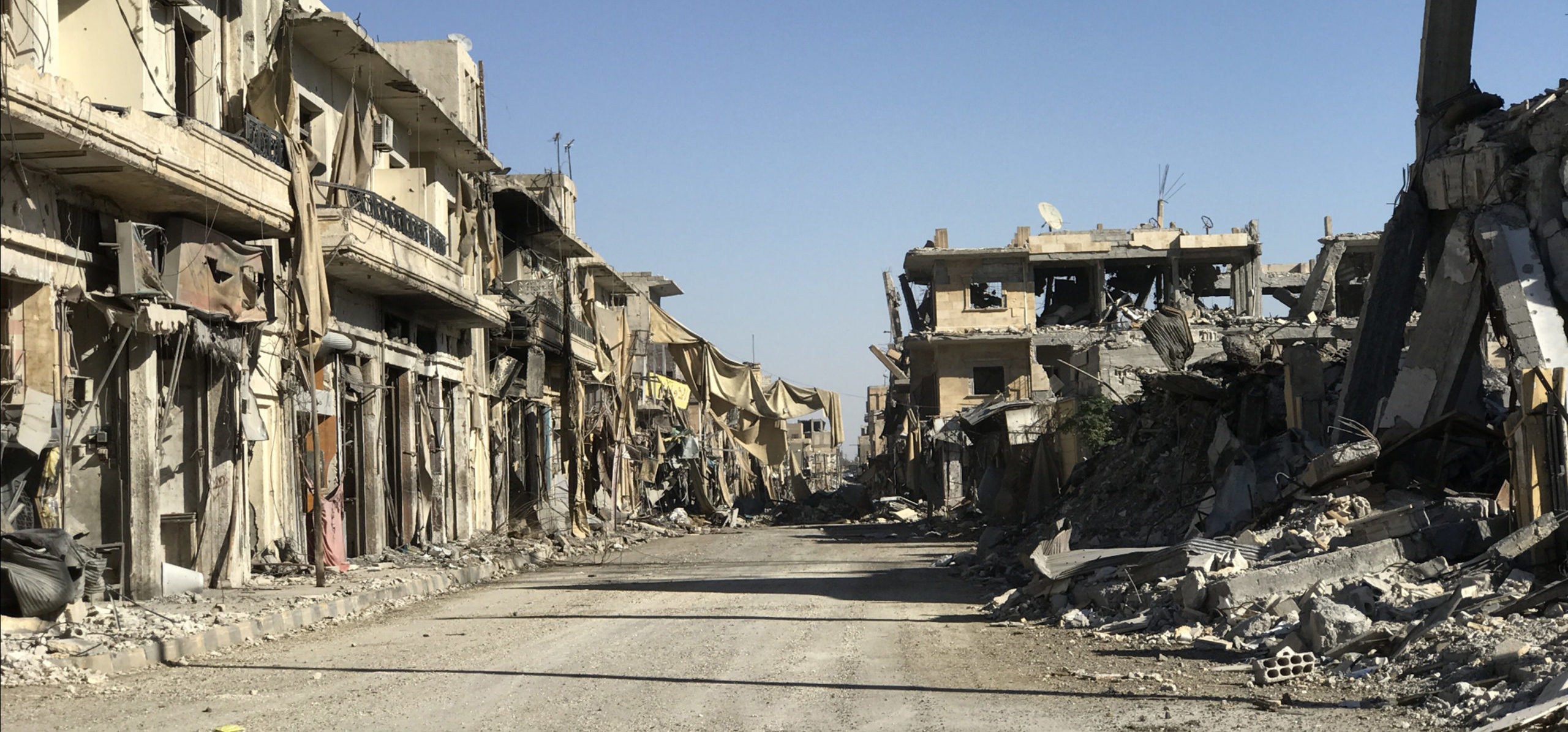
Twelve years after the beginning of the conflict in Syria and four years since the end of anti-ISIS hostilities, the costs associated with the conflict in Syria are staggering. At the end of 2022, nine out of 10 Syrians lived in poverty, and with food prices up 800%, 12.4 million people were considered food insecure.[1] According to one estimate, Syria has lost between $20-38 billion in annual growth capacity,[2] while the World Bank has estimated that between 2010 and 2021, Syria’s economy shrank by more than half, requiring its reclassification from a middle- to lower-income country.[3] This situation is the result of damaged infrastructure and strategic assets, the loss of human capital, the decline of governance capacity and the break-up of long-established economic networks.[4] In addition, Syria also remains under comprehensive economic sanctions, intended to apply maximum economic pressure on the regime’s leadership and military-security apparatus.
Indicators of economic loss fall in line with more synoptic indicators regarding the economic cost of conflict, including a broader estimate that states that each year of civil war costs a national economy 2.2% of its underlying growth.[5] Other models find that the intensity of the conflict, as measured by the number of deaths rather than the aggregate number of casualties, is a predictive factor of subsequent economic impact. Four years of civil war typically cost 18% in GDP.[6] The same studies note the wide-ranging impacts of war on all parts of society—whether in terms of birth weight and height, final level of educational attainment, or housing prices. Often, these impacts far outlast conflict-related violence itself,[7] and are incurred through a range of conflict-related effects: the looting of natural resources, the redirection of men and boys to conflict and away from education, the destruction of infrastructure and supply chains, and the collapse of trade.[8]
In northeast Syria, the widespread destruction and loss of human capital resulting from the first few years of the Syrian conflict was then followed by several years of brutal, costly ISIS rule. During the five years in which the group’s so-called “caliphate” administered Syria’s northeast, ISIS extracted revenues from nearly every facet of the economy—from income tax to agricultural outputs, and oil to fines for violations of proscribed behaviour.[9] While some of this revenue was, for a time, used to provide minimal public services in areas under ISIS control, nearly all the income that ISIS generated was used for ambitions and purposes that went far beyond local governance, including ISIS’ extensive military campaigns and the financing of terror attacks abroad. In essence, ISIS’ economic impact was principally extractive—the group depleted resources and ransacked property and assets from territory under its control without contributing substantially to its maintenance or governance, despite propaganda claims to the contrary.[10]
Once ISIS came under increasing pressure from the US-led Coalition in the air and ground advances by the US-backed SDF seized more and more territory east of the Euphrates River, the group stopped providing local services, with oil and taxation revenues funnelled towards military operations instead. The human toll of this shift was staggering. Between ISIS’ extractive resource collection, its neglect of local economic needs and conflict-related destruction, communities in northeast Syria were left impoverished and marginalised—a status quo that has lasted until the present day, long after the territorial collapse of ISIS.
Methodology
A large body of academic and policy-focused work has already considered ISIS’ administration and structure, as well as the cost of the conflict to Syria’s economy. This chapter seeks to complement this existing body of work by offering insights into the individual and community-level economic costs of ISIS rule and the anti-ISIS conflict. Additionally, because most studies on the cost of Syria’s conflict focus on government-controlled areas of the country, where access to figures concerning currency, infrastructure and trade is more easily obtained, this chapter—though not exhaustively—details the situation in northeast Syria specifically. The chapter also considers the individual, human elements of the conflict that are captured but largely obscured by macroeconomic models—the loss of homes, jobs, and opportunities—that are unlikely to be recovered during this lifetime. It considers some of the following questions: What were the primary revenue sources for ISIS in northeast Syria? What was the extent of infrastructure damage in the communities surveyed? And finally, how did the main ways that ISIS extracted revenue impact communities and households?
The findings presented in this chapter are drawn from a combination of desk research from academic and policy sources and key informant interviews, conducted by RDI with community leaders, economists, and journalists in Hasakeh, Qamishli, Manbij, Tabqa, Raqqa, and Deir Ezzor between April and June 2023.
A notable research limitation is attributable to the fact that northeast Syria’s governing authority, the Autonomous Administration, operates as a de facto semi-autonomous entity that generates little macroeconomic data. Figures related to the Syrian economy prior to the conflict typically consider the entire country, and many of the detailed qualitative descriptions of the historical economic development of northeast Syria lack quantitative components. The absence of northeast-specific data is compounded in estimates concerning the total conflict-related costs incurred in Syria between 2011 and the present day. While the economy in northeast Syria remains closely bound to Damascus, for example through its currency and formal international status, the region has charted its own path in terms of governance and reconstruction efforts—including infrastructure construction that was denied to the northeast’s communities for decades before the conflict. This report therefore consciously distinguishes whole-of-Syria figures from descriptions, and where possible, data specific to northeast Syria.
The chapter first provides an overview of the research findings in northeast Syria to contextualise the findings and describe the locations surveyed for the work before recapping the main findings regarding the macroeconomic cost of conflict in northeast Syria. It then briefly reviews the economic components of ISIS’ governance system, including its main sources of revenue. Finally, the chapter moves into a description of the ways in which these macroeconomic findings had microeconomic impacts: how ISIS governance impacted communities and individuals, and how this impact has reverberated in the years since the formal cessation of the conflict with ISIS in 2019.
Northeast Syria pre-conflict economy
Since the foundation of the Syrian Arab Republic in 1948, the northeast of the country was a predominantly agrarian region that received little investment from the central government when compared with other regions.[11] While Aleppo and Damascus developed large factories and industrial economies, the Syrian government tightly restricted development in the northeast, citing the importance of land preservation for agricultural purposes and the sensitivity of developing regions along the Turkish and Iraqi borders.[12]
In the six decades between Syria’s independence and the start of the post-2011 uprising and ensuing civil war, the government passed increasingly punitive regulations narrowing the opportunities for economic development outside its economic heartland. While other areas of the country outside northeast Syria became increasingly industrialised, the northeast remained underdeveloped, impoverished and agriculture-based, supplying oil resources, wheat and barley to the rest of the country.
While policies restricting economic growth in the northeast decreased economic opportunities for all those living in the area, other legislation specifically targeted the ethnic Kurdish population. Northeast Syria forms part of the geographic band of historic Kurdish homeland, which stretches north into southern Turkey and eastwards across Iraqi Kurdistan and into Iran. A series of government policies from the early 1950s progressively narrowed economic opportunities for the northeast and Kurds in particular. In 1952, the government passed a law prohibiting the improvement of agricultural land near the Turkish and Iraqi border on security grounds;[13] a 1962 census of Kurds in Kobane and Hasakeh later deprived 120,000 Kurds of Syrian citizenship, rendering them stateless.[14] This deprived them of fundamental rights, including full participation in the Syrian economy, by limiting access to certain professions—law, medicine, engineering, journalism and public sector roles—that were otherwise afforded to citizens, and relegated them to a legal status that persists today.[15]
In 1973, then Syrian President Hafez al-Assad moved to establish a so-called “Arab Belt,” a 15-kilometre-wide and 375-kilometre-long militarised strip of land along the Turkish border in northeast Syria. This displaced another 60,000 Syrian Kurds from the area and transferred their land to Arab families displaced by the construction of the Tabqa Dam.[16] Families that resisted the Arab cordon were stripped of their Syrian citizenship.[17] Throughout the 1980s and 1990s, although the Assad regime supported regional Kurdish efforts towards political autonomy in Turkey and Iraq, domestic oppression of Syrian Kurds continued.[18] A severe drought throughout Syria between 1998 and 2001 led to further population outflows from predominantly Kurdish agricultural areas to the cities: 329,000 people in northeast Syria (from 47,000 nomadic households) were forced to liquidate agricultural and livestock holdings and faced food shortages.[19]
In 2004, not long after Hafez’s son Bashar al-Assad became president, riots broke out in Qamishli following a football match and soon turned into a broader movement concentrated on Kurdish rights. The protests, which quickly spread throughout northeast Syria, were met with stricter economic policies. Law 41/2004, introduced in the months after the riots, increased punishments associated with development on agricultural land along the border (to two years’ imprisonment and significant fines).[20] Four years later, this law was expanded further through Decree 49/2008, which forbids the transfer or mortgaging of property in border areas without prior authorisation through an extensive permitting process; this situation was made worse by Decree 59/2008, which mandated the demolition of buildings in violation of these regulations.[21] Although applications for construction permits in restricted areas were open to all Syrians, in practice, Kurds rarely received them.[22] As a result of these restrictions, Kurdish cities in the northeast had few of the factories—or factory jobs—that Aleppo and Damascus did, and many Kurds migrated abroad or to other Syrian cities in search of work.[23]
Concurrently, in the early 2000s, President Assad significantly expanded privatisation policies begun by his father in the late 1990s.[24] This resulted in the rise of a private business class with close ties to the regime and Assad’s inner circle; some argue that these policies also precipitated increasing poverty rates among the lower classes, particularly those living outside urban areas.[25] Throughout the 2000s, groundwater reserves in northeast Syria were depleted and agricultural land was overstretched through overambitious, privatised agricultural development projects, further imperilling rural communities.[26]
Economic liberalisation also paved the way for a series of agreements with international oil giants, including Shell, Total and Gulfsands. These corporations privatised exploration of Syria’s oil fields in the northeast.[27] Northeast Syria contains the country’s oil reserves, concentrated largely in the al-Omar oil and gas fields east of Deir Ezzor.[28] Modest by international standards, contributing to just a tiny fragment of global oil production, these reserves still accounted for five to seven percent of the state’s GDP prior to the conflict.[29] During the decade-long window between liberalisation and the imposition of international sanctions, a US company handled the distribution of Syrian oil originating from northeast Syria; following the onset of sanctions in December 2011, these revenues went to the state-owned General Petroleum Company.[30]
While poverty rates in the rest of Syria declined between 1998 and 2004, they increased in rural northeast Syria during the same period.[31] In 2004, northeastern provinces had the highest rates of rural and urban poverty, with 58% of Syria’s poor living in the area and 21% of the population living on less than two dollars per day.[32] In 2005, the Syrian government cancelled state subsidies, a system on which lower-income households were heavily dependent.[33] Between 2005 and 2010, the agricultural share of Syrian GDP declined from 7.8% to 2.2%, and 56% of Syrians living in the countryside were considered poor.[34]
At the outbreak of conflict in 2011, therefore, northeast Syria had been left out of the economic and infrastructural advances experienced by the rest of the country. Even before the arrival of ISIS, the post-2011 uprising compounded pre-conflict economic vulnerabilities. It would not be long, however, before ISIS set its sights on the rich resources in northeast Syria—with devastating consequences.
ISIS’ primary revenue sources in northeast Syria
Unlike predecessor organisations such as al-Qaida, which financed itself primarily through external donations, ISIS financed itself first and foremost through the territories it controlled in Syria and Iraq.[35] In 2017, the group’s annual revenue streams were estimated at $500 million from oil, $200 million from proceeds from Iraqi and Syrian farmland, $45 million from kidnap and ransom, and a further $5 million from foreign donations.[36]
Additionally, extortion of the local population provided a significant source of ISIS income. Much of the bank looting took place in Mosul, home to a large branch of the Iraqi Central Bank, and the receipt of external donations was largely centralised in Mosul. In northeast Syria specifically, much of the group’s income came from agriculture taxation, exploitation of oil infrastructure and taxation of imports arriving from Turkey.[37]
Oil revenue
Oil revenue was ISIS’ largest single source of income.[38] As part of its territorial expansion across northeast Syria in 2014, ISIS seized the region’s oil infrastructure in Deir Ezzor, Hasakeh and Raqqa provinces. By 13 January 2014, oil assets in Raqqa were fully under ISIS control;[39] half a year later, the group seized the al-Omar and Tanak oil fields, followed by the remaining Deir Ezzor oil fields shortly afterwards.[40] While some fields in Hasakeh province remained under Kurdish control throughout the period of ISIS rule, those in al-Hol, al-Shaddadah and Jabisah fell to ISIS in July 2014.[41]
Estimates of the amount of money ISIS earned from oil vary. Some sources indicate ISIS was earning as much as $3 million per day in 2014; others suggest the group was making about half that figure in 2016.[42] In mid-2016, Deir Ezzor’s al-Omar oil field—the largest in Syria—was producing between 34,000 and 40,000 barrels of oil per day.[43] The group was able to sell oil from al-Omar for $45 per barrel, exceeding the average international closing price in 2016, by exploiting captive local markets in northeast Syria.[44]
In 2014, it was estimated that ISIS’ largest oil customer was the population under its own control—with households purchasing petrol and mazout (low-quality heavy diesel) for daily consumption.[45] Oil traders operating within ISIS territory were required to present a zakat certificate indicating they had already paid tax; traders from outside of ISIS territory who had not paid zakat were required to pay a tax of 200 Syrian pounds (about $0.67) per barrel.[46]
To ensure local supply, in 2015, ISIS purchased at least five refineries in northeast Syria, keeping the former owners on to operate them.[47] ISIS supplied the crude oil for refinement, took all of the resulting mazout—the heavy diesel used to operate generators—and split the profits with the refinery operator.[48] From 2016, as ISIS struggled to keep refineries running because of dwindling supplies and mounting US and Russian airstrikes, the northeast witnessed a proliferation of “burners,” primitive refinery-like operations that required fewer specialised parts and allowed basic refinement of crude oil into a product that could be used in generators and cars.[49] However, these “backyard refineries” were shown to expose people to highly toxic compounds, precipitating a ‘long-lasting health impact on communities and their environments.’[50]
Foreign trade, truckers, middlemen and smugglers
Despite its ideological fanaticism, ISIS displayed remarkable pragmatism when it came to the oil trade. It had no qualms about doing business with battlefield enemies, whether the Assad regime, Kurdish militias in northeast Syria or armed opposition groups in the northwest.[51] While its primary market was the territory under its control, it also flowed to the Kurdistan region of Iraq (KRI), Turkey, and territories held by the Syrian government.[52]
Oil distribution was controlled by smugglers, truckers and middlemen.[53] ISIS’ engagement with the oil generated in its territory was limited to extraction, crude sales and, in some cases, sale of refined products to independent traders; its involvement therefore typically ceased once the oil entered the trucks of independent traders. From then on, smuggling was left up to traders who paid tax to the group but operated independently of it.[54]
According to both international sources and individuals consulted for this report, ISIS initially sold oil directly to independent traders who brought their trucks directly to the oil fields, where they purchased crude oil.[55] Truckers could typically transport up to 70 barrels.[56] Initially, trucks simply lined up on the roads outside of oil refineries. However, this became untenable later in the conflict when US-led coalition airstrikes increased. Drivers were assigned pick-up times to reduce queues of vehicles—an obvious target for airstrikes.[57] Later, as ISIS came under increasing financial pressure, it sold “licenses” to truckers, allowing them to skip the line and purchase up to 1,000 barrels at a time, provided they pre-paid for them.[58]
Once truckers had collected oil from the source, they could either sell it to a refinery or a trader with links outside ISIS-held territory, or sell the crude themselves on local crude oil markets.[59] Truckers under contract with a nearby refinery would typically transport the crude oil to the refinery, while others would either link up with traders with smaller vehicles or travel to al-Qaim, on the Syrian-Iraqi border, to sell on the local oil market.[60]
Traders headed outside ISIS territory to destinations such as the opposition-held northwest, government-held areas or Iraq, but they also headed to market towns inside ISIS territory such as Manbij, al-Bab (near Aleppo), and al-Qaim.[61] According to key informants, the primary trade routes in and out of ISIS territory passed through the central Palmyra desert and through al-Sukhnah, both in Homs province.[62] Much of the oil smuggled out of ISIS territory passed through opposition-held territory, and while some initially entered the KRI, by 2016 the border had been closed and oil had passed through the al-Qaim market in southern Iraq’s Anbar province instead.[63]
An ISIS memo from February 2015, recovered by US Special Forces during a raid in May that year, revealed that Abu Sayyaf, the emir in charge of the ISIS’ oil ministry, had greenlighted several multi-million-dollar oil contracts with the regime.[64] In the six months preceding the issuance of the memo, sales to the regime had accounted for 72% of ISIS’ $289.5 million earnings from oil revenue.[65] Transactions between the Assad regime and ISIS were largely handled by prominent Syrian businessmen closely affiliated with the regime. The main interlocutor with ISIS, according to both international sanctions documents and respondents interviewed for this report, was Hussam al-Qaterji. Qaterji, named in US Treasury Department sanctions from 2020, owns at least a 50% stake in Arfada, a petroleum trading company with a significant trading relationship with the Syrian government. He directly handled much of the trade between the regime and ISIS.[66]
Small-scale traders without access to someone like Qaterji resorted to more creative methods. In the early days of ISIS rule in northeast Syria, when the price per barrel was close to $90, smugglers used boats to bring oil into Turkey, loading it into 50 or 60-litre metal barrels and hoisting them across the river to the Turkish side, where tractors carried it to a waystation for collection.[67] Other smuggling methods relied on rubber tubes, horseback and carrying jerry cans by hand through mountainous terrain, predominantly through the opposition-held northwest and onwards into Turkey.[68] With the decline of oil prices in 2015 and 2016 and crackdowns in Iraqi Kurdistan and Turkey, these practices became less profitable and largely stopped.[69]
Peak oil production
The significant income that ISIS gained from oil production was particularly noteworthy because of the limited capacity the group possessed to exploit complex extraction or refinement technology or to expand existing oil extraction. It also struggled to maintain aging infrastructure in its territory and primarily pumped oil from existing wellheads. In inheriting oil fields and refineries across northeast Syria—many of which were constructed using old equipment that required specific technical knowledge to maintain—ISIS was heavily reliant on the cooperation of locals who had been operating the oil fields and refineries prior to their arrival.[70] In some cases, oil facilities were also staffed by militants or insurgent groups separate from ISIS, but who cooperated with the group.[71]
The highwater mark of ISIS oil production in northeast Syria occurred between mid-2014 and late 2015. In January 2016, the US-led Coalition began to target oil infrastructure in areas under ISIS control, including gas and oil separation plants, oil wellheads, pump jacks, tankers as well as related construction and repair equipment. By January 2017, having regained territorial control over much of the area east of the Euphrates, the SDF also regained control over oil resources—a significant portion of the SDF’s operating revenues thereafter. Throughout 2017, under pressure from both air and ground forces and increasingly strapped for cash, ISIS ramped up oil and gas sales to the Assad regime, which reportedly became its largest revenue stream.[72] Between January 2016 and 2018, ISIS lost 90% of its oil revenue.[73]
While ISIS’ total revenue from oil is difficult to calculate, it is certain that it declined over time due to US-led Coalition airstrikes and the lowering of the international price per barrel. Nevertheless, in 2014, ISIS was estimated to be earning up to $40 million per month from oil sales, with revenue tapering to closer to $4 million by October 2017.[74] This generated total assets between $1.3 billion and $2 billion during the period in which the group occupied northeast Syria, making ISIS the wealthiest terror group in the world—wealthier than small nations such as Nauru, Tonga and the Marshall Islands.[75]
Zakat collection
At the height of its power, ISIS took in more than $1 million per day in extortion and taxation revenues.[76] While much of this came from the taxation of government salaries (Iraqi government salaries were taxed at 50%), company contracts (20% of the value of the contract) and individuals and goods passing through its territory, agricultural taxes made up a sizeable portion of the revenue, particularly in northeast Syria.[77]
In August 2014, ISIS introduced its first tax—a border tax of 5,000 Syrian pounds per month (then roughly $23) on buses carrying passengers from other areas of Syria.[78] These were followed in September 2014 by taxes on drinking water, electricity and gas as ISIS began to provide basic services to populations under its control.[79] In January 2015, ISIS began opening diwawin al-zakat (tax collection offices) throughout its territory and announced in Friday sermons that a 2.5% tax would be collected—if necessary, by force—from local communities.[80] ISIS considered zakat a religious obligation, with failure to pay considered equal to apostasy.[81]
Soon thereafter, zakat collectors began to visit local shops and goldsmiths, tallying the value of their wares to produce tax invoices.[82] The tax was levied on all businesses and individuals above an income threshold and some portion of tax income was, at least initially, used to provide food and basic supplies to the poorest members of the community.[83] Very small shops, food stalls and small businesses in the countryside could be exempt from tax if they were determined to fall below the zakat threshold.[84] While these tax collection offices were initially located in each town centre, they were repeatedly relocated, along with all other ISIS municipal facilities, as airstrikes intensified.[85]
In interviews with key informants, the extent to which taxation rates were standardised was unclear. Some believed the taxation scheme imposed on their city was specific; others were unsure because taxes were collected in their city by local officials with little explanation of the link to the group’s overarching system. Tax collection was delegated to local officesand ISIS employees, such as the wali, or governor. Informants throughout the community worked in collaboration with the local male and female hisba units.[86]
A business owner in Raqqa recalled how business owners would receive stamped ISIS-issued zakat invoices indicating the amount due, which ISIS officials had independently calculated.[87] In addition to goods, infrastructure was also taxable, with ISIS levying taxes on buildings. According to the Raqqa business owner, cash savings were assessed at 2.5% of the total value, cows at 10% of their value and sheep at 40%.[88] Penalty for non-payment of taxation, according to key informants, ranged from confiscation of the goods or closure of shops or businesses to physical violence or even death.[89]
Additionally, ISIS imposed significant taxes on imports. A journalist, interviewed for this report, indicated that a standard practice was to confiscate one carload of goods for every 10 that crossed the border.[90] Later, ISIS began to tax all entry and exits from its territory, regardless of whether it was for the transport of goods.[91]
A business owner from Tabqa said:
I received zakat invoices for electricity, water, and telephone bills. There was a zakat collector who visited my house. As for the zakat of agricultural crops, there were special centres for each region. If anyone falsified the value of his production, half of his crop would be seized as a punishment known as ta’azeer.[92]
The same key informant indicated that ISIS employed local Syrians as tax collectors whereas revenues, which were funnelled to tax offices, were handled by foreign fighters.[93]
Although ISIS referred to zakat as a form of Islamic almsgiving and stated in its publications and communications with the public that zakat was voluntary, in practice, ISIS-era taxation was mandatory. The degree of adherence to the religious mandate varied, with some local ISIS officials taking significant liberties in their interpretation of tax enforcement. Traders with good relationships with ISIS were able to negotiate favourable taxation rates, and tax collectors were lenient in their collection practices along frontlines where communities were under duress—although a punitive emphasis was often placed on individuals perceived to be non-compliant with ISIS’ values, rather than the companies enabling non-compliant behaviour. As a teacher in Manbij said: “ISIS did not punish the large merchant who sells cigarettes, they punished the street smoker.”[94]
Because of the risk of punishment, a visit to the tax office was a stressful experience. A respondent from Tabqa explained how:
Each word that a person uttered [in front of ISIS] was calculated in advance a thousand times, because any mistake might lead to punishment or maybe even death. Almost all state employees were “semi-ISIS.” The truth is that a person didn’t feel that he or she was entering an ordinary institution, no matter how “civil” it claimed to be. Nobody, whether a farmer or a merchant, dared to go against the tax office.[95]
Agricultural taxation
While ISIS’ oil revenues made international headlines, it is estimated that the group generated as much as $200 million by taxing agriculture.[96] Northeast Syria forms a large swath of the Northern Mesopotamia breadbasket, generating much of the wheat, barley and cotton consumed by Iraq and Syria.[97] ISIS’ practice of levying mandatory “donations” from farmers on crops and confiscating agricultural infrastructure such as silos, mills and tractors and renting them back to farmers therefore deeply impacted households and communities throughout ISIS-held territory.[98]
Agricultural taxation rates were standardised throughout ISIS-held territory, with rain-fed crops taxed at 10% and irrigated crops taxed at five per cent.[99] Agricultural goods produced in northeast Syria were typically taxed at least three times, with farmers paying a specified levy, truck drivers paying a second tax and shopkeepers selling the goods paying a third tax.[100] Tax calculations varied somewhat by location, with some shopkeepers paying a tax based on their reported sales, while others paid based on the value of their total inventory. ISIS also varied the penalties and strictness of its tax collection somewhat and did not demand tax payment from communities in areas close to military frontlines. By 2016, it was estimated that ISIS had generated $56 million in income from the taxation of barley and wheat within its territory.[101]
Unlike other sources of revenue that ISIS quickly depleted—such as extortion, bank looting and the sale of already-refined crude oil—farming was an important, stable source of income for the group’s so-called “caliphate.” Agricultural production in northeast Syria returned to, or even exceeded, pre-conflict levels from 2015 onwards, following a dip at the beginning of the conflict.[102] Winter crops such as wheat and barley fared particularly well; summer crops such as cotton less so.[103] In March 2015, ISIS announced a tax of 200 Syrian pounds (then slightly less than $1) per dunam—one thousand square-meters—of land.[104]
Jizya tax and the treatment of Kurds and minorities
ISIS divided the populations under its control into three categories: Muslim believers; “people of the book”, which included Christians; and “apostates”, which included Yazidis and Alawis). While Alawis were generally executed and Yazidis were killed or enslaved, ISIS initially offered Christians the choice of converting, paying the jizya tax, leaving or facing death.[105]
In Syria, ISIS began to institute the jizya tax in October 2014.[106] In one instance, in the town of al-Mayadeen in Deir Ezzor province, ISIS offered the only Christian family there the option of paying jizya to remain. The Christian family chose to leave, and their property was confiscated.[107] When the jizya payment was instituted in Syria (prior to its announcement in Iraqi territory), the payment in Raqqa amounted to half an ounce of gold, then equal to roughly $750. However, the amount appears to have varied by location.[108] According to ISIS publications at the time, the fee structure was four gold dinars for the wealthy, two dinars for the middle class and one dinar for the poor.[109] One key informant, a 41-year-old man in Tabqa, recounted how:
Our neighbour was paying 25 grams of gold to stay in her house—a very large amount. [ISIS] was ordering the slaughter of all Shi’a and Alawi minorities and most other sects. They fled from the killing and left their homes and money, which were seized by ISIS.[110]
At the outset of the conflict, ISIS generally treated Arabs and Kurds equally, offering separate religious instruction courses in Kurdish.[111] Policies hardened as the SDF gained ground throughout northeast Syria. ISIS came to distrust the Kurdish population, accusing Kurds of colluding with the SDF, and increasingly ordering the expulsion of Kurds from the territories under its control. Such announcements were issued from mosques. Kurds were evicted from their homes and their property and belongings were seized. ISIS turned the private businesses, shops, homes, and restaurants it seized from expelled individuals, as well as municipal facilities such as stadiums and hospitals, into ISIS administration centres and prisons; it also converted some into accommodation for foreign fighters.[112] According to one key informant, ISIS operated 107 prisons converted from other buildings in Raqqa alone.[113]
Unlike Christians, Kurds—who are overwhelmingly Sunni Muslim—did not receive the option to pay the jizya tax to avoid expulsion. A Kurdish woman in Raqqa recounted:
[ISIS] came to take our home under the pretext that we were Kurds and worked with the SDF. A Tunisian emir came. He entered the house with ISIS women and saw the house and our belongings. We tried to take our belongings, but we were threatened with imprisonment.[114]
While some Kurds forcibly expelled from ISIS territory were sent to SDF-held areas, others were detained and tortured by ISIS when trying to leave for Kobane. A man from Raqqa recounted that when the edict expelling Kurds was announced in Raqqa, they were ordered to travel to the desert near Palmyra with 10 other families. When they encountered food shortages and devastation in Palmyra, the man decided to take his family to SDF-held Kobane:
At the Ain Issa junction, I stood at an ISIS checkpoint. They asked me where I was going, and I told them [we were going] to Kobane. They didn’t respond, so we set off immediately.
After an hour, an ISIS car stopped us and took me to the mosque near the Tishreen Bridge, where I was detained for more than three months. I was brought to a basement where ISIS youth asked me what sect I belonged to. When I told them “Kurdish”, they laughed and told me to forget any dreams for the future. I was held in chains. My charge was being Kurdish and attending the Nowrouz [New Year] festival. Three of the five other Kurds held with me were charged with collecting zakat money to give to the SDF. Eventually we paid smugglers to take us to SDF territory and escaped.[115]
Kurds—as well as individuals perceived by ISIS to be Kurds, such as members of Raqqa’s Arab Tayi tribe who were historically integrated with the Kurdish community, or those married to Arabs—were able to remain in ISIS-held territory if they paid significant sums of money. One respondent from Raqqa was permitted to remain when his family was expelled because his wife was Arab but was ordered to pay $10,000 within 24 hours.[116]
Fines and punishments
Although not a significant source of revenue, severe fines and punishments meted out by ISIS’ hisba police created terror amongst the population. Nearly all key informants mentioned these systems of punishment when asked about ISIS-era taxation practices. Fear of such punishment accompanied all interactions with the group. For financial infractions, such as failing to honestly report the value of an agricultural crop or shop, fines or confiscation of goods were a standard punishment. Physical punishments were typically reserved for perceived infringements of religious doctrine. As one key informant in Qamishli shared:
A case occurred in the town of al-Hol. While a man was passing through an ISIS checkpoint, he noticed his motorcycle tire was flat and exclaimed spontaneously: “Oh Muhammed! The tire is flat!” ISIS employees at the checkpoint stopped him and imposed the death penalty on him because it was not permissible to swear and seek help except from God, even from the Prophet [Peace Be Upon Him].[117]
Other common infractions occurred when people’s clothing was deemed not compliant with ISIS standards or when people failed to correctly answer religious questions.[118] In the case of inappropriate dress—or cigarette smoking, enforced by hisba police by smelling the hands of residents—respondents indicated that men were forced to attend 15 days of Shari’a instruction and purchase new garments.[119] Many punishments were intended to humiliate the violator. Moustaches worn in violation of mandates on facial hair were burned off the faces of offenders.[120] As a key informant in Tabqa recounted: “In some special cases, they made the person ride backwards on a donkey in the streets as a deterrent [and] an example to other people.”[121]
Women were frequently fined, a method of behavioural control intended to confine them to the home. In the case of women found in violation of Islamic dress, their male guardians were punished with Shari’a instruction and forced to purchase compliant garments at an inflated price.[122] One woman, a 37-year-old hairdresser in Raqqa, recalled:
I had a small women’s hairdressing shop. They forced me to close it, took it over and broke all the items under the pretext that it was a place for grooming, which was forbidden. My shop was converted into a place to sell oil derivatives, diesel, kerosene and other things, and our financial condition deteriorated from then on.[123]
In rural districts where women had traditionally worked alongside their husbands and other male relatives in fields and pastures, ISIS began to issue fines for women who failed to comply with the dress code.[124] This included fining women for wearing the wrong shoes, compelling them to appear in court and purchase correctly coloured shoes.[125] The effect was that women in rural areas began to remain at home and stayed inside to avoid the risk of fines.[126]
Kidnapping, looting and donations
Another source of income for ISIS was the kidnapping for ransom of largely (though not exclusively) western foreign nationals.[127] In 2014, the group was estimated to have generated $50 million through this practice.[128]
Although the US and UK refused to pay ransoms, France is believed to have paid up to $14 million for the release of French citizens. Spain similarly paid for the release of Spanish journalists.[129] In 2016, ISIS demanded $18 million for the release of 230 Assyrian Christians held in Syria; although the final amount paid for the hostages was not confirmed, Assyrian Christian organisations raised millions from individual contributors around the world to fund the release of the hostages, for whom ISIS charged up to $50,000 per individual.[130] By 2017, however, as the group had lost large chunks of territory, its fighters paid smugglers to defect. Syria’s armed opposition groups would also sell captured foreign ISIS fighters to governments that wanted militants back, with Gulf states reportedly paying millions of dollars through this informal system.[131] It was a stark reversal of fortunes for the terrorist organisation that for years had been one of the main drivers of human trafficking to northeast Syria.
Looting provided a further revenue stream. Estimates of income generated by ISIS through the looting and sale of antiquities vary tremendously— amounts have ranged from $4 million to $7 billion.[132] ISIS had an established process for extracting antiquities from its territory, with the main sites being Nimrud and Mosul in Iraq and Palmyra in Syria.[133] First, a dig permit was secured from ISIS authorities for the area in question; artifacts were then unearthed and evaluated, likely by the Antiquities Division of ISIS’ Department of Natural Resources, before being moved for sale on the international market.[134] ISIS imposed a tax of 20% on the sale of antiquities.[135] Because of the specialised skills and contacts involved in each step of the process, it is unlikely that the same individuals who unearthed antiquities (once the looting of public museums had finished) were the ones who brought the items to the international market.[136]
Fighters involved in general pillaging and asset seizure—as compared to the highly regulated antiquities sector—were instructed by ISIS to take only the amount required to advance the objectives of jihad.[137] ISIS divided spoils into ghanima—moveable property seized from non-Muslims during military operations, which in practice were often munitions and fay (land acquired without force from non-believers) considered necessary to further the objectives of jihad.[138] Fighters were required to pay a 20% tax on any ghanima and fay seized.[139]
Donations formed a final important source of income. Between 2012 and 2014, in ISIS’ early years and prior to its takeover of northeast Syria, ISIS grossed an estimated $40 million from wealthy financiers in the Gulf.[140] Funds originating in Kuwait in particular were significant well into the conflict.[141] While initial funding bound for Syria was largely organised by humanitarian-minded Syrian expatriates in Kuwait, others became involved in supporting specific armed groups, allegedly with ties to Jabhat al-Nusra and al-Qaida.[142] Many fundraising initiatives occurred publicly on social media in Kuwait.[143] Saudi Arabia enacted counter-terrorism legislation in 2014 designed to tighten channels for funding.[144] Around the same time, Kuwait and Qatar also tightened their previously money laundering laws.[145]
Bayt al-Mal
Funds collected by ISIS at the level of local tax collection offices were later transferred to the group’s Raqqa-based treasury department, the Bayt al-Mal, a name referring to an Islamic treasury referenced in the Quran. The Bayt al-Mal provided material support to ISIS, managing payments from various diwanin (ministries) as well as the proceeds of ISIS extortion and plundering.[146] The Bayt al-Mal was fundamental to the day-to-day financial operations of ISIS, managing relationships with money transfer, or hawala, agents.
The Bayt al-Mal also handled the payment of salaries to fighters employed with ISIS, later imposing salary cuts as ISIS came under increasing financial pressure after 2016.[147] ISIS maintained an intricate wage structure, in which foreign fighters were paid roughly double that of local fighters.[148] While locals either lived modestly or suffered financial hardship as their businesses were shuttered, foreign fighters lived comparatively lavish lifestyles. One source remembered visiting the home of a Kenyan fighter in Raqqa: “I could see expensive perfumes, Ray Ban sunglasses and different bottles of Johnny Walker Red Label whisky. It was a high-class house.”[149]
In 2014, ISIS announced that it intended to introduce its own currency, the gold dinar. The gold dinar was intended to be minted from gold looted from the Mosul Central Bank and tied to the international price of gold, although more than one key informant indicated that coins appeared to be either gold-plated or a kind of painted gold, rather than actual solid gold. The gold dinar was subdivided into dominations of dirhams made of silver and fulus made of copper. Gold dinar weighed 4.25 grams, in accordance with the weight of a dinar at the time of the Prophet Muhammad (Peace Be Upon Him).[150] ISIS reportedly minted up to two tons of gold dinar, using 21-karat gold.[151]
The dinar began to appear in cities around northeast Syria in 2016 and was available from ISIS money changers, according to key informants. Reports on the value of the gold dinar against the dollar varied, however, and may have varied from one community to the next. One key informant indicated that one gold dinar was equal to $120, whereas another indicated the value was as high as $350 in his community.
While the gold dinar was ultimately of minor financial relevance to ISIS and primarily served as an indication of its aspirations to operate a parallel economic system, the appearance of the dinar was another way in which ISIS’ influence aimed at local economies. Because of its high value, respondents indicated that most community members had limited interaction with the dinar, although its use was, at least technically, compulsory for a time, including for tax payments. One source indicated that in his city, at least, payment of taxes in Syrian pounds would be counted as non-payment, and the individual would be required to pay the amount plus a fine in gold dinar.[152] However, interviewees said that even when the gold dinar was in circulation as the official currency, the US dollar and euro remained the primary currencies in which trade occurred, with most households continuing to rely on the Syrian pound for everyday expenses.
Life after the conflict
Most people interviewed saw the post-ISIS northeast Syria’s economic devastation as the direct outcome of years of ISIS rule over the region. Families saw the death or disappearance of breadwinners, permanently impacting the extended family’s ability to access income. One woman said that her brother lost a limb to a boobytrap, plunging the entire family into poverty. Many similar tragedies occurred throughout the conflict.
Others told stories of people unable to meet basic needs. During a focus group meeting in Qamishli, participants recounted the story of a man who could not afford the costs of surgeries required to remove shrapnel from his head, which would allow him to recover physically and, hopefully, gain work.[153] Another story told of a widowed female soldier who was unable to feed her family on one income as costs had risen because of inflation.[154]
A man from Manbij said that most families in his community had lived on $500 per month prior to the conflict, earning through agricultural work, small shops and remittances from male family members working elsewhere. He said the average family now survives on just $50 per month.[155] A man from Tabqa remembered life before the conflict:
My brothers and I used to cooperate; we had properties in the village, including olive trees, land and cars. I owned a taxi with my brothers, as well as a commercial shop, an electrical repair shop and a car parts shop.[156]
When asked about how his life had changed, the man said he was now unemployed and responsible for caring for his elderly mother, who suffers from psychological distress, as well as his deceased brother’s wife and five children.[157]
Families across northeast Syria found themselves unable to afford basic expenses or to enrol their children in school. One respondent in Tabqa indicated that she would not be sending her son to the third year of middle school because she could not afford the enrolment fees.[158] A participant in a focus group session in Tabqa said: “I have been left without a breadwinner. I cannot bear my life.”[159]
While key informants were clear about the personal and community-level devastation wrought by the conflict and its aftermath, others saw the economic situation under ISIS rule as functional compared with the economic difficulties that followed. A businessman from Tabqa remarked:
Despite the cruelty, injustice and the imposition of taxes and zakat, people’s economic situation was actually very good for several reasons. Firstly, there were plenty of employment opportunities. For example, work in burners [primitive oil refineries] accommodated a huge number of workers as well as all of the attendant labour, whether owners of tanks, owners of burners, merchants, and farmers. And secondly, they worked under the slogan, “God is our livelihood.”[160]
The respondent said that this slogan meant that because ISIS forbade price gouging as un-Islamic, market prices were competitive. Most commodities were available and, because zakat was a charitable Islamic concept, people generally accepted paying it when they had jobs and sufficient income. Comparing the present with the period of ISIS rule, the man reflected that there were currently few job opportunities in most communities in northeast Syria, adding that the collapse of the Syrian pound against the dollar has left most households below the poverty line. Indeed, in 2022, 90% of Syrians in the northeast were living in poverty.[161]
One of the most lasting impacts of ISIS rule and the subsequent anti-ISIS conflict has been the extent of infrastructure damage. Interviewees unanimously agreed that ISIS invested very little in the infrastructure of cities it controlled. It mainly contributed physical embellishments in the form of threatening propaganda slogans. One key informant, for example, remembered a city gate painted black and scrawled with the Arabic phrase, “We have come to slaughter you.” In some cities, ISIS maintained roads in the service of enabling trade routes, with an emphasis on the main roads in and out of the group’s territory.
Communities across northeast Syria are still affected by unexploded ordnance laid by ISIS in its effort to defend territory. As of December 2022, humanitarian agencies operating in Raqqa labelled it the most contaminated city in the world.[162] Contamination in Raqqa is, in the terminology of demining agencies, “diverse and complex” and will take decades to clean.[163] This is particularly evident in the level of dread creativity that ISIS employed in boobytrapping buildings, homes and agricultural land as it both sought to delay military advancements in 2017. Many of these explosives continued to inflict damage long after ISIS’ territorial collapse in northeast Syria.[164]
Additionally, the damage sustained by northeastern cities during operations by the US-led Coalition was catastrophic and remains largely unrepaired. Under Operation Inherent Resolve, by August 2017 more than 11,000 airstrikes targeting key ISIS military infrastructure and oil refineries had been conducted across Syria.[165] The total economic cost in infrastructure losses and human capital outflow is tremendous, but also deeply personal, with individual apartments too damaged for families to return to and hopes for the future hobbled by the lack of jobs. Nearly every inhabitant in northeast Syria has lost a home, business, or some land. This is not only the result of actions taken by ISIS but also the intensity of the campaign to ultimately defeat the group.
Local researchers in Raqqa estimate that 30,000 homes remain destroyed or damaged to an extent that they cannot be used, and report that the city waterworks and electrical grid remain non-functional.[166] Respondents indicated that where infrastructure repairs have occurred, these have been largely the result of international assistance, with the Autonomous Administration contributing to limited upgrades. Similarly, one key informant estimated that 75% of Kobane remains in ruins, with few resources available to initiate repairs. This estimate, which is difficult to verify because of the limited reporting on infrastructure rehabilitation in northeast Syria, matches figures from 2015 stating that 70% of Kobane was destroyed by fighting.[167]
The industrial scale of destruction in northeast Syria’s cities continues to impede life for individual households. Without public funding to rehabilitate apartment complexes and other multi-family dwellings, individual families in cities throughout the northeast have little recourse in reclaiming their individual property. One respondent offered the example of a family who owns an apartment on the third storey of a building to which they would like to return one day.[168] Because the apartment owners on lower floors cannot afford to contribute to rebuilding the stairwell or the shared entrance, the family’s third-floor apartment remains inaccessible. For families whose primary remaining asset is their home, this represents a significant, potentially permanent, barrier to economic improvement.
The little rehabilitation that has occurred in communities has largely been the result of international humanitarian support delivered through NGOs, with minor contributions from the Autonomous Administration.[169] Despite the widespread destruction of oil infrastructure, oil remains an important source of revenue for the Autonomous Administration—accounting for up to 60% of its income, largely because of the depreciation of other revenue streams.[170] The agricultural sector, the other historical source of income, has been badly impacted by the 2020-2021 drought, the worst in 70 years.[171] This has led to a “disaster” for the region’s pastoralists, who numbered half a million before the war.[172] But international resources are dwindling, too: in June 2023, the UN announced it would be unable to provide food aid to nearly half the Syrians relying on this assistance.[173]
One possible path to economic growth in northeast Syria would be to increase international oil exports, but this remains a contentious issue. The northeast was exempted from US sanctions for a range of industries, including agriculture, construction, infrastructure and trade. But oil exports—the most lucrative of northeast Syria’s native resources—remain sanctioned.[174] Recent exemptions following the devastating February 2023 earthquake have not changed this.[175] The US administration of President Donald Trump—who contemplated withdrawing troops from Syria but then, in his words, left troops behind to “keep the oil”—granted a sanctions waiver to a newly founded but well-connected company, Delta Crescent Energy, to rehabilitate oil fields and export.[176] The Biden administration subsequently favoured allowing targeted investments in northeast Syria and did not renew Delta Crescent’s license, reportedly because of the objection of major oil companies that held the sovereign rights for oil exploitation under agreements signed with Damascus in 2003.[177]
Lacking outlets for international export, this led to an 89,000 barrel-a-day deal between the Autonomous Administration and the Syrian government, which reportedly respectively make $16 and $15 per barrel of oil. Up to $50 dollars per barrel is meanwhile lost in the hands of middlemen and profiteers.[178] The Syrian government, which has lamented the $100 billion losses in Syria’s oil sector since the start of the conflict, has sought to bring the country’s oil and gas fields back under its control.[179] The regime also proposed deals with Russian companies to invest in oil exploitation, as well as with the Wagner Group for protection of oil fields, which led to clashes over the Conoco gas plant between Wagner and the SDF.[180]
Syria’s oil remains caught in the larger geopolitical struggle over the Syrian conflict. While communities in northeast Syria do not materially benefit from the exploitation, they do suffer from the oil industry’s environmental damage.[181] It risks recreating familiar patterns of economic marginalisation that the region experienced long before the outbreak of the post-2011 conflict.
In the long term, researchers assess the options for economic growth of northeast Syria, independent from the Syrian government, to be limited, and predict the economy will remain reliant on remittances from abroad as well as NGO contributions.[182] With 90% of people in northeast Syria now living in poverty and the region caught in a semi-autonomous state, with adequate natural resources but no tax base with which to administer government services, the prospects for reconstruction—and future prosperity—remain unstable.
[1] Euro-Med Human Rights Monitor, ‘Syria: Unprecedented rise in poverty rate, significant shortfall in humanitarian aid funding’ (17 October 2022) <https://euromedmonitor.org/en/article/5382/Syria:-Unprecedented-rise-in-poverty-rate,-significant-shortfall-in-humanitarian-aid-funding> accessed 31 July 2023.
[2] Hannes Mueller and Julia Tobias, ‘The cost of violence—Estimating the economic impact of violence’ (International Growth Centre, 13 December 2016) <https://www.theigc.org/publications/growth-brief-cost-violence-estimating-economic-impact-conflict> accessed 15 April 2023.
[3] World Bank, ‘Syria: Overview’ <https://www.worldbank.org/en/country/syria/overview> accessed 15 April 2023.
[4] Ibid.
[5] Paul Collier, ‘On the Economic Consequences of Civil War’ (1999) 51(1) Oxford Economic Papers <https://www.jstor.org/stable/3488597> accessed 31 July 2023.
[6] Mueller and Tobias, ‘The cost of violence’.
[7] Hannes Mueller, ‘The Economic Costs of Conflict’ (International Growth Centre, August 2013) <https://www.theigc.org/sites/default/files/2014/09/Mueller-2013-Working-Paper2.pdf> accessed 15 April 2023.
[8] Ibid.
[9] World Economic Forum, ‘How ISIS runs its economy’ (16 December 2015)<https://www.weforum.org/agenda/2015/12/how-isis-runs-its-economy/> accessed 2 May 2023.
[10] ISIS repeatedly put out propaganda statements publicising the redistribution of so-called “spoils of war” to orphans and the needy.
See: Mara Revkin, The Legal Foundations of the Islamic State (Brookings Project on U.S. Relations with the Islamic World, July 2016) <https://www.brookings.edu/wp-content/uploads/2016/07/Brookings-Analysis-Paper_Mara-Revkin_Web.pdf> accessed 31 July 2023.
[11] Lucas Chapman and Ali Ali, ‘Northeast Syria’s Industrial Revolution: Advances and Challenges’ (Kurdish Peace Institute, 18 October 2022) <https://www.kurdishpeace.org/research/economics/northeast-syrias-industrial-revolution-advances-and-challenges/> accessed 31 July 2023.
[12] Ibid.
[13] Ibid.
[14] Human Rights Watch (HRW), ‘Syria: The Silenced Kurds’ (October 1996) <https://www.hrw.org/reports/1996/Syria.htm> accessed 31 July 2023.
[15] The number of Syrian Kurds impacted by the 1962 census is now estimated to be as high as 300,000.
See: Syrians for Truth and Justice (STJ), ’Statelessness in Syria: An Enduring Dilemma’ (11 October 2022) <https://stj-sy.org/en/statelessness-in-syria-an-enduring-dilemma/> accessed 15 May 2023; United Nations Office of the High Commissioner for Human Rights (OHCHR), ‘Persecution and Discrimination Against Kurdish Citizens in Syria’ NGO submission to Session 12 of Syria’s Universal Periodic Review submission (October 2011) <https://www.ohchr.org/sites/default/files/lib-docs/HRBodies/UPR/Documents/session12/SY/KIS-KurdsinSyria-eng.pdf> accessed 31 July 2023.
[16] Some NGOs estimate that as many as 60,000 Kurds left the area for Damascus during this period.
See: Minority Rights Group International, ‘Syria: Kurds’ (March 2018) <https://minorityrights.org/minorities/kurds-5/> accessed 31 July 2023; Council on Foreign Relations, ‘The Kurds’ Long Struggle With Statelessness: 1920-2022’ (n.d.) <https://www.cfr.org/timeline/kurds-long-struggle-statelessness> accessed 31 July 2023.
[17] OHCHR, ‘Persecution and Discrimination’.
[18] Minority Rights.
[19] Francesca de Chatel, ‘The Role of Drought and Climate Change in the Syrian Uprising: Untangling the Triggers of the Revolution’ (2014) 50(4) Middle Eastern Studies, citing Frank Hole, ‘Drivers of Unsustainable Land Use in the Semi-Arid Khabur River Basin, Syria’ (2009) 47(1) Geographical Research <https://onlinelibrary.wiley.com/doi/pdf/10.1111/j.1745-5871.2008.00550.x> accessed 31 July 2023.
[20] Chapman and Ali.
[21] Ibid.
[22] Ibid.
[23] Ibid.
[24] Alice Bonfatti, ‘The socio-economic roots of Syria’s uprising’ Al-Jumhuriya English (21 September 2017) <https://aljumhuriya.net/en/2017/09/21/socio-economic-roots-syrias-uprising/> accessed 31 July 2023.
[25] Ibid.
[26] De Chatel.
[27] Ibrahim Hamidi, ‘The Syrian Oil: Time for New Approach?’ Asharq al-Awsat (9 November 2022) <https://english.aawsat.com/home/article/3977206/syrian-oil-time-new-approach> accessed 31 July 2023.
[28] Enab Baladi, ‘The US and Al-Omar Oil Field: Military base or oil greed’ (23 September 2022) <https://english.enabbaladi.net/archives/2022/09/the-us-and-al-omar-oil-field-military-base-or-oil-greed/> accessed 31 July 2023.
[29] Dr. Peter Bartu and Maurice Ruttiman, ‘Northeast Syria: The Good, Bad & the Oil’ (Australian Institute of International Affairs, 8 Jun 2021)<https://www.internationalaffairs.org.au/australianoutlook/north-east-syria-the-good-the-bad-the-oil/> accessed 31 July 2023.
[30] Ibid.
[31] United Nations Development Programme (UNDP), ‘Poverty in Syria 1996-2004, Diagnosis and Pro-Poor Policy Considerations’ (26 March 2020), p.27 <https://www.undp.org/arab-states/publications/poverty-syria-1996-2004> accessed 31 July 2021.
[32] Ibid.
[33] Ibid.
[34] UNDP, ‘Arab Development Challenges Report’ (8 November 2013) <https://www.undp.org/publications/arab-development-challenges-report-2011> accessed 19 June 2023.
[35] FATF, Financing of the terrorist organisation Islamic State in Iraq and the Levant (ISIL) (27 February 2015)< https://www.fatf-gafi.org/en/publications/Methodsandtrends/Financing-of-terrorist-organisation-isil.html> accessed 14 May 2023.
[36] European Parliament, The Financing of the ‘Islamic State’ in Iraq and Syria (ISIS) (September 2017) <https://www.europarl.europa.eu/RegData/etudes/IDAN/2017/603835/EXPO_IDA(2017)603835_EN.pdf> accessed 31 July 2023.
[37] KII: Qamishli, May 2023.
[38] Erika Solomon, Robin Kwong, and Steven Bernard, ‘Inside ISIS Inc: The Journey of a Barrel of Oil’ Financial Times (29 February2015) <https://ig.ft.com/sites/2015/isis-oil/> Syria oil map: the journey of a barrel of Isis oil (ft.com) accessed 31 July 2023.
[39] Because smaller oil fields did not receive individual media attention, a World Bank study estimated this based on when ISIS consolidated control over Hasakeh province in January 2014.
See: Do Quy-Toan and others, ‘How much oil is the Islamic state group producing: evidence from remote sensing’ (World Bank, 31 October 2017) <https://documents.worldbank.org/en/publication/documents-reports/documentdetail/239611509455488520/how-much-oil-is-the-islamic-state-group-producing-evidence-from-remote-sensing>, accessed 3 May 2023.
[40] Salma Abdelaziz, ‘Group: ISIS takes major Syrian oil field’ CNN (3 July 2014) <https://edition.cnn.com/2014/07/03/world/meast/syria-isis-oil-field/index.html> accessed 31 July 2023; Al Arabiya News, ‘ISIS militants seize another oil field in Syria’s Deir el-Zour (Associated Press, 4 July 2014) <https://english.alarabiya.net/News/middle-east/2014/07/04/Islamic-militants-seize-Syria-oil-field> accessed 31 July 2023.
[41] Quy-Toan and others.
[42] Luay Al-Khatteeb and Eline Gordts, ‘How ISIS Uses Oil to Fund Terror’ (Brookings, 27 September 2014) <https://www.brookings.edu/on-the-record/how-isis-uses-oil-to-fund-terror/> accessed 31 July 2023.
[43] Solomon and others.
[44] Ibid.
[45] El Khatteeb and Gordts.
[46] Solomon and others.
[47] Ibid.
[48] Ibid.
[49] KII: businessman, Tabqa, June 2023.
[50] Win Zwijnenburg, Scorched earth and charred lives: Human health and environmental risks of civilian-operated makeshift oil refineries in Syria (Pax, August 2016) <https://paxforpeace.nl/wp-content/uploads/sites/2/import/import/pax-scorched-earth-and-charred-lives.pdf> accessed 31 July 2023.
[51] Solomon and others.
[52] Al-Khatteeb and Gordts.
[53] Ibid.
[54] Solomon and others.
[55] Ibid. This was echoed by KII: male journalist, Qamishli, March 2023.
[56] Ibid.
[57] Ibid.
[58] Ibid.
[59] Ibid.
[60] Ibid.
[61] Ibid.
[62] KII: male journalist, Qamishli, May 2023.
[63] Solomon and others.
[64] Benoit Faucon and Margaret Coker, ‘The Rise and Deadly Fall of Islamic State’s Oil Tycoon’ The Wall Street Journal (New York City, 24 April 2016) <https://www.wsj.com/articles/the-rise-and-deadly-fall-of-islamic-states-oil-tycoon-1461522313> accessed 31 July 2023.
[65] Jack Moore, ‘ISIS’s Multimillion Dollar Oil Deals With Assad Regime Uncovered in US Special Forces Raid’ Newsweek (26 April 2016) <https://www.newsweek.com/isis-oil-deals-assad-regime-revealed-us-special-forces-raid-452426> accessed 31 July 2023.
[66] US Department of State, ‘Report to Congress On the Estimated Net Worth and Known Income Sources of Syrian President Bashar Al-Assad and His Family Members Section 6507 of the National Defense Authorization Act for Fiscal Year 2022’ (P.L. 117-81).
[67] Solomon and others.
[68] Ibid.
[69] Janine Di Giovanni, Leah McGrath Goodman and Damien Sharkov, ‘How Does ISIS Fund Its Reign of Terror’ Newsweek (6 November 2014) <https://www.newsweek.com/2014/11/14/how-does-isis-fund-its-reign-terror-282607.html> accessed 31 July 2023.
[70] Solomon and others.
[71] Al-Khatteeb and Gordts.
[72] Levitt, Terrorist Financing’.
[73] Di Giovanni and others.
[74] Rand Corporation, ‘Oil, Extortion Still Paying Off for ISIS’ (27 October 2017) <https://www.rand.org/blog/2017/10/oil-extortion-still-paying-off-for-isis.html> accessed 18 June 2023.
[75] Terrence McCoy, ‘ISIS Just Stole $425 million, Iraqi Governor says, and became the world’s richest terror group’ The Washington Post (Washington DC, 12 June 2014) <https://www.washingtonpost.com/news/morning-mix/wp/2014/06/12/isis-just-stole-425-million-and-became-the-worlds-richest-terrorist-group/> accessed 18 June 2023.
[76] European Parliament, ‘The financing of the Islamic State’.
[77] Ibid.
[78] Mara Revkin, ‘The Non-Economic Logic of Rebel Taxation, Evidence from an Islamic State Controlled District’ (Project on Middle Eastern Political Science, n.d.) <https://pomeps.org/the-non-economic-logic-of-rebel-taxation-evidence-from-an-islamic-state-controlled-district> accessed 19 June 2023.
[79] Ibid.
[80] Ibid.
[81] Ibid.
[82] Ibid.
[83] Ibid.
[84] KII: businessman, Tabqa, June 2023.
[85] Ibid.
[86] Ibid.
[87] KII: male business owner, Gharanij (Deir Ezzor), May 2023.
[88] Ibid.
[89] KII: male journalist, Qamishli, May 2023.
[90] Ibid.
[91] Revkin, ‘The Non-Economic Logic’.
[92] KII: male business owner, Gharanij (Deir Ezzor), May 2023.
Ta’azeer refers to a kind of punishment used by ISIS that is not specified in the Quran, which can in practice range from a fine or property seizure to flogging.
[93] Ibid.
[94] KII: male teacher, Manbij, May 2023.
[95] KII: male journalist, Qamishli, May 2023.
[96] The total figures presented on this source of income often include ISIS territory outside northeast Syria, namely Aleppo in northwestern Syria and Iraq, however a considerable portion of this income would have derived from Hasakeh and Raqqa, given their regional importance in agricultural production.
[97] Hadi Jaafar and Eckart Woertz, ‘Agriculture as a funding source of ISIS: A GIS and Remote Sensing Analysis’ (2016) 64 Food Policy.
[98] Ibid.
[99] Ibid.
[100] Ibid.
[101] Ibid.
[102] Ibid.
[103] Ibid.
[104] Ibid.
[105] Imran Khan, Religious prejudice in the ‘Islamic State’?” Al Jazeera English (Qatar, 18 August 2014) <https://www.aljazeera.com/features/2014/8/18/religious-prejudice-in-the-islamic-state> accessed 31 July 2023.
[106] Revkin, ‘The Non-Economic Logic’.
[107] Ibid.
[108] Kelly Phillips Erb, ‘Islamic State Warns Christians, Convert, Pay Tax, Leave or Die’ Forbes (19 July 2014) <https://www.forbes.com/sites/kellyphillipserb/2014/07/19/islamic-state-warns-christians-convert-pay-tax-leave-or-die/> accessed 31 July 2023.
[109] Richard Spencer, ‘Militant Islamist Group in Syria Orders Christians to Pay Protection Tax’ The Telegraph (London, 27 February 2014) <https://www.telegraph.co.uk/news/worldnews/middleeast/syria/10666257/Militant-Islamist-group-in-Syria-orders-Christians-to-pay-protection-tax.html> accessed 31 July 2023.
[110] KII: representative from Eastern Canton Economics Commission, Abu Hamam (Deir Ezzor), May 2023.
[111] KII: male shopkeeper, Hasakeh, May 2023.
[112] KII: male journalist, Qamishli, June 2023.
[113] Ibid.
[114] Focus group session, Qamishli, May 2023.
[115] Focus group session, Raqqa, May 2023.
[116] Focus group session, Raqqa, April 2023.
[117] KII: male journalist, Qamishli, May 2023.
[118] Focus group session, Hasakeh, June 2023.
[119] KII: male journalist, Qamishli, June 2023.
[120] KII: male shopkeeper, Hasakeh, June 2023.
[121] Ibid.
[122] Ibid.
[123] KII: female hairdresser, Raqqa, May 2023.
[124] Revkin, ‘The Non-Economic Logic’.
[125] Ibid.
[126] Ibid.
[127] Di Giovanni and others.
[128] US House of Representatives’ Committee on Foreign Affairs, ‘Terrorist Financing: Kidnapping, Antiquities, Trafficking, and Private Donations’ (17 November 2015) <https://docs.house.gov/meetings/FA/FA18/20151117/104202/HHRG-114-FA18-Transcript-20151117.pdf> accessed 31 July 2023.
[129] Di Giovanni and others.
[130] CBS News, ‘ISIS collects millions in ransom for abducted Christians’ (22 February 2016) <https://www.cbsnews.com/news/isis-collects-millions-in-ransom-for-abducted-christians/> accessed 31 July 2023.
[131] Erica Solomon and Ahmad Mhidi, ‘The black market trade in ISIS fighters’ Financial Times (London, 8 January 2017) <https://www.ft.com/content/c7a7d804-d357-11e6-b06b-680c49b4b4c0> accessed 31 July 2023.
[132] Fiona Rose-Greenland, ‘How much money has ISIS made selling antiquities? More than enough to fund its attacks’ The Washington Post (Washington DC, 3 June 2015) < https://www.washingtonpost.com/posteverything/wp/2016/06/03/how-much-money-has-isis-made-selling-antiquities-more-than-enough-to-fund-its-attacks/ > accessed 31 July 2023.
[133] Rachel Shabi, ‘Looted in Syria—and sold in London: the British antiquities shops dealing in artefacts smuggled by ISIL’ The Guardian (London, 3 July 2015) <https://www.theguardian.com/world/2015/jul/03/antiquities-looted-by-isis-end-up-in-london-shops> accessed 31 July 2023.
[134] Ibid.
[135] Ibid.
[136] Ibid.
[137] Revkin, ‘The Legal Foundations of the Islamic State’.
[138] Ibid.
[139] Ibid.
[140] Carnegie Endowment for International Peace, ‘Remarks by US Treasury Under-Secretary David S. Cohen on Attacking ISIL’s Financial Foundation’ (23 October 2014) <https://carnegieendowment.org/2014/10/23/remarks-by-u.s.-treasury-under-secretary-david-s.-cohen-on-attacking-isil-s-financial-foundation-pub-57007> accessed 31 July 2023; Di Giovanni and others; Elizabeth Dickinson, ‘Playing with Fire: Why Private Gulf Financing for Syria’s Extremist Rebels Risks Igniting Sectarian Conflict at Home’ (Brookings, 6 December 2013) <https://www.brookings.edu/articles/playing-with-fire-why-private-gulf-financing-for-syrias-extremist-rebels-risks-igniting-sectarian-conflict-at-home> accessed 31 July 2023.
[141] Dickinson.
[142] Ibid.
[143] Ibid.
[144] Di Giovanni and others.
[145] Lori Plotkin Boghardt, ’ The Terrorist Funding Disconnect with Qatar and Kuwait (The Washington Institute for Near East Policy, 2 May 2014), ttps://www.washingtoninstitute.org/policy-analysis/terrorist-funding-disconnect-qatar-and-kuwait
[146] United Nations Security Council, ‘Letter Dated 26 May 2022 from the Special Adviser and Head of the United Nations Investigative Team to Promote Accountability for Crimes Committed by Da’esh/Islamic State In Iraq and the Levant addressed to the President of the Security Council’ S/2022/434 (16 June 2022) <https://iraq.un.org/en/186409-letter-dated-26-may-2022-special-adviser-and-head-united-nations-investigative-team-promote> accessed 31 July 2023.
[147] Maayan Groisman, ‘ISIS cuts fighters’ salaries in half amid financial hardship’ The Jerusalem Post (Jerusalem, 18 January 2016) <https://www.jpost.com/middle-east/isis-threat/isis-cuts-fighters-salary-in-half-amid-financial-hardship-441904> accessed 31 July 2023.
[148] The Guardian, ‘Islamic State to Halve Fighters Salaries As Cost of Waging War Starts to Bite’ (London, 20 January 2016) <https://www.theguardian.com/world/2016/jan/20/islamic-state-to-halve-fighters-salaries-as-cost-of-waging-terror-starts-to-bite> accessed 31 July 2023.
[149] KII: male journalist, Qamishli, June 2023.
[150] Newsline Institute for Strategy and Policy, ‘Interview: ISIS’s Abdul Nasser’ (4 June 2020) <https://newlinesinstitute.org/isis/interview-isiss-abdul-nasser-qardash/> accessed 31 July 2023.
[151] Ibid.
[152] Focus group session, Qamishli, May 2023.
[153] Focus group session, Qamishli, May 2023.
[154] Ibid.
[155] Focus group session, Tabqa, May 2023.
[156] Ibid.
[157] Ibid.
[158] Ibid.
[159] Ibid.
[160] Ibid.
[161] Euro-Med Monitor.
[162] Handicap International, ‘Unprecedented levels of contamination in Raqqa’ (1 December 2022) <https://www.hi-us.org/en/news/unprecedented-levels-of-contamination-in-raqqa> accessed 31 July 2023.
[163] Ibid.
[164] Ibid.
[165] US Department of Defense, ‘Operation Inherent Resolve, Targeted Operations to Defeat ISIS’ (n.d.) <https://dod.defense.gov/OIR/> accessed 27 September 2023.
[166] RDI, ’Civil damage and humanitarian violations carried out by ISIS in northeastern Syria (Raqqa)’ (Ar.) (n.d.).
[167] Joe Dyke, ‘Whatever Happened to Kobani’ The New Humanitarian (7 May 2015) <https://reliefweb.int/report/syrian-arab-republic/whatever-happened-kobani> accessed 31 July 2023.
[168] KII: male journalist, Qamishli, May 2023.
[169] KII: male journalist, Qamishli, May 2023.
[170] Bartu and Ruttiman, ‘Northeast Syria: The Good, the Bad and the Oil’.
[171] International Federation of the Red Cross and Red Crescent Societies, ‘Syria: Droughts-Final Report DREF Operation no MDRSY006’ (6 October 2022) <https://reliefweb.int/report/syrian-arab-republic/syria-droughts-final-report-dref-operation-ndeg-mdrsy006> accessed 31 July 2023.
[172] Peter Schwartzstein and Wim Zwijnenburg, “We fear more war. We fear more drought.”: How climate and conflict are fragmenting rural Syria (PAX, January 2022) <https://paxforpeace.nl/wp-content/uploads/sites/2/import/2022-02/PAX_report-Pastoralist_Syria.pdf> accessed 31 July 2023.
[173] UN News, ‘UN chief insists on solidarity with people of Syria, with “no time to spare”’ (15 June 2023) <https://news.un.org/en/story/2023/06/1137737> accessed 31 July 2023.
[174] Alexander Langlois, ‘Why US sanctions waivers in northeast Syria could fight poverty but harden divisions’ The New Arab (London, 19 May 2022) <https://www.newarab.com/analysis/why-us-sanctions-waivers-ne-syria-could-harden-divisions> accessed 31 July 2023.
[175] Erica Moret, ‘Effectiveness of Humanitarian Exceptions to Sanctions: Lessons for the Syria Earthquake’ (Carter Center, 11 July 2023) <https://www.cartercenter.org/resources/pdfs/peace/conflict_resolution/syria-conflict/2023/effectiveness-of-humanitarian-exceptions-to-sanctions-syria-earthquake-lessons.pdf> accessed 31 July 2023.
[176] Kenneth R. Rosen, ‘The American Wildcatters Who Sought Syrian Oil’ Esquire (15 November 2022) <https://www.esquire.com/news-politics/a41902965/syria-oil-delta-crescent/> accessed 31 July 2023.
[177] Hamidi.
[178] Ibid.
[179] Ieva Paldaviciute, ‘Syria oil sector losses top $100 billion since start of war’ (Argus, 6 February 2022) <https://www.argusmedia.com/en/news/2299198-syria-oil-sector-losses-top-100bn-since-start-of-war>
[180] Hamidi.
[181] Wim Zwijnenburg and others, War, Waste, and Polluted Pastures: An Explorative Environmental Study of the Impact of Conflict in north-east Syria (PAX, May 2021) <https://paxforpeace.nl/wp-content/uploads/sites/2/import/2021-07/PAX_WWPP_v2.2.pdf>
[182] Langlois, New Arab.