Southern Dialogue Process in Yemen – Facilitator’s Summary
15/07/2025
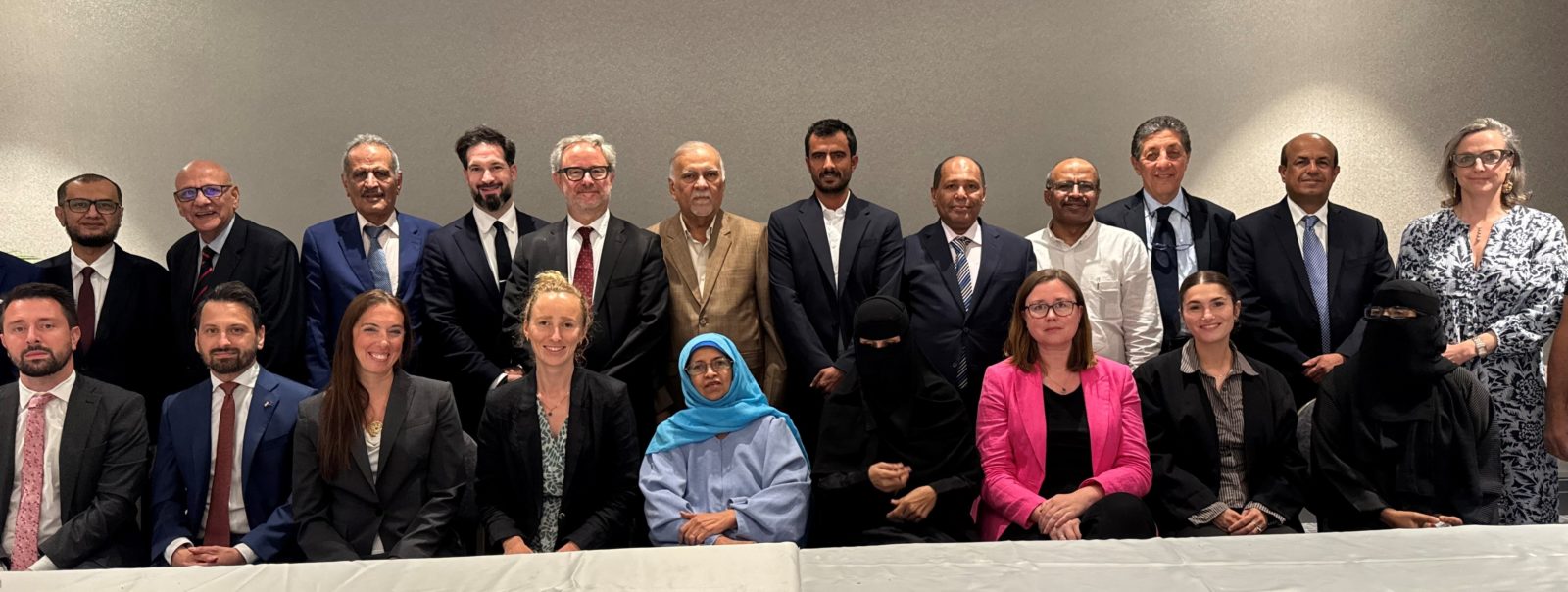
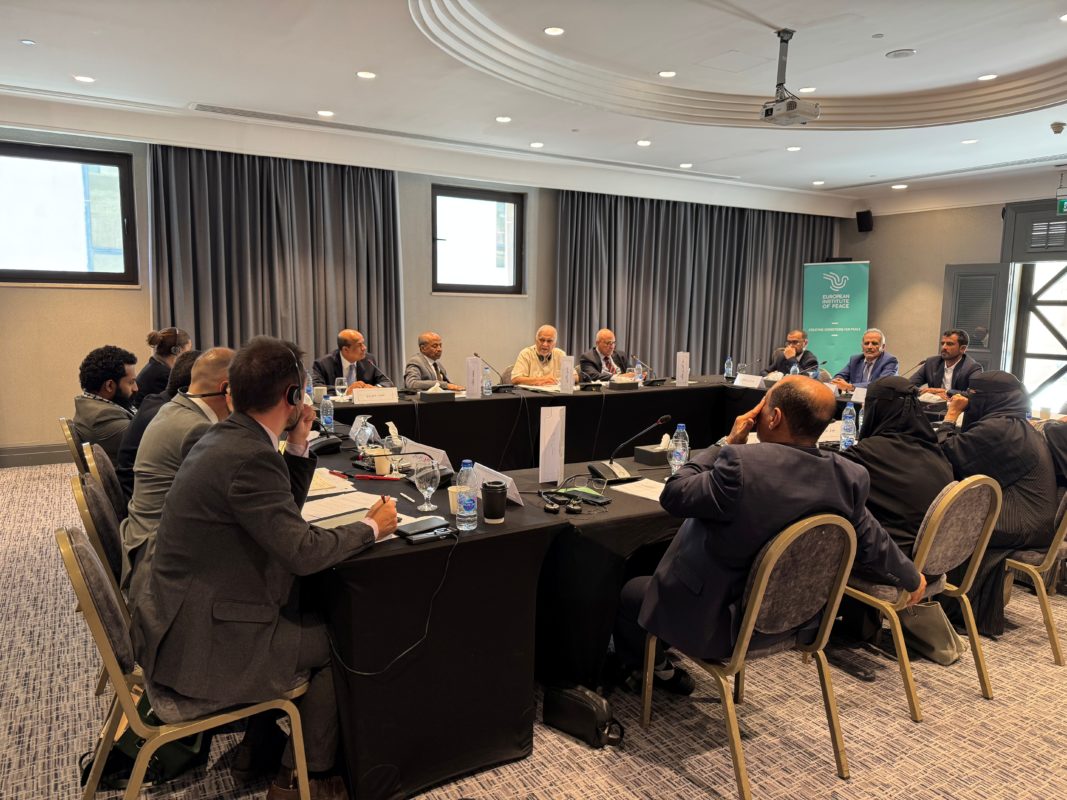
- The European Institute of Peace held the Fourth convening of the Southern Dialogue Process in Yemen in the period of 5–7 July 2025 in Amman, the Hashemite Kingdom of Jordan. The dialogue included representatives from the following entities: Supreme Council of Southern Revolutionary Movement (Hirak), Nahdha (Renaissance) Movement for Peaceful Change, Southern Movement (Hirak) Participating in the National Dialogue Conference, Southern National Coalition, Committee of the Peaceful Sit-In in al-Mahra Governorate, United Alliance of the People of Shabwa, Hadhramaut National Council, Shabwa National General Council, and Southern Women for Peace Group.
- Participants reviewed the political, economic, and security conditions in the southern governorates and Yemen as a whole, noting the deteriorating living conditions, lack of basic services, and insecurity in the capital city of Aden, and other areas in southern Yemen.
- Participants call on the Presidential Leadership Council, the government, and local authorities to take immediate action to address the crisis affecting citizens’ lives and livelihoods. They emphasize the need to reform local authorities, whose performance has contributed to the worsening situation, and warn of the dangers of continued deterioration without comprehensive solutions.
- Participants reject violence and the use of force to achieve political goals or impose a political reality on any region. They condemn the arrests and enforced disappearances of many political, religious, and social figures in Aden. They also reject recent threats to use military force to impose a political reality on the people of Hadhramaut, which violates the accepted rules of political action.
- Participants express their full support to the women’s revolution in Aden, Abyan, and Lahj, who have been demanding a decent living and basic services such as electricity, water, healthcare, education, and salaries during their weekly demonstrations. They condemn the repression and arbitrary arrests of women in Aden and reject intimidation, threats, and harm against them. They stress the need to protect women and activists from violations and harassment and to respect their rights, including freedom of expression and peaceful protest. They call on the authorities to take the necessary measures to meet the women’s legitimate demands and express regret over the international community’s lack of support for the women’s revolution.
- The participants have agreed in principle to establish a political platform to enhance consultations and cooperation among them and to follow up on this issue in the coming period.
- Participants discussed ways for the southern Yemenis to participate in the political process and how to express their position to the Yemeni public, regionally, and internationally. They emphasize the importance of regional countries and the international community in playing a positive role in achieving peace in Yemen.
- Participants agree on the need to develop a vision for political, economic, and security reform considering the challenges facing the country’s Presidential Leadership Council and government, as well as the turbulent political conditions in many southern Yemeni governorates. A working group has been formed among dialogue participants to prepare a paper for urgent discussion, focusing on developing the political system and achieving national reconciliation while ensuring accountability.
- Participants stress the need for gradual and balanced economic reform, considering the suffering of the Yemeni people. They emphasize that all state revenues should be deposited in the Central Bank of Yemen and warn against floating the customs exchange rate of the US dollar, which could harm citizens’ interests in the southern governorates and Yemen as a whole. They note that further economic deterioration could lead to more disintegration, or even complete collapse of state functions.
- Participants also highlight the importance of unifying military and security forces under the government’s Defence and Interior institutions, according to the Riyadh Agreement, and reject any armed groups that operate outside of the law.
- Participants commend the significant meeting they held with ambassadors and diplomats representing friendly countries, including the European Union, the United States, the United Kingdom, and the Netherlands, as well as the Office of the UN Special Envoy for Yemen, to discuss developments in Yemen, particularly in the southern governorates.

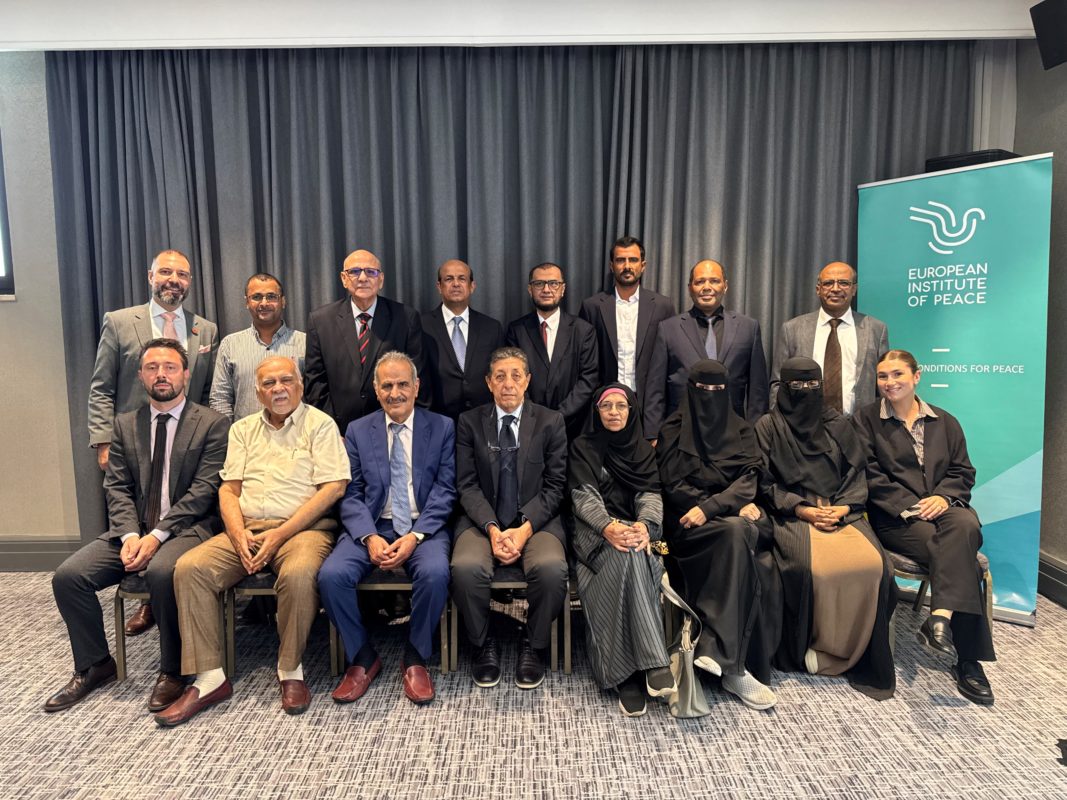
This document was produced as part of an ongoing dialogue project facilitated by the European Institute of Peace to foster trust and convergence between political components in southern Yemen and to support the efforts of the UN Special Envoy for Yemen. This document has been produced with the financial assistance of the European Union. Its contents are the sole responsibility of the European Institute of Peace and can under no circumstances be regarded as reflecting the position of the European Union.


