
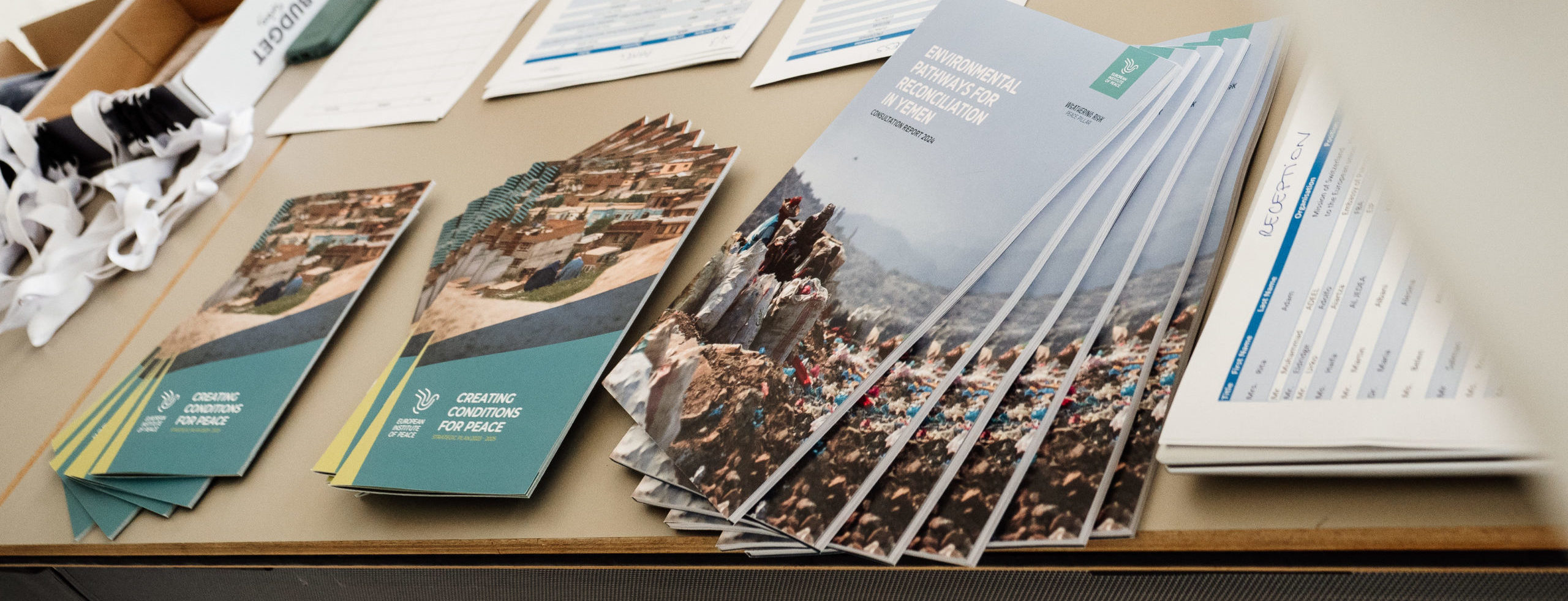
Climate, Peace, and Security Consultation in Yemen – Results Report 2026
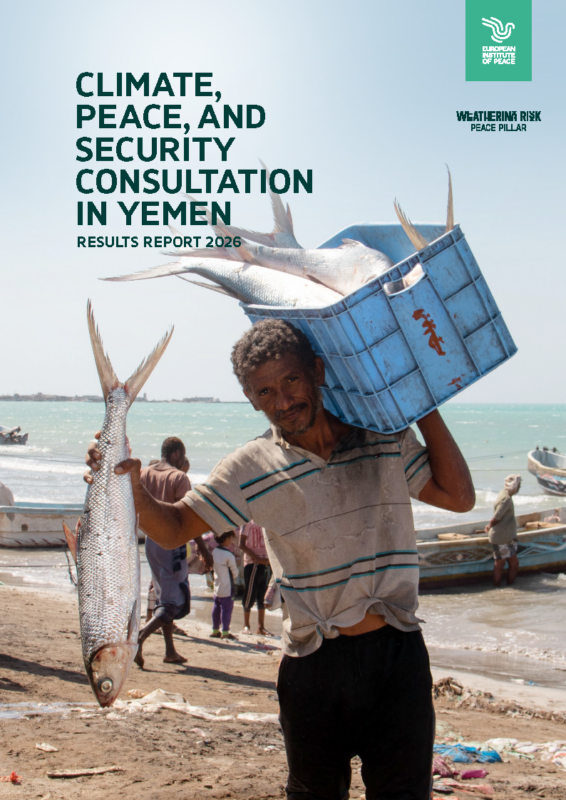
This report presents the results of an extensive consultation that reached out to over 3,600 people in Yemen as part of the project Environmental Pathways for Reconciliation in Yemen, which aims to support locally led and sustainable peace by using the environment as an entry point and key element of peacemaking. It is implemented by the European Institute of Peace with support from the German Federal Foreign Office and is part of the Weathering Risk Peace Pillar led by adelphi.
The project builds upon the findings of a prior consultation on conflict, justice and reconciliation that reached out to 15,870 individuals facilitated by the Institute in 2020–2021. It found that the environmental issues ranked among the highest priorities of the local population in the context of the search for peace and reconciliation.
To better understand what environment means to Yemenis, and why it matters in the context of the conflict, the Institute rolled out a second consultation specifically on natural resources, environment and climate change. Conducted between 2023 and 2024, this environmental security consultation reached a total of 3,694 additional people across the thirteen governorates of Aden, Taiz, Marib, Al-Mahra, Al-Hodeidah, Shabwah, Sana’a, Al-Dhale’, Hajjah, Hadramawt, Al-Jawf, Abyan, and Ibb. It consisted of a survey conducted with ordinary citizens, whose views are often overlooked in political and peace efforts, as well as semi-structured focus group discussions and key informant interviews with influential individuals.
The results of the consultation reveal the local impact of natural resources, environmental and climate risks on social cohesion, human security, and, more importantly, their implications in driving conflict. This report compiles the results and examines the environmental dimension of local grievances and conflict further by exploring Yemenis’ perceptions of environmental issues, their impact on peace and security, and existing or potential environmental peacemaking solutions. Moreover, the analysis provides insights into the gaps and potential entry points when addressing these risks, with a focus on contributing to building peace and reconciliation, so that peacemakers and peacebuilders, as well as environmental and humanitarian actors from the local to the international level, can be better informed in their policymaking and programming.


