
في 24 فبراير 2026، نظم المعهد الأوروبي للسلام حواراً عن بُعد بين ممارسين وخبراء بعنوان «التحديات والفرص أمام مشاركة النساء في حوكمة وإدارة المياه في اليمن». أدار هذا النقاش كل من هشام العميسي (المستشار الأول للشؤون اليمنية) وكاميلا ريزنفيلد (المستشارة الأولى لشؤون الإدماج وعمليات السلام)، وجمع ناشطات ميدانيات من محافظات يمنية مختلفة – بينها عدن وتعز وحضرموت والمهرة ومأرب – ومن بينهم وسيطات، ومهندسات بيئة، ومسؤولات محليات، وقياديات من المجتمع المدني، ومقدمات مساعدة قانونية، وممثلات يعملن مع النازحين والمجتمعات المهمشة.
في جوهره، أكد النقاش بوضوح لا يقبل الجدل نقطة واحدة: عدم الاكتفاء بالحضور الشكلي للنساء بل إشراكهن بشكل حقيقي وهادف ودعمهن بموارد كافية وحمايتهن بفعالية، كون ذلك سيساعد في تحوّل إدارة المياه من كونها عاملاً يغذي التوتر والهشاشة إلى أداة قوية لبناء السلام وتعزيز التماسك الاجتماعي وبناء القدرة على الصمود على المدى الطويل.
افتتحت بولين شوفو (مسؤولة برنامج النوع الاجتماعي وبناء السلام)الحوار بوضعه في سياق المبادرة البحثية الأوسع «كسر الحواجز، صنع السلام» الممولة من وزارة الخارجية الألمانية. وأوضحت السؤال التوجيهي للمبادرة: ما الذي يُمكّن فعلياً من مشاركة النساء المؤثرة في عمليات السلام، بعيداً عن الشعارات؟ ومستندة إلى أحدث نتائج أبحاث المعهد، أكدت “بولين” استمرار بُنية النظام الذكوري المتجذّر التي لا تزال تشكل هياكل السلام الرسمية. كما أبرزت نمطاً متكرراً يظهر عبر سياقات مختلفة وهو: حين يرتكز بناء السلام على الواقع المحلي – أي الأرض وسبل العيش والبيئة والبقاء اليومي – لا تكون النساء مجرد أطراف هامشية، بل هن فاعلات محوريات.
من جانبها، أطّرت كاميلا ريزنفيلد (المستشارة الأولى لشؤون الإدماج وعمليات السلام) النقاش مستعينة بتجارب مقارنة من عمليات سلام في سياقات مثل كولومبيا. وأشارت إلى أدلة تثبت أن عمليات السلام الشاملة أكثر استدامة، لكنها شددت أيضاً أنه في لحظات تعثر أو تشتت المفاوضات على المستوى الوطني، تصبح المبادرات المرتكزة محلياً أكثر أهمية. وأضافت أن حوكمة البيئة – وإدارة المياه على وجه الخصوص – توفر مدخلاً ملموساً لبناء السلام من القاعدة إلى القمة. ورغم أنها غالباً لا تُصنف كـ «عمليات سلام»، فإن الوساطة المجتمعية حول الآبار وأنظمة الصرف الصحي والري والتلوث تشكل جهوداً يومية لحل النزاعات وتمنع العنف وتحافظ على التماسك الاجتماعي.
هذا وقدمت سعاد عبدالله (قائدة المشروع المحلي) أبرز النتائج من زيارتها الميدانية الأخيرة إلى عدن وحضرموت والمهرة، استناداً إلى مقابلات أجرتها مع وسيطات، ومسؤولين بيئيين، وفاعلات في المجتمع المدني، ونساء من المجتمعات المهمشة، حيث درست تقاطع إدارة المياه والنزاع مع أدوار النساء في اليمن. وفي هذا السياق، سلطت الضوء على ما يلي: (1) النساء وسيطات ناجحات لكنهن ما زلن مستبعدات، (2) الإقصاء المنهجي متأصل في المؤسسات، (3) المبادرات التي تقودها النساء ناجحة لكن غياب الدعم يعطلها ويوقفها، (4) المجموعات المهمشة تعاني في صمت.
هذا وركزت المشاركات على التحديات والفرص لتمكين المبادرات المحلية التي تقودها النساء، وتعزيز مشاركتهن في حل النزاعات المتعلقة بالمياه وإدارة الموارد. كما ناقشوا إمكانية استغلال ملف المياه كأداة لبناء السلام، وبناء الثقة، والدبلوماسية. وتقدمت المشاركات بتوصيات محددة موجهة للمجتمع الدولي لمعالجة هذه التحديات، مع التركيز بشكل خاص على تجاوز العوائق أمام إدماج وإشراك النساء.
العوائق والتحديات الرئيسية
حددت المشاركات شبكة مترابطة ومعقّدة من العوائق الهيكلية والسياسية والأمنية التي تقيّد مشاركة النساء الفاعلة في حوكمة وإدارة المياه وبناء السلام البيئي في اليمن.
على المستوى المؤسسي، تظل النساء مغيّبات إلى حد كبير عن لجان تنسيق الموارد، وعن عمليات التخطيط والتقييم والتنفيذ. وحيثما كنّ حاضرات، فإن تمثيلهن غالباً ما يكون رمزياً – أي تعيينات مدفوعة بمتطلبات المانحين وليس انطلاقاً من قيادة حقيقية. كثير من النساء العاملات في القطاع الحكومي يفتقرن إلى صلاحيات رسمية في مجال السياسة أو صنع القرار، وإلى تفويض واضح أو مسؤوليات محددة، ويواجهن اسلوب متجاهل أو متعالِ عندما يطالبن بحقوقهن المهنية. تُضاعف المؤسسات العامة الهشة والمشرذمة من هذا الإقصاء: فَجمع بيانات غير دقيقة، وغياب الشفافية من الوزارات، وتداخل الاختصاصات المؤسسية، والفساد، ونقص الخبرة الفنية، كلها تقوّض تماسك واتساق السياسات واستدامة المشاريع.
تعزز الهياكل الاجتماعية والسياسية هذا التهميش والاقصاء. فَشبكات السلطة الذكورية المهيمنة، وأنظمة المحسوبية الحزبية، وغياب الإرادة السياسية الحقيقية، كلها تستبعد النساء اللواتي لا يملكن دعماً سياسياً قوياً بشكل منهجي. كما أن النساء المهمشات، والريفيات، والنازحات، والشابات، وذوات الإعاقة، يُقصين بشكل خاص من حيز صنع السياسات، بينما تفشل المشاريع قصيرة الأجل والقائمة على التمويل المؤقت في معالجة هذه العوائق المتجذرة، ويبقى التمويل الموجه للمبادرات التي تقودها النساء أو المبادرات النسوية غير كافٍ وغير مستقر.
هذا وتُعدّ المخاطر الأمنية جسيمة، حيث تواجه الوسيطات والمدافعات عن قضايا البيئة الترهيب من الجماعات المسلحة، وحملات التشهير، والتهديدات لعائلاتهن، وفي بعض الحالات الاعتقال. ومع هيمنة سياق يتعرض فيه حتى كبار المسؤولين الذكور للهجوم، يُفاقم غياب أطر الحماية من هشاشة الدور القيادي للنساء. فَحتى الوزيرات المعينات حديثاً يواجهن تهديدات بسبب انعدام آليات الحماية. علاوة على ذلك، فإن الظروف الأمنية الهشة وانتشار السلاح يجعلان حتى النزاعات المائية البسيطة قابلة للتصعيد إلى مواجهات مسلحة.
تفاقم ديناميكيات النزاع حول المياه من مواطن ضعف النساء. استُخدمت المياه كسلاح حرب من خلال قطع الإمدادات عمداً وتلويثها بشكل مقصود. كما أن الصدمات المناخية – بما في ذلك الأعاصير في المحافظات الشرقية – دمرت بنى تحتية كانت أصلاً تفتقر إلى القدرة على التكيّف مع الصدمات. وفي مناطق النزوح، يؤجج التوزيع غير العادل وغير المتكافئ للمياه التوترات، وغالباً ما يضر ذلك الأرامل والنساء اللواتي لا يدعمهن رجال. على مستوى الأسرة، يساهم الضغط البيئي في تصاعد العنف القائم على النوع الاجتماعي، بينما تقضي النساء والفتيات ساعات طويلة في جلب المياه، مما يحد من فرصهن في الحصول على التعليم، وفرص كسبهن للدخل، ومشاركتهن في الحيز المدني.
أخيراً، تحدّ القيود المفروضة على التنقل، وعوائق الحصول على التأشيرات، والاستحواذ النخبوي على الفرص، من مشاركة النساء والشباب في المنتديات الدولية المتعلقة بالمناخ والمياه. تواجه الناشطات البيئيات الشابات هجمات على مصداقيتهن من قبل «الخبراء» المُتمكِّنين، مما يقلص أكثر من المساحة المدنية. وتكشف هذه التحديات مجتمعة أن استبعاد النساء من حوكمة وإدارة المياه ليس أمراً عرضياً، بل هو متجذر هيكلياً عبر الأبعاد المؤسسية والاجتماعية والأمنية.
الفرص والتوصيات
أكدت المشاركات على الحاجة الملحة إلى اتخاذ الإجراءات التالية:
التمويل المستدام والتمكين الاقتصادي:
هناك حاجة ماسة إلى تمويل طويل الأمد ومَرن ومستدام للمبادرات التي تقودها النساء، خصوصاً في مجالات التكيف مع المناخ، وإدارة الموارد الطبيعية، والاقتصاد الأخضر. ينبغي أن يدعم هذا التمويل الوصول إلى الأسواق، والبرامج الصغيرة لتوليد الدخل، وتوسيع نطاق مبادرات الشابات الخريجات، مع تعزيز التعاون عبر القطاعات والعمل الجماعي. إلى جانب ذلك، على المنظمات وضع استراتيجيات خروج منظمة لتجنب تعطيل المشاريع المحلية، كما يجب أن تمتد الاستدامة المالية إلى السكان النازحين، من خلال تحسين ظروف المعيشة وتوزيع المياه بشكل متكافئ وعادل.
بناء القدرات والتدريب المتخصص وتبادل المعرفة:
يُعدّ التدريب الموجّه في مجال إدارة النزاعات البيئية، وإدارة الموارد الطبيعية، وحل النزاعات، والوساطة، ومهارات الإعلام أمراً أساسياً لتمكين النساء من أن يصبحن بنّاءات (صانعات) سلام فاعلات. فالاستثمار في مدربين محليين مؤهلين يضمن تثقيفاً يراعي السياق المحلي. كما أن إنشاء شبكات خبراء نسائية، وبرامج إرشاد مشتركة بين الأجيال، وشراكات مع الشباب – بما في ذلك مبادرات التثقيف البيئي (أو محو الأمية البيئية) في الجامعات – من شأنه أن يعزز تبادل المعرفة والابتكار وأفضل الممارسات عبر القطاعات.
المشاركة الجامعة وإشراك المجتمعات المحلية:
يجب إشراك النساء – بما في ذلك النازحات والريفيات وذوات الإعاقة والنساء من الفئات المهمشة – بشكل حقيقي وهادف في تصميم المشاريع واتخاذ القرارات والجهود الوساطية المحلية. يساهم رفع الوعي على مستوى المجتمع المحلي في إبراز النساء كوسيطات فاعلات وبنّاءات (صانعات) سلام بيئي، وليس كمستفيدات غير فاعلات. كما أن النُهُج التشاركية، مثل جمع البيانات، ومشاريع تجميع المياه، والحوار بين السكان النازحين والمجتمعات المضيفة، تعزز الشعور بالملكية والشفافية والتخطيط المراعي لظروف النزاع. فضلا عن ذلك، فإن إنشاء مراكز وساطة مجتمعية متخصصة تشارك فيها النساء من شأنه أن يعزز جهود بناء السلام المحلية.
توفير الحماية وصون الحقوق والاعتراف بدور الناشطات:
تشمل الحماية الشاملة للناشطات والوسيطات ضمان سلامتهن الذاتية، واستقرارهن المالي، وإعمال حقهن بالعمل، والاعتراف بدورهن داخل المؤسسات العامة وخارجها. ومن الضروري اتخاذ إجراءات متكاملة للتصدي للعنف القائم على النوع الاجتماعي، بما في ذلك العنف المنزلي المرتبط بالموارد. كما أن دعم اللوجستيات المرتبطة بسفر النساء وحصولهن على التأشيرات اللازمة للمشاركة في المنتديات الدولية، وتعزيز عمل المجالس الاستشارية النسائية والمنظمات المحلية، من شأنه أن يضمن ظهورهن المهني وتأثيرهن ومشاركتهن في صنع القرار الوطني.
السياسات والحوكمة وتعزيز المؤسسات:
يساهم تعزيز قدرات المؤسسات العامة في ردم الفجوات القائمة في الخبرات والاعتماد على بيانات غير دقيقة، ويضمن تخطيطاً مرناً يراعي ويتكيّف مع السياق. كما أن الالتزام بأطُر حقوق الإنسان، بما في ذلك اتفاقيات جنيف لعام 1949، يحمي الوصول العادل إلى المياه ويمنع استغلال الموارد في سياق النزاع. فضلا عن ذلك، من شأن إحياء الإرادة السياسية لتنفيذ الاتفاقيات الموجودة على الورق دون تطبيق – مثل اتفاق الحوبان – ودعم قواعد بيانات المياه التشاركية والرصد الشفاف، أن يضمن حوكمة الموارد بشكل مستدام وقائم على الحقوق.
المياه كأداة لبناء السلام:
تُعد إدارة المياه محور التدخلات المراعية للنزاعات، حيث ان تدريب مستخدمي المياه على إدارة هذه الموارد، وتحسين البنية التحتية في مخيمات النزوح، وتعزيز الحوار بين النازحين والمجتمعات المضيفة، من شأنه أن يُعزّز نتائج مبادرات بناء السلام. كما أن دعم المشاريع المحلية التي تولد دخلاً من خلال مبادرات مرتبطة بالمياه، وإنشاء مجالس قانونية متخصصة في شؤون المياه، وإدراج المياه كركيزة أمنية في محادثات السلام، سيعزز دور النساء في بناء السلام البيئي وإدارة الموارد بشكل مستدام.
—- إن تمكين المبادرات المحلية التي تقودها النساء وتعزيز مشاركتهن في حل النزاعات المتعلقة بالمياه أمر حاسم لإدارة المياه بشكل مستدام، ذلك أن النساء غالباً ما يتحملن المسؤولية الأساسية عن جلب المياه واستخدامها في كثير من المجتمعات. وعليه، سيؤدي إشراكهن إلى نتائج أكثر فعالية وإلى تحقيق الإنصاف والعدالة. علاوة على ذلك، يمكن أن يفضي تنفيذ الاستراتيجيات بالتعاون مع الحكومات والمنظمات غير الحكومية والمجتمعات إلى أنظمة مياه أكثر فعالية، ومساواة أكبر بين الجنسين، وتقليل النزاعات
يقدّم هذا التقرير نتائج مشاورات واسعةالنطاق شملت أكثر من ٣٦٠٠ شخص في اليمن أُجريت ضمن مشروع “المسارات البيئية للمصالحة في اليمن”، الذي يهدف إلى دعم السلام المستدام بقيادة محلية من خلال استخدام البيئة كمدخل وعنصر أساسي في جهود صنع السلام. يُنفذ مشروع المسارات البيئية للمصالحة من قِبل المعهد الأوروبي للسلام بدعم من وزارة الخارجية الألمانية، وهو جزء من ركيزة السلام لمقاومة المخاطر بقيادة أديلفي
يبني المشروع على نتائج مشاورات سابقة حول النزاع والعدالة والمصالحة، شملت ١٥٨٧٠ مشاركًا، نفّذها المعهد خلال عامي ٢٠٢١ – ٢٠٢٠. وقد أظهرت تلك المشاورات أن القضايا البيئية تُعدّ من بين أهم أولويات في سياق البحث عن السلام والمصالحة
ولفهمٍ أعمق لما تعنيه البيئة لليمنيين، ولماذا تكتسب أهميتها في سياق النزاع، أطلق المعهد جولة ثانية من المشاورات ركّزت تحديدًا على الموارد الطبيعية والبيئة وتغيّر المناخ. أُجريت هذه المشاورات المتعلقة بالأمن البيئي على ثلاث مراحل بين عامي ٢٠٢٣ و ٢٠٢٤، وصلت إلى ٣,٦٩٤ شخصًا إضافيًا في ثلاث عشرة محافظة: عدن، تعز، مأرب، المهرة، الحديدة، شبوة، صنعاء، الضالع، حجة، حضرموت، الجوف، أبين، وإب. وشملت المشاورة استطلاعًا للرأي أُجري مع شريحة واسعة من المواطنين العاديين الذين غالبًا ما يتم تجاهل آراؤهم في الجهود السياسية وجهود السلام، بالإضافة إلى مناقشات جماعية مركزة شبه منظمة ومقابلات مع مصارد معلومات رئيسيين وشخصيات مؤثرة
تكشف نتائج المشاورات عن تأثير الموارد الطبيعية والمخاطر البيئية والمناخية على التماسك الاجتماعي والأمن الإنساني، والأهم من ذلك، دورها في تغذية النزاع. ويجمع هذا التقرير تلك النتائج ويحلل البعد البيئي للمظالم والنزاعات من خلال استكشاف مفاهيم اليمنيين للقضايا البيئية، وتأثيرها على السلام والأمن، وماهي الحلول القائمة أو الممكنة لصنع السلام البيئي. كما يقدّم حول الفجوات ونقاط الانطلاق المحتملة لمعالجة هذه المخاطر، مع التركيز على المساهمة في بناء السلام والمصالحة، بحيث يصبح بناة السلام، إلى جانب الفاعلين البيئيين والإنسانيين على المستويات المحلية والدولية، أكثر قدرة على اتخاذ قرارات مستنيرة في سياساتهم وبرامجهم
The European Institute of Peace is thrilled to announce its latest report, presenting the findings of an extensive consultation with over 3,600 Yemenis about environmental aspects of conflict, peace and security. The consultation was conducted as part of the project Environmental Pathways for Reconciliation in Yemen, which aims to support locally led and sustainable peace by using the environment as an entry point and key element of peacemaking.
The project builds upon the findings of a prior consultation that reached out to 15,870 individuals facilitated by the Institute in 2020-21, which found that environmental issues ranked among the highest priorities of the local population in the context of the search for peace and reconciliation.
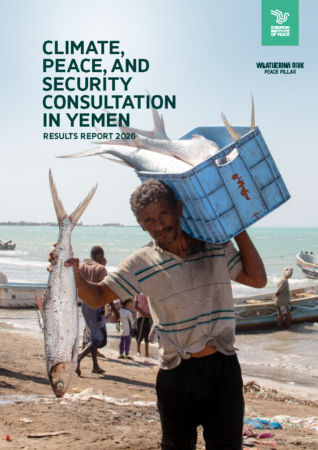
To better understand what environment means to Yemenis, and why it matters in the context of the conflict, the Institute rolled out a second consultation specifically on natural resources, environment and climate change. Conducted in three waves between 2023 and 2024, this environmental security consultation reached a total of 3,694 additional people across the thirteen governorates of Aden, Taiz, Marib, Al-Mahra, Al-Hodeidah, Shabwah, Sana’a, Al-Dhale’, Hajjah, Hadramawt, Al-Jawf, Abyan, and Ibb. It consisted of a survey conducted with ordinary citizens, whose views are often overlooked in political and peace efforts, as well as semi-structured focus group discussions and key informant interviews with influential individuals.
The results of the consultation reveal the local impact of natural resources, environmental and climate risks on social cohesion, human security, and, more importantly, their implications in driving conflict. This report compiles the results and examines the environmental dimension of local grievances and conflict further by exploring Yemenis’ perceptions of environmental issues, their impact on peace and security, and existing or potential environmental peacemaking solutions. Moreover, the analysis provides insights into the gaps and potential entry points when addressing these risks, with a focus on contributing to building peace and reconciliation, so that peacemakers and peacebuilders, as well as environmental and humanitarian actors from the local to the international level, can be better informed in their policymaking and programming.
Key findings
The results of this consultation reveal an urgency to implement conflict resolution and prevention approaches that are sensitive to the perspectives, needs, and priorities of Yemenis in a context of multifaceted security risks that are significantly connected to natural resources, environment and climate change. The consultation also highlighted the major opportunities for peacemaking through environmental dialogue, conflict-sensitive natural resources management, environmental protection, and climate change adaptation efforts, some of which are already ongoing, led by local and international actors alike. Lastly, the results highlight a need to promote more efforts to better understand and address environment-related security risks in Yemen, including their impact on livelihoods and community cohesion, and the untapped opportunities to leverage them for peacemaking at the community and national levels.
- Yemenis across the country are knowledgeableand concerned about climate change and environmental degradation. Seven out of ten Yemenis recognise climate change as having at least a moderate impact on their daily lives, withnearly 85% expressing concern.
- Yemen’s population faces a myriad of environmental risks affecting livelihoods and human security. As over 80% of survey respondents consider the natural environment essential or important to secure their income, it is deeply worrying that 92% perceive a reduction in the availability of and access to natural resources in recent years, notably in water, gas, and fuel.
- Unaddressed environmental issues drive tensions in Yemen, especially at the local level. Over half of respondents reported tensions or conflicts in their districts due to environmental factors. Pollution and water scarcity are the main environmental issues perceived as leading to conflict.
- Addressing environmental risks with an integrated approach can be a solution to build resilience and social cohesion in Yemen, including as part of the peace process. Over 80% of Yemenis consulted consider it essential to respond to climate change and protect the environment in the short term. A significant majority (57%) also believe that environmental challenges should be integrated into peace negotiations.
Given the severity of the environmental crisis and the impact of the national conflict on governance and the provision of basic services, it is no surprise that local institutions are weak and almost non-existent in some places. In this context, rather than a demand for improved environmental governance as a precursor to sustainable peace, the issues identified in this report provide an opportunity to build an approach to environmental peacemaking that engages the agency of those most directly affected by the conflict and the environmental crisis. The report provides a basis to inform action that helps build, rather than wait for, accountable governance structures. The core of that structure lies in three areas:
- Engagement with the environmental concerns of the affected population,
- Encouragement and facilitation of their participation in identifying plausible strategies to address the environmental and climate risks in relation to the ongoing conflict, and
- Around these processes, build effective institutions that can both implement and be held accountable.
This report is part of the Environmental Pathways for Reconciliation in Yemen project, implemented by the European Institute of Peace with support from the German Federal Foreign Office as part of the Weathering Risk Peace Pillar led by adelphi.
This report presents the results of an extensive consultation that reached out to over 3,600 people in Yemen as part of the project Environmental Pathways for Reconciliation in Yemen, which aims to support locally led and sustainable peace by using the environment as an entry point and key element of peacemaking. It is implemented by the European Institute of Peace with support from the German Federal Foreign Office and is part of the Weathering Risk Peace Pillar led by adelphi.
The project builds upon the findings of a prior consultation on conflict, justice and reconciliation that reached out to 15,870 individuals facilitated by the Institute in 2020–2021. It found that the environmental issues ranked among the highest priorities of the local population in the context of the search for peace and reconciliation.
To better understand what environment means to Yemenis, and why it matters in the context of the conflict, the Institute rolled out a second consultation specifically on natural resources, environment and climate change. Conducted between 2023 and 2024, this environmental security consultation reached a total of 3,694 additional people across the thirteen governorates of Aden, Taiz, Marib, Al-Mahra, Al-Hodeidah, Shabwah, Sana’a, Al-Dhale’, Hajjah, Hadramawt, Al-Jawf, Abyan, and Ibb. It consisted of a survey conducted with ordinary citizens, whose views are often overlooked in political and peace efforts, as well as semi-structured focus group discussions and key informant interviews with influential individuals.
The results of the consultation reveal the local impact of natural resources, environmental and climate risks on social cohesion, human security, and, more importantly, their implications in driving conflict. This report compiles the results and examines the environmental dimension of local grievances and conflict further by exploring Yemenis’ perceptions of environmental issues, their impact on peace and security, and existing or potential environmental peacemaking solutions. Moreover, the analysis provides insights into the gaps and potential entry points when addressing these risks, with a focus on contributing to building peace and reconciliation, so that peacemakers and peacebuilders, as well as environmental and humanitarian actors from the local to the international level, can be better informed in their policymaking and programming.
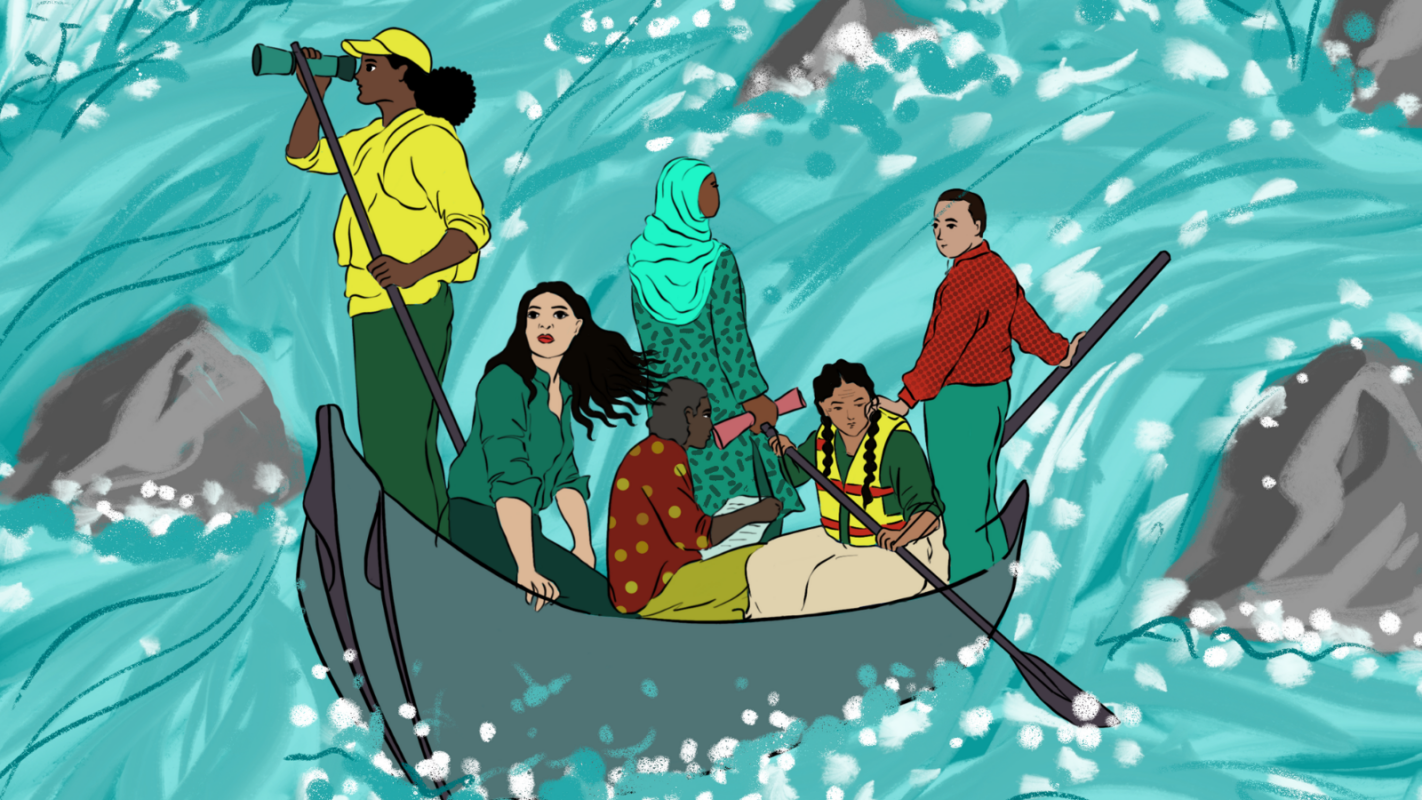
On 24 February 2026, the European Institute of Peace organised an online practitioners and experts dialogue on “Challenges and Opportunities for Women’s Participation in Water Management in Yemen”.This discussion, facilitated by Hisham ِAl-Omeisy (Senior Yemen Advisor) and Camilla Riesenfeld (Senior Advisor on Inclusion and Peace Processes), brought together frontline activists from different Yemeni governorates – including Aden, Taiz, Hadramout, Al-Mahrah and Marib — among them women mediators, environmental engineers, local officials, civil society leaders, legal aid providers, and representatives working with displaced and marginalised communities.
In essence, the discussion made one point unmistakably clear: when women are not merely present but meaningfully included, adequately resourced, and effectively protected, water governance shifts from being a driver of tension and fragility to becoming a powerful vehicle for peacebuilding, social cohesion, and long-term resilience.
Pauline Chauveau (Gender and Peacemaking Programme Officer) opened the dialogue by situating it within the broader Breaking Barriers, Making Peace research initiative funded by the German Federal Foreign Office. She outlined the initiative’s guiding question: what genuinely enables women’s meaningful participation in peace processes — beyond rhetoric? Drawing on the Institute’s most recent research findings, she underscored the persistence of entrenched patriarchal power structures that continue to shape formal peace architectures. She also highlighted a consistent pattern emerging across contexts: when peacebuilding is grounded in local realities — in land, livelihoods, environment, and daily survival — women are not peripheral actors. They are central actors.
Camilla Riesenfeld (Senior Advisor on Inclusion and Peace Processes) framed the discussion by drawing on comparative experiences from peace processes in contexts such as Colombia. She highlighted evidence demonstrating that inclusive peace processes are more sustainable but also underscored that in moments where national-level negotiations are stalled or fragmented, locally anchored initiatives become even more critical. Environmental governance — and water management in particular — offers a tangible entry point for bottom-up peacebuilding. While often not labelled as “peace processes,” community-level mediation over wells, sewage systems, irrigation, or pollution constitutes daily conflict resolution work that prevents violence and sustains social cohesion.
Suaad Abdullah (Local Project Lead) presented key findings from her recent field mission to Aden, Hadramout, and Al-Mahrah, based on interviews with female mediators, environmental officials, civil society actors, and women from marginalised communities, where she examined how water governance, conflict, and women’s roles intersect in Yemen. There, she highlighted that (i) women are successful mediators but still left out, (ii) systematic exclusion is built into institutions, (iii) women-led initiatives work but lack of support halts it, and (iv) marginalized groups suffer in silence.
Participants highlighted both the challenges and opportunities for empowering women-led local initiatives and enhancing women’s participation in water-related conflict resolution and resource management. They also discussed the potential of leveraging water as a tool for peacebuilding, confidence-building, and diplomacy. In addition, participants put forward targeted recommendations for the international community to address these challenges, with particular emphasis on overcoming barriers to women’s inclusion.
Key barriers and challenges
Participants identified a dense web of structural, political, and security-related barriers constraining women’s meaningful participation in water governance and environmental peacebuilding in Yemen.
At the institutional level, women remain largely absent from resource-coordination committees and from planning, assessment, and implementation processes. Where present, their representation is often symbolic — appointments driven by donor requirements rather than leadership. Many women in government lack formal policy or decision-making powers, clear mandates, or defined responsibilities, and face dismissive attitudes when asserting their professional rights. Weak and fragmented public institutions further compound exclusion: inaccurate data collection, lack of transparency from ministries, unclear institutional mandates, corruption, and limited technical expertise undermine both policy coherence and project sustainability.
Social and political structures reinforce this marginalization. Male-dominated power networks, party-based patronage systems, and the absence of political will systematically sideline women without political backing. Marginalized, rural, displaced, young and disabled women are particularly excluded from policymaking spaces. Short-term, project-based interventions fail to address these entrenched barriers, while funding for women-led and feminist initiatives remains insufficient and unpredictable.
Security risks are acute. Women mediators and environmental defenders face intimidation from armed groups, smear campaigns, threats to their families, and, in some cases, arrest. In a context where even senior male officials are attacked, the absence of protection frameworks makes women’s leadership particularly precarious. Even newly appointed female ministers face threats due to the absence of protection frameworks. Moreover, fragile security conditions and widespread weaponization mean that even minor water disputes can escalate into armed confrontation.
Conflict dynamics around water further intensify gendered vulnerabilities. Water has been used as a weapon of war through deliberate cuts and contamination of supply. Climate shocks — including cyclones in eastern governorates — have destroyed infrastructure already lacking resilience. In displacement settings, inequitable water distribution fuels tensions, often disadvantaging widows and women without male support. At household level, environmental stress contributes to rising gender-based violence, while women and girls spend extensive time fetching water, limiting education, income generation, and civic engagement.
Finally, restricted mobility, visa barriers, and elite capture limit women and youth participation in international climate and water forums. Young women environmental activists face credibility attacks from entrenched “experts,” further shrinking civic space. Together, these challenges reveal that women’s exclusion from water governance is not incidental but structurally embedded across institutional, social, and security dimensions.
Opportunities and recommendations
Participants underlined the crucial need for the following measures:
Sustainable Funding and Economic Empowerment
There is a critical need for long-term, flexible, and sustainable funding for women-led initiatives, particularly in climate adaptation, natural resource management (NRM), and the green economy. Funding should support market access, small income-generating programs, and scaling of young women graduates’ initiatives, while fostering cross-sector collaboration and collective action. Organizations must ensure structured exit strategies to avoid disrupting local projects. Financial sustainability should also extend to displaced populations, improving living conditions and equitable water distribution.
Capacity Building, Specialized Training, and Knowledge Exchange
Targeted capacity building in environmental conflict management, NRM, conflict resolution, mediation, and media skills equips women to become effective peacebuilders. Investment in qualified local trainers ensures context-sensitive learning. Establishing women’s expert networks, inter-generational mentorship programs, and partnerships with youth—including environmental literacy initiatives in universities—promotes knowledge sharing, innovation, and best practices across sectors.
Inclusive Participation and Community Engagement
Women—including displaced, rural, disabled, and marginalized groups—must be meaningfully included in project design, decision-making, and local mediation efforts. Community-level awareness raising positions women as active mediators and environmental peacebuilders rather than passive beneficiaries. Participatory approaches, such as data collection, water-harvesting projects, and dialogue between displaced populations and host communities, enhance ownership, transparency, and conflict-sensitive planning. Establishing specialized community mediation centers with women’s participation further strengthens local peacebuilding efforts.
Protection, Rights, and Recognition of Women Activists
Holistic protection for women activists and mediators encompasses physical security, financial stability, labor rights, and recognition within public institutions and beyond. Integrated responses to gender-based violence, including resource-related domestic violence, are essential. Supporting women’s travel logistics and visas for participation in international forums and reinforcing the operation of female advisory councils and local organizations ensures their professional visibility, influence, and participation in national decision-making.
Policy, Governance, and Institutional Strengthening
Strengthening public institutions’ capacity addresses gaps in expertise, reliance on inaccurate data, and ensures adaptive, context-sensitive planning. Upholding human rights frameworks, including the 1949 Geneva Conventions, protects equitable water access and prevents conflict-related resource abuses. Reviving political will for agreements that exist on paper but lack implementation, such as the Al-Huban agreement, and supporting participatory water databases and transparent monitoring, ensures sustainable, rights-based resource governance.
Water as a Peacebuilding Tool
Water management is central to conflict-sensitive interventions. Training water users in resource management, improving infrastructure in displacement camps, and promoting dialogue between displaced and host communities strengthens peacebuilding outcomes. Supporting local projects that generate income through water-related initiatives, establishing legal councils on water, and integrating water as a security pillar in peace talks amplifies the role of women in environmental peacebuilding and sustainable resource management.
Empowering women-led local initiatives and enhancing their participation in water-related conflict resolution is crucial for sustainable water management, as women often bear the primary responsibility for water collection and use in many communities, leading to more effective and equitable outcomes when they are involved. Furthermore, implementing strategies collaboratively with governments, NGOs, and communities can lead to more effective water systems, greater gender equality, and reduced conflicts.
Yemen is one of the world’s most vulnerable countries to climate change, and for the past decades political conflicts have fragmented its society, strained its economy, and caused extreme humanitarian suffering. In this context of multifaceted political, humanitarian, and environmental crises, innovative entry points for dialogue are sorely needed.
The Environmental Pathways for Reconciliation (EPfR) project set out to support local and national actors to identify these entry points, with an innovative approach using environmental issues as a starting point for dialogue, reconciliation, and trust-building in Yemen.
Through consultations and community dialogues, the project reached out to Yemenis across 13 governorates. We convened local decision-makers, traditional leaders, civil society, and subject experts to identify key concerns, priorities, and opportunities to tackle environmental risks as part of conflict resolution and prevention. Through these dialogue spaces, Yemenis can identify locally led peacemaking solutions to address these risks and enhance resilience.
In this video, Yemeni citizens recount how their daily lives have been affected by environmental degradation, and discuss how taking part in the EPfR consultations and community dialogues has given them an arena to make their voices heard and to reflect upon the role of environmental changes and natural resources in peace efforts.
The EPfR project is implemented by the European Institute of Peace and is supported by the German Federal Foreign Office. It is part of the Weathering Risk Peace Pillar implemented by adelphi, the Berghof Foundation, the Centre for Humanitarian Dialogue and the European Institute of Peace. Learn more about the Weathering Risk Peace Pillar: https://weatheringrisk.org/en/peacepillar.
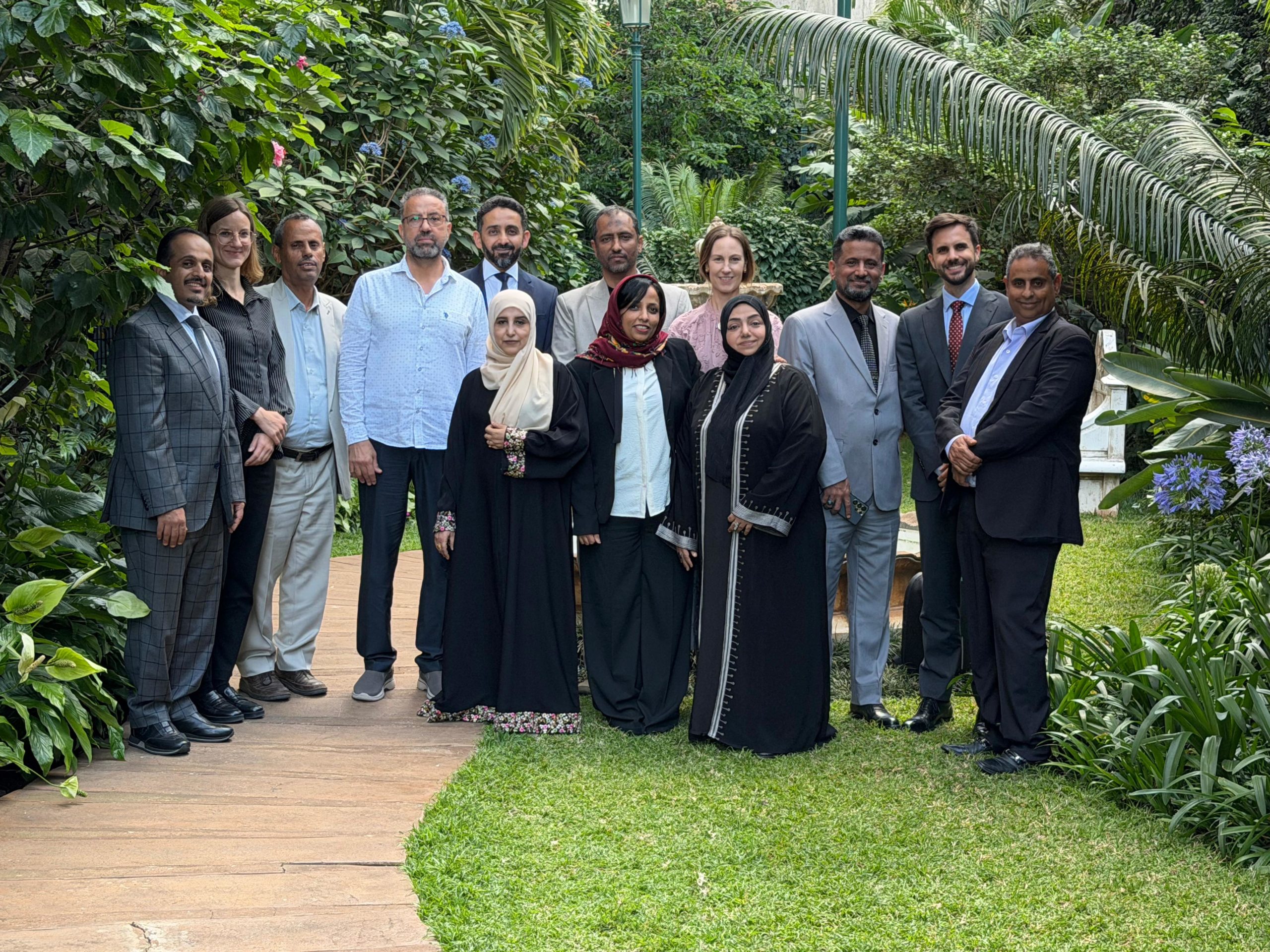
عُقد في نيروبي، كينيا، من 28 نوفمبر إلى 1 ديسمبر، الحوار الفني الثاني حول صنع السلام المناخي والبيئي في اليمن. واستند هذا الاجتماع إلى نجاح الاجتماعات الثنائية السابقة والحوار الفني الأول الذي عُقد في أغسطس 2025 في عمّان، والذي حقق تفاهمًا مشتركًا حول قضايا المياه، بما في ذلك دورها في سوء التكيف والنزاعات والصراعات. وخلال الحوار في نيروبي، بادر المشاركون إلى وضع رؤية مشتركة ومسودة خارطة طريق للتعاون لمعالجة ندرة المياه في اليمن.
كان هذا الاجتماع المشترك الثاني للمشاركين الفنيين والسياسيين للحكومة اليمنية والمجلس الانتقالي الجنوبي، والذي دعا إليه المعهد الأوروبي للسلام، في إطار عمل متفق عليه للحوار والتعاون البيئي. وتهدف هذه العملية إلى معالجة القضايا المتعلقة بالموارد الطبيعية والبيئة ومخاطر المناخ بشكل مشترك، دعماً لفوائد السلام في تحقيق الاستقرار والمصالحة وتعزيز القدرة على الصمود. وتضمن الحوار عروضاً تقديمية حول حوكمة وإدارة المياه على المستويين الوطني والمحلي، مما وفر فهماً دقيقاً أتاح إجراء مناقشات عملية تهدف إلى حل قضايا المياه الملحة بما يتماشى مع أولويات سياسات الجهات المعنية.
أجرى المشاركون مناقشات معمقة، وعززوا التفاهم المشترك حول تحديات المياه الأكثر إلحاحًا في اليمن وأثرها على المجتمعات المحلية. نوقشت خلال الحوار الفني الثاني مجالات العمل الاستراتيجية والحلول العملية على المدى القصير والمتوسط والطويل لتحسين إدارة موارد المياه، ودعم التوفير المستدام لخدمات المياه في المناطق الحضرية والريفية، وتحسين الإدارة البيئية، كل ذلك باتباع نهج يراعي ظروف النزاع ويدعم السلام.
على هامش جمعية الأمم المتحدة للبيئة، أتاحت العاصمة الكينية فرصةً ثمينة للمشاركين للقاء المنظمات الدولية المعنية بمواجهة مخاطر الأمن المناخي في منطقة القرن الأفريقي وشبه الجزيرة العربية. وفي زيارةٍ لمركز التنبؤ بالمناخ وتطبيقاته التابع للهيئة الحكومية الدولية المعنية بالتنمية (IGAD)، اطلع المشاركون على امكانية أن تتطور المخاطر الناجمة عن تغير المناخ والتدهور البيئي إلى كوارث ونزاعات، وكيفية الوقاية منها من خلال الإنذار المبكر والاستجابة لهذه المخاطر من خلال برامج التأهب.
كدراسة حالة، قامت الهيئة الحكومية الدولية المعنية بالتنمية (IGAD) بتحليل إعصار تيج، الذي ضرب ساحل المهرة في أكتوبر/تشرين الأول 2023. كما زار المشاركون مستشار الأمن المناخي التابع لبرنامج الأمم المتحدة للبيئة في الصومال للتعرف على مشروع رائد في جوهر، الصومال، يهدف إلى بناء القدرة على الصمود في مواجهة تغير المناخ وتحسين الأمن المائي والغذائي من خلال نهج متكامل يجمع بين بناء السلام والعمل المناخي.
المياه كأساس للصراع والتعاون في اليمن
في اليمن، حيث يُقدَّر أن حوالي 17 مليون شخص – أي ما يقرب من نصف السكان – يعانون من انعدام الأمن المائي، تتفاقم ندرة المياه الفعلية بسبب آثار النزاع المسلح، الذي قوَّض قدرة المجتمعات والسلطات على مواجهة المخاطر البيئية. في هذا السياق، يمكن للمياه أن تُفاقم التوترات، ولكنها قد تُشكِّل أيضًا مدخلًا للتعاون وبناء الثقة والحوار. تسعى عملية الحوار والتعاون البيئي التابعة للمعهد إلى تحويل القضايا البيئية من مصدر للخلاف إلى فرص لدعم السلام والاستقرار من خلال جهود مشتركة لتعزيز القدرة على الصمود في وجه المخاطر المناخية والبيئية. وقد مثّل الحوار الفني الأول حول صنع السلام المناخي والبيئي في اليمن، الذي اختُتم في أغسطس/آب 2025، نقطة انطلاق لاستكشاف هذه الفرص.
حول المشروع
يهدف مشروع “المسارات البيئية للمصالحة” (EPfR) إلى المساهمة في تحقيق سلام مستدام في اليمن من خلال الحوار والتعاون البيئي. ومن خلال نهجه الشامل، يُعزز المشروع أصوات اليمنيين في المناقشات السياسية ومناقشات السلام، مستخدمًا القضايا البيئية كمدخلات وعناصر للسلام. يُنفذ مشروع EPfR من قِبل المعهد الأوروبي للسلام بدعم من وزارة الخارجية الألمانية الاتحادية، وهو جزء من ركيزة السلام “مقاومة المخاطر” التي تقودها منظمة أديلفي. يمكنكم الاطلاع على المزيد حول المشروع على الموقع الإلكتروني www.epfryemen.org .
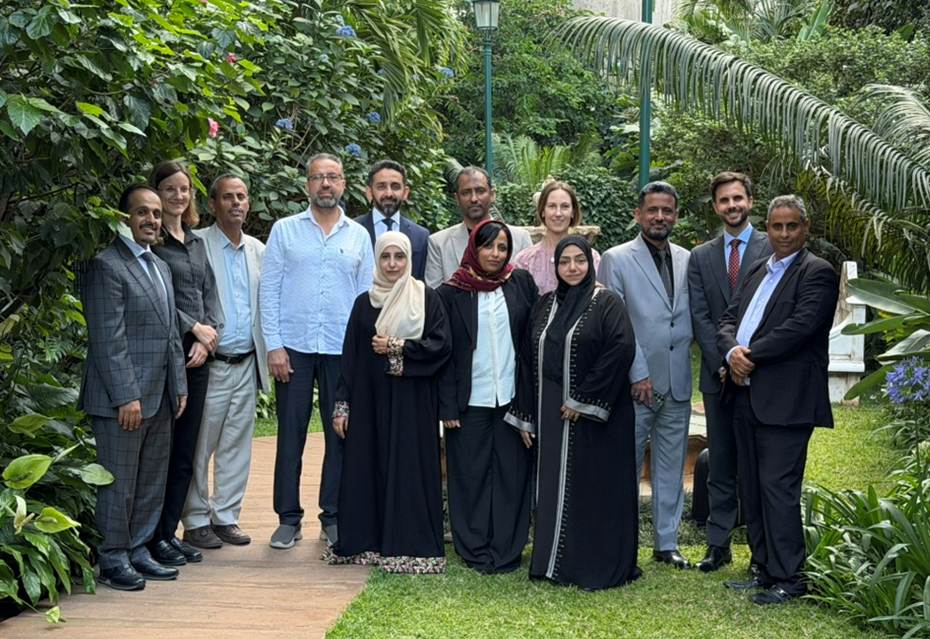
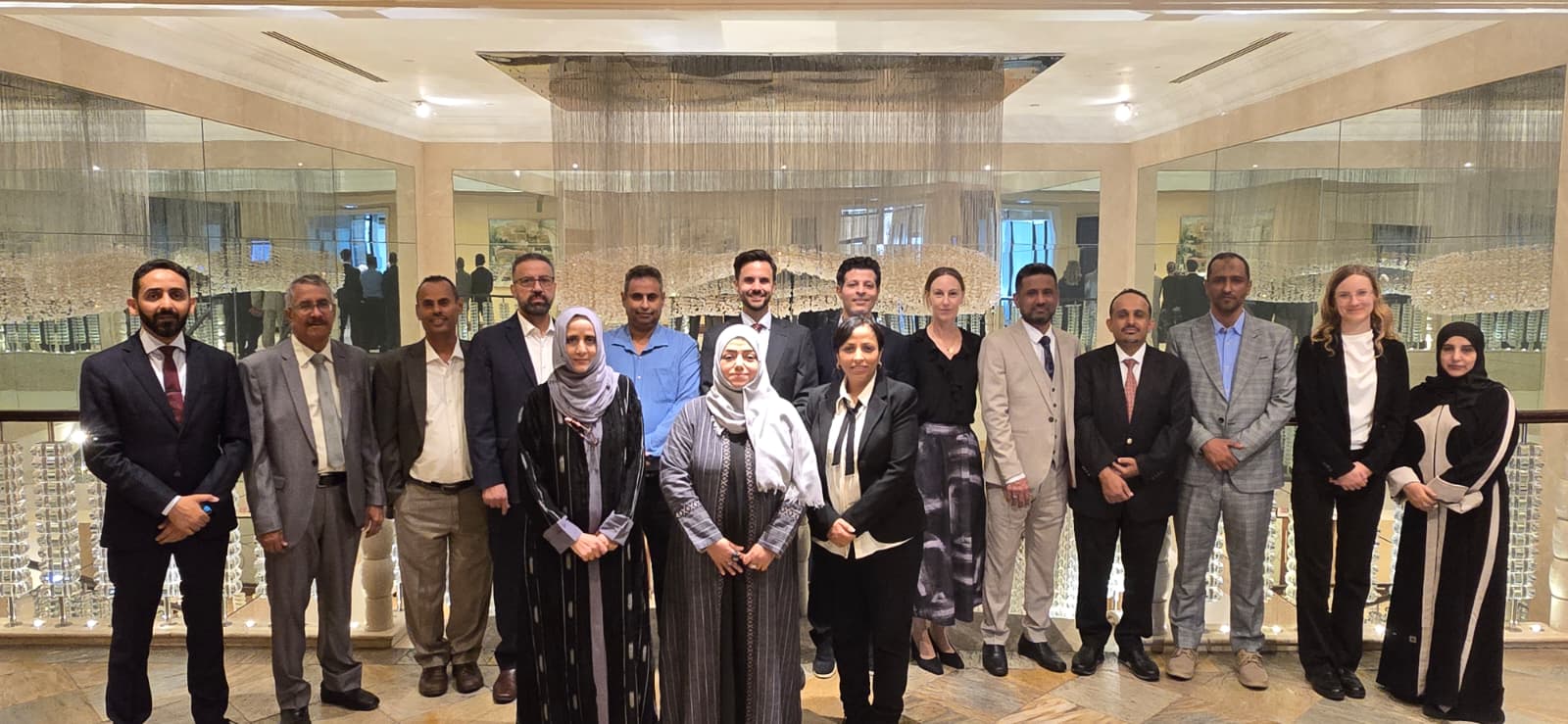
From 28 November to 1 December, the Second Technical Dialogue on Climate and Environmental Peacemaking in Yemen took place in Nairobi, Kenya. The convening built on the success of previous bilateral meetings and the First Technical Dialogue facilitated in August 2025 in Amman, which achieved a joint understanding of water issues, including as a driver of maladaptation, disputes and conflict. During the dialogue in Nairobi, the delegates initiated the development of a common vision and draft roadmap for cooperation to address water scarcity in Yemen.
This was the second joint meeting of technical and political representatives of the Government of Yemen (GOY) and the Southern Transitional Council (STC) convened by the European Institute of Peace as part of an agreed framework of environmental dialogue and cooperation. The process seeks to jointly address issues related to natural resources, environment and climate risks in support of peace benefits on stabilisation, reconciliation, and enhanced resilience. The dialogue included presentations on water governance and management at the national and local levels, providing a nuanced understanding that enabled practical discussions aimed at solving pressing water issues in alignment with the policy priorities of the relevant authorities.
The delegates engaged in in-depth discussions and strengthened the joint understanding on the most pressing water challenges in Yemen and their impact on local communities. Concretely, during the Second Technical Dialogue, strategic areas of action and practical solutions were discussed at the short-, medium-, and long-term to better manage water resources, support the sustainable provision of water services in urban and rural areas, and improve environmental management, all with a conflict-sensitive and peace-positive approach.
On the sidelines of the United Nations Environmental Assembly, the Kenyan capital offered a great opportunity for the delegates to meet international organisations working on addressing climate security risks in the Horn of Africa region and the Arabian Peninsula. In a visit to IGAD’s Climate Prediction and Applications Centre, the delegates explored how hazards emerging from climate change and environmental degradation can develop into disaster and conflict risks, and how to prevent them through early warning and respond to these risks with preparedness programmes. As a case study, IGAD analysed Cyclone Tej, which hit the Yemeni coast of Al-Mahra in October 2023. The delegates also visited UNEP’s Climate Security Advisor to Somalia to learn about a flagship project in Jowhar, Somalia, building resilience to climate change and improving water and food security through an integrated approach combining peacebuilding with climate action.
Water as a ground for conflict and cooperation in Yemen
In Yemen, where about 17 million people – almost half of the population – are estimated to experience water insecurity, physical water scarcity is exacerbated by the effects of armed conflict, which has undermined the capacity of communities and authorities to address environmental risks. In this context, water can exacerbate tensions, but it can also serve as an entry point for cooperation, trust-building, and dialogue. The Institute’s Environmental Dialogue and Cooperation Process seeks to transform environmental issues from a source of contention into opportunities to support peace and stability through joint efforts to foster resilience to climate and environmental risks. The First Technical Dialogue on Climate and Environmental Peacemaking in Yemen, concluded in August 2025, has marked a starting point for exploring these opportunities.
About the project
The Environmental Pathways for Reconciliation (EPfR) project aims to contribute to sustainable peace in Yemen through environmental dialogue and cooperation. With its inclusive approach, the project amplifies Yemeni voices in political and peace discussions, using environmental issues as entry points and elements for peace. The EPfR project is implemented by the European Institute of Peace with support from the German Federal Foreign Office and is part of the Weathering Risk Peace Pillar led by adelphi. You can read more about the project at www.epfryemen.org.
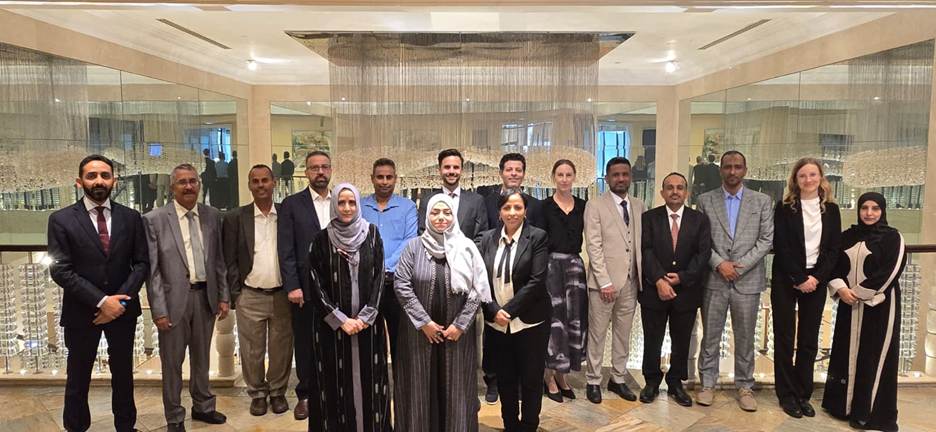
In August, the Institute’s Climate and Environmental Peacemaking Programme convened various parties from the relevant authorities within the Government of Yemen to jointly discuss the water situation in the country. The meeting took place in Amman and aimed to examine concrete challenges in specific governorates and cities, to find a common vision and identify potential solutions on how to address these issues from the water supply and demand sides. After four days of meetings, the delegates jointly developed a strategic list of practical solutions to address the country’s water issues. The group will reconvene at the end of 2025 to continue discussions.
Building on a series of unilateral meetings facilitated by the Institute, the Fourth Technical Meeting on Climate and Environmental Peacemaking in Yemen marked the first joint meeting of the relevant government parties, including the Southern Transitional Council (STC). The initiative is based on an agreed framework of environmental dialogue and cooperation, which recognises that jointly addressing natural resources, environment and climate risks can offer peace benefits on stabilisation, reconciliation, and enhanced resilience against both environmental and conflict risks.
The discussions helped to find common ground by recognising shared interests, values, and goals in a context of water scarcity. This mutual understanding included the need for updated and more accurate assessments of surface and groundwater availability, usage trends, and identification of the region’s most pressing water hotspots, especially where competition may lead to tensions and disputes.
Water, peace and conflict in Yemen
Yemen has long been struggling with water provision for agricultural, industrial, and household uses. With its semi-arid to arid climate, the country is naturally prone to physical water scarcity and largely dependent on non-renewable groundwater resources. After a decade of armed conflict, Yemen’s water situation has developed into a severe crisis, with about 17 million Yemenis lacking access to water for daily needs. Direct impacts of war, such as the destruction of water networks, have paired with financial challenges, a lack of capacity, and demographic growth, all of which have been exacerbated by the conflict. As the impacts of climate change, such as fluctuations in rainfall rates, are showing themselves more clearly, the issue of water scarcity is becoming ever-more pressing.
Not only does the water crisis have humanitarian implications, but it also affects social cohesion, fuels competition, and drives conflict. Already before the escalation of the war, water was identified as a significant factor contributing to tensions in Yemen. As the conflict continues and Yemen’s water resources are depleting, an integrated approach to peacemaking that recognises these connections is becoming indispensable. In this context, the Institute’s engagement seeks to leverage shared environmental concerns as a new avenue for peace, to transform environmental matters from a source of tension to an opportunity for joint action.
About the project
The Environmental Pathways for Reconciliation (EPfR) project aims to contribute to sustainable peace in Yemen through environmental dialogue and cooperation. With its bottom-up and inclusive approach, the project amplifies Yemeni voices in political and peace discussions, using environmental issues as entry points and elements for peace. The EPfR project is implemented by the European Institute of Peace with support from the German Federal Foreign Office and is part of the Weathering Risk Peace Pillar led by adelphi. You can read more about the project at www.epfryemen.org.
في مطلع أغسطس، عقد برنامج صنع السلام المناخي والبيئي التابع للمعهد الأوروبي للسلام اجتماعًا ضمّ جهات مختلفة من الجهات المعنية في الحكومة اليمنية لمناقشة الو ضع المائي في البلاد. عُقد الاجتماع في عمّان، وكان الهدف منه دراسة التحديات الملموسة في محافظات ومدن محددة، والتوصل إلى رؤية مشتركة وتحديد الحلول الممكنة لمعالجة هذه القضايا من حيث العرض والطلب على المياه. وبعد أربعة أيام من الاجتماعات، وضع المشاركون قائمة استراتيجية بالحلول العملية لمعالجة قضايا المياه في البلاد. وستجتمع المجموعة مجددًا في نهاية عام 2025 لمواصلة النقاش.
بناءً على سلسلة من الاجتماعات الأحادية التي يسّرها المعهد، مثّل الاجتماع الفني الرابع حول صنع السلام المناخي والبيئي في اليمن الاجتماع المشترك الأول للأطراف الحكومية المعنية، بما في ذلك المجلس الانتقالي الجنوبي. وتستند هذه المبادرة إلى إطار عمل متفق عليه للحوار والتعاون البيئي، يُقرّ بأن التصدي المشترك لمخاطر الموارد الطبيعية والبيئة والمناخ يُمكن أن يُحقق فوائد للسلام في تحقيق الاستقرار والمصالحة، وتعزيز القدرة على الصمود في وجه المخاطر البيئية ومخاطر الصراع.
ساهمت المناقشات في إيجاد أرضية مشتركة من خلال الإقرار بالمصالح والقيم والأهداف المشتركة في ظل ندرة المياه. وشمل هذا التفاهم المتبادل الحاجة إلى تقييمات محدثة وأكثر دقة لتوافر المياه السطحية والجوفية، واتجاهات استخدامها، وتحديد بؤر المياه الأكثر إلحاحًا في المنطقة، لا سيما حيث قد تؤدي المنافسة إلى توترات ونزاعات.
المياه والسلام والصراع في اليمن
يعاني اليمن منذ زمن طويل من نقص المياه للاستخدامات الزراعية والصناعية والمنزلية. فبفضل مناخه شبه الجاف إلى الجاف، يُصبح البلد بطبيعة الحال عُرضةً لندرة المياه، ويعتمد بشكل كبير على موارد المياه الجوفية غير المتجددة. وبعد عقد من الصراع المسلح، تفاقم الوضع المائي في اليمن إلى أزمة حادة، حيث يفتقر حوالي 17 مليون يمني إلى المياه لتلبية احتياجاتهم اليومية. وقد اقترنت الآثار المباشرة للحرب، مثل تدمير شبكات المياه، بالتحديات المالية، ونقص الإمكانيات، والنمو السكاني، وكلها تفاقمت بسبب الصراع. ومع تزايد وضوح آثار تغير المناخ، مثل تقلبات معدلات هطول الأمطار، أصبحت قضية ندرة المياه أكثر إلحاحًا من أي وقت مضى.
لا تقتصر أزمة المياه على الآثار الإنسانية فحسب، بل تؤثر أيضًا على التماسك الاجتماعي، وتؤجج التنافس، وتدفع الى الصراع. وحتى قبل تصاعد وتيرة الحرب، كان يُنظر إلى المياه كعامل رئيسي يُسهم في التوترات في اليمن. ومع استمرار الصراع ونضوب موارد المياه في اليمن، أصبح اتباع نهج متكامل لصنع السلام يُدرك هذه الروابط أمرًا لا غنى عنه. في هذا السياق، يسعى المعهد من خلال عمله إلى الاستفادة من الاهتمامات البيئية المشتركة كمسار جديد للسلام، وتحويل القضايا البيئية من مصدر للتوتر إلى فرصة للعمل المشترك.
نبذه عن المشروع
يهدف مشروع “المسارات البيئية للمصالحة” (EPfR) إلى المساهمة في تحقيق سلام مستدام في اليمن من خلال الحوار والتعاون البيئي. ومن خلال نهجه التصاعدي والشامل، يُعزز المشروع أصوات اليمنيين في المناقشات السياسية ومناقشات السلام، مستخدمًا القضايا البيئية كمدخل وعنصر للسلام. يُنفذ مشروع المسارات البيئية للمصالحة من قِبل المعهد الأوروبي للسلام بدعم من وزارة الخارجية الألمانية، وهو جزء من ركيزة السلام لمقاومة المخاطر بقيادة أديلفي. يمكنكم الاطلاع على المزيد عن المشروع على الموقع الإلكتروني www.epfryemen.org.
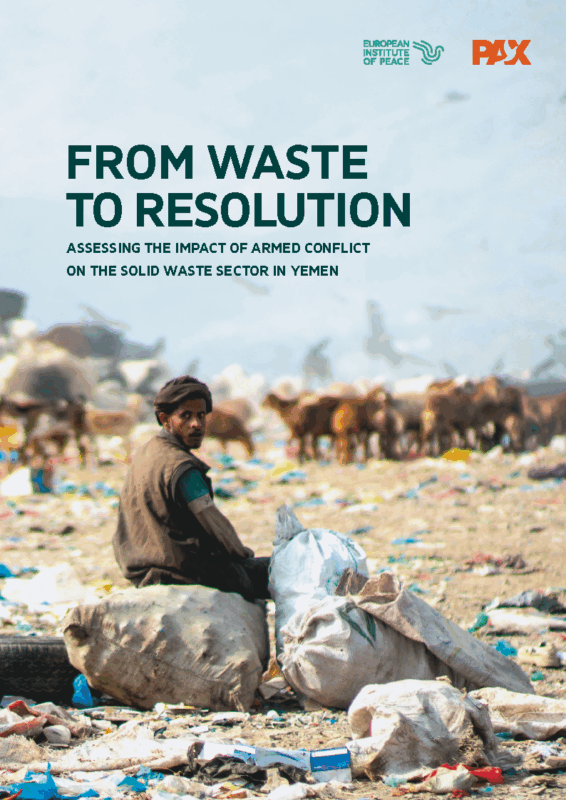
The European Institute of Peace and PAX are proud to announce our joint publication, “From waste to resolution: Assessing the impact of armed conflict on the solid waste sector in Yemen”, which provides insight into Yemen’s waste management crisis and its impact on the local environment, population, and society.
Throughout a decade of war, Yemen has been experiencing significant environmental degradation, both through direct impacts of armed conflict and indirectly through the decay of governance structures that could prevent and respond to environmental needs.
The conflict has eroded the capacity of public entities to protect crucial ecosystems, enact and implement relevant legislation, and provide essential services to Yemen’s population. When it comes to waste management, this has resulted in widespread illicit dumping, an uncontrolled expansion of solid waste, and a lack of adequate collection, disposal, and treatment facilities.
This report investigates Yemen’s waste crisis as a result of the armed conflict and reflects on ways to address it as a contribution to peacemaking, conflict prevention, and stabilisation. It identifies the main governance challenges in relation to effective waste management, including exponential demographic growth, lack of updated data, and weak institutional capacity. It analyses the environmental impact of Yemen’s solid waste crisis on air, water, and land, as well as its social and security implications, ranging from outbreaks of diseases to the degradation of agricultural land and an increase in competition for resources.
The report identifies three entry points to respond to the waste management crisis:
- Fostering collaboration and social cohesion: Strengthened coordination between various actors can offer co-benefits by improving solid waste management (SWM) services, while enhancing relationships between these stakeholders through joint decision-making or implementation. Collaboration, for instance on mapping needs, data sharing, or recycling initiatives, can be fostered between authorities and with the broader population alike, offering valuable opportunities for meaningful engagement of various groups. By involving communities in decision-making and implementation on SWM, authorities can garner popular support as a central pillar of lasting peace.
- Enhancing governance and building trust through technical cooperation: Technical subjects such as SWM offer opportunities for local and national authorities to strengthen their role and legitimacy in governance, hence improving the delivery of services and supporting public trust in institutions. At the same time, it can provide opportunities for dialogue, learning and knowledge-sharing across institutions and governorates to enhance the capacities of relevant SWM agencies, while contributing to increased coherence and trust between different institutions or parties.
- Strengthening livelihoods and unlocking economic opportunities: Investments and partnerships to improve SWM infrastructure can provide local economic opportunities through job creation and livelihood diversification, while providing revenue for municipalities and businesses. This way, investments in waste management infrastructure and enhanced waste governance can play a role in bolstering the local economy as a fundamental pillar of resilience and stability, especially if complemented with community-driven structures or solutions.
Based on these entry points, the report provides the following recommendations to provide guidance for local and national policymakers, donors, as well as international and multilateral organisations seeking to support peace and stability in Yemen.
- Addressing policy, legal and institutional gaps: Policymakers in Yemen are recommended to systematically review and update the legislative SWM framework, including the National SWM Strategy; strengthen institutional capacity of the CCIFs; and centralise collection and monitoring of waste data, all of which can contribute to improved waste management and environmental health.
- Mitigating environmental impacts of the waste crisis: Humanitarian and development organisations operating in Yemen are recommended to support expanded research on other dimensions of pollution and environmental degradation in the context of the conflict; enhance recycling and composting initiatives to depart from dumping; establish collection and disposal systems of hazardous waste; and expand waste-to-energy projects.
- Supporting resilience-building and preventing tensions: Local authorities and SWM entities are recommended to promote community-led approaches to waste management and engage in dialogue and peer learning to enhance coordination across the SWM sector.
This report is part of the Environmental Pathways for Reconciliation in Yemen project, implemented by the European Institute of Peace with support from the German Federal Foreign Office as part of the Weathering Risk Peace Pillar led by adelphi.
The full report is available here.
Throughout a decade of war, Yemen has been experiencing significant environmental degradation, both through direct impacts of armed conflict and indirectly through the decay of governance structures that could prevent and respond to environmental needs.
The conflict has eroded the capacity of public entities to protect crucial ecosystems, enact and implement relevant legislation, and provide essential services to Yemen’s population. When it comes to waste management, this has resulted in widespread illicit dumping, an uncontrolled expansion of solid waste, and a lack of adequate collection, disposal and treatment facilities. Not only do these practices contribute to severe pollution of land, water and air, posing significant risks to public health and undermining livelihoods, but also, they significantly erode trust in local and national institutions and impact social cohesion.
This report investigates Yemen’s waste crisis as a result of the armed conflict and reflects on ways to address it as a contribution to peacemaking, conflict prevention, and stabilisation. It identifies the main governance challenges in relation to effective waste management, including exponential population growth, lack of updated data, and weak institutional capacity. It analyses the environmental impact of Yemen’s solid waste crisis on air, water, and land, as well as its social and security implications ranging from outbreaks of diseases to the degradation of agricultural land and an increase in competition for resources.
The report also identifies entry points to respond to the waste management crisis and support local resilience to both environmental and conflict risks, including by:
- Fostering collaboration and social cohesion;
- Enhancing governance and building trust through technical cooperation;
- Strengthening livelihoods and enhancing economic opportunities.
Finally, the report provides recommendations for local and national policymakers, donors, and international organisations to address policy, legal and institutional gaps; implement development and humanitarian projects to mitigate the impact of the waste crisis; and integrate resilience-building initiatives with dialogue to support trust building and local ownership in waste management structures.
This report has been created in collaboration between PAX and the European Institute of Peace. It is part of the Environmental Pathways for Reconciliation in Yemen project, implemented by the European Institute of Peace with support from the German Federal Foreign Office as part of the Weathering Risk Peace Pillar led by adelphi.
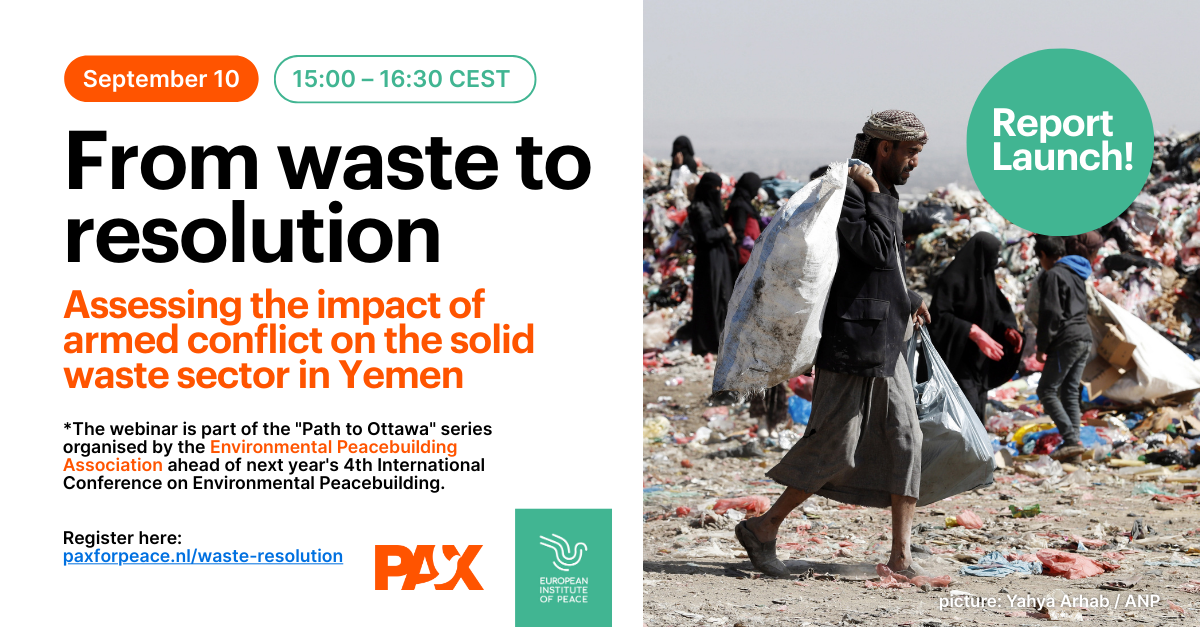
Join the European Institute of Peace and PAX for the online launch of our joint report “From waste to resolution: Assessing the impact of armed conflict on the solid waste sector in Yemen,” which provides insight into Yemen’s waste management crisis and its impact on public health, ecosystems, and long-term stability.
The webinar will present the findings from an extensive assessment of Yemen’s solid waste sector amid the conflict, drawing from geospatial mapping and policy analysis. It will explore the drivers and consequences of uncontrolled dumping and waste accumulation, as well as entry points to address them as a contribution to peacemaking, conflict prevention, and stabilisation.
The launch will take place in an online webinar on Wednesday, 10 September, from 15:00 to 16:30. The full report will be available online immediately after the event.
Speakers:
- Hisham Al-Omeisy, Senior Yemen Advisor, European Institute of Peace
- Elias Kharma, Research Analyst, European Institute of Peace
- Marie Schellens, Geospatial Analyst, PAX
- Wim Zwijnenburg, Project Leader Humanitarian Disarmament, PAX
Moderator:
- Alina Viehoff, Climate and Security Advisor, adelphi
This event is part of the Path to Ottawa series organised by EnPax ahead of the 4th International Conference on Environmental Peacebuilding, which will take place in June 2026 in Ottawa, Canada.
The Environmental Pathways for Reconciliation (EPfR) project supports sustainable peace in Yemen by engaging different parties in environmental dialogue and cooperation.
The EPfR project brings together different parties at both the community and the national level to discuss environmental challenges and solutions to support local resilience. Through these engagements, the project uses the environment as an entry point to open avenues for dialogue and cooperation, reconciliation, and trust-building.
Through its innovative environmental peacemaking approach, the project generates lessons that contribute to guiding integrated programmes on climate, peace and security – in Yemen and internationally.
The project is implemented by the European Institute of Peace with support from the German Federal Foreign Office and is part of the Weathering Risk Peace Pillar led by adelphi.
The EPfR website is a valuable resource on the project and on environmental peacemaking at large, with comprehensive information on the team’s research and analysis work on environmental security and governance in Yemen, as well as on ongoing activities and engagement with decision-makers.
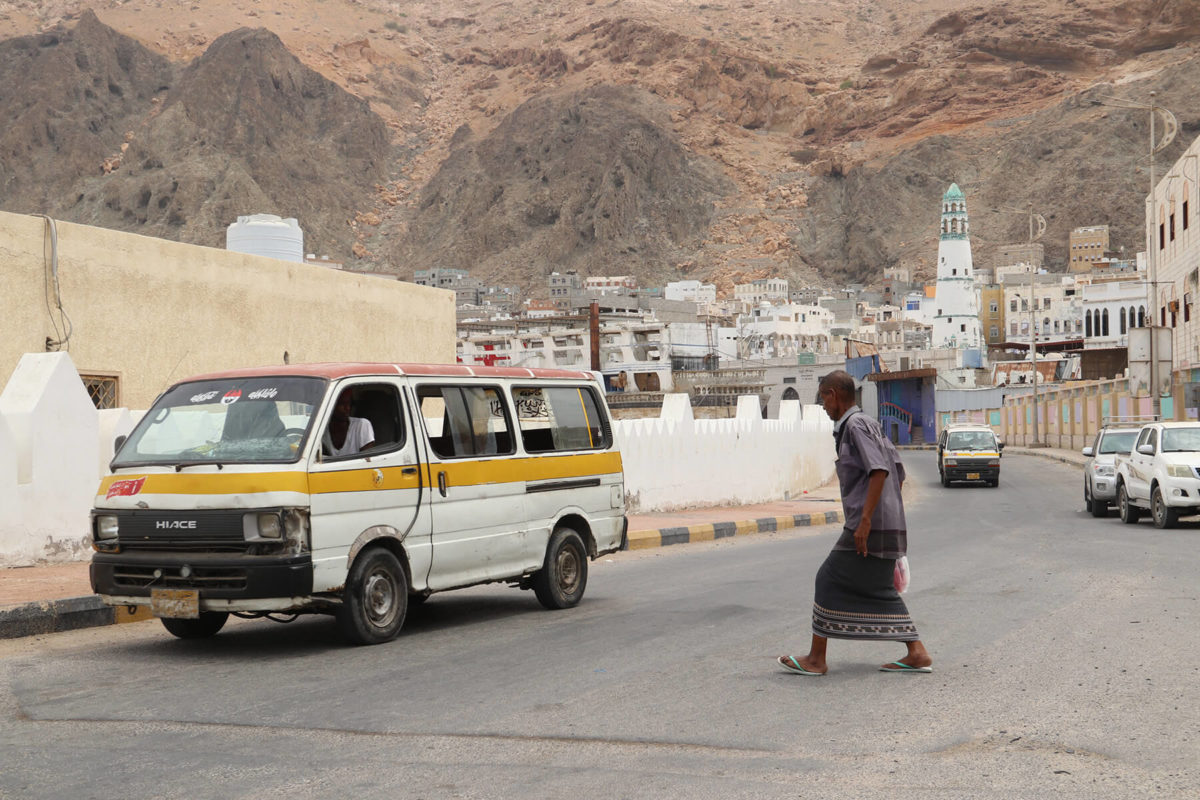
The European Institute of Peace is proud to announce the launch of the website for our Environmental Pathways for Reconciliation (EPfR) project, which contributes to building a sustainable peace in Yemen by using the environment as an entry point for dialogue, reconciliation and trust-building among different parties at both the community and the national level.
The website contains comprehensive information on our team’s research and analysis work on environmental security and governance in Yemen and on the project’s consultations with the local population and engagement with decision-makers, with over 3,600 individuals involved across 13 governorates so far. Through these dialogue spaces that convene local decision-makers, traditional leaders, civil society, and subject experts, Yemeni citizens can identify locally led peacemaking solutions to address environmental risks and enhance resilience.
This website aims to become a key resource not only for the EPfR project, but for environmental peacemaking at large, showcasing the lessons generated by the project that can contribute to guiding integrated programmes on climate, peace and security – in Yemen and internationally.
The project is implemented by the European Institute of Peace with support from the German Federal Foreign Office and is part of the Weathering Risk Peace Pillar led by adelphi.
In 2024, on the occasion of the 10th Anniversary of the establishment of the European Institute of Peace, the Institute commissioned a series of articles about our work, interviewing staff members, senior advisors, and people who have worked with us in the past decade on conflict prevention and resolution in different areas of the world.
How best to communicate our work is not obvious. Discretion is often an essential ingredient to what we do, for example around dialogue and engagement with parties to conflict and their supporters. But we cannot afford not to communicate in an increasingly crowded media and public affairs environment, one in which political and public recognition is too low regarding the value and practical benefits of the work that we and our partners undertake. “What you are doing is great – why aren’t you telling more people about it?” is a typical reaction from partners that want to increase their support for us. Sharing these stories about the Institute’s work is of the ways in which we are responding to these requests.
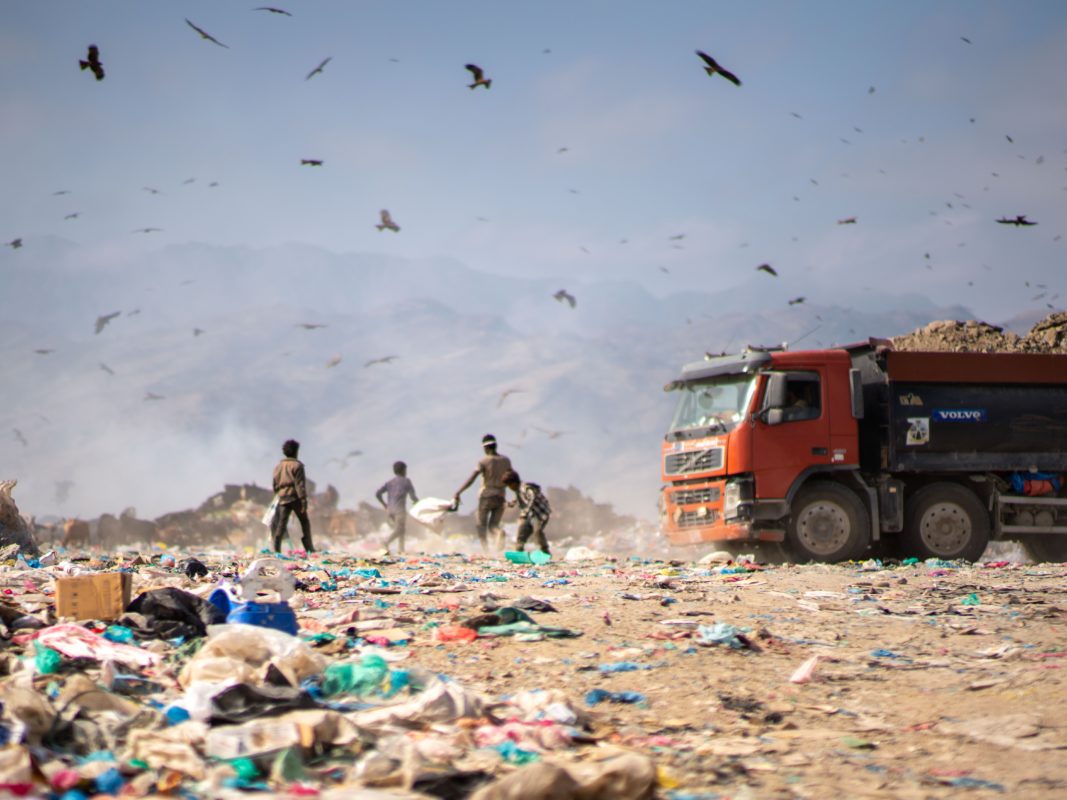
According to the International Committee of the Red Cross, of the 20 countries most affected by climate change, the majority are at war. Not only is climate change a driver of instability and conflict, but armed conflict is often a cause of environmental degradation. During the first two years of the conflict in Ukraine, carbon dioxide emissions directly related to the war stood at 175 million tonnes – more than the yearly output of the Netherlands. In Gaza, the UN Environment Programme estimates that over 100,000 cubic metres of sewage and wastewater are currently being dumped daily onto land or into the Mediterranean Sea as a result of infrastructure damage. In 2019, Europe’s military carbon footprint alone was estimated at around 24.8 million tCO2e, equivalent to the CO2 emissions of about 14 million average cars. War is waste.
Recognising both the relationship between armed conflict and climate change, in early 2019, the European Institute of Peace established a dedicated unit, the Climate and Environmental Peacemaking Programme. The Programme responds to the security and conflict risks posed by environmental challenges by engaging parties to conflict, opening new avenues for dialogue, building trust and relationships, and providing policy advice on climate and environment. It creates a space for greater civil society input by also being the bridge between populations and decision-makers, and shifting the consciousness of those in power.
The Institute has implemented bespoke projects which engage directly with the environmental aspects of conflict in the Liptako-Gourma region of West Africa, in Yemen, and Somalia. This has enabled the Institute to connect mediators to technical expertise on climate science, identifying and socialising peace dividends related to climate action, such as stability, economic growth and development. It advocates for the necessity of putting climate front and centre when it comes to peacemaking. Seeking out other partners who are equally passionate about tackling the nexus between climate and security is also a priority.
Since 2022 the European Institute of Peace has been a core member of the ‘Weathering Risk Peace Pillar’, which seeks to address climate security risks through peacemaking and peacebuilding. Together, these initiatives argue for a response to climate change that goes beyond the work of scientists, to involve others with direct experience studying and responding to climate’s relationship to conflict.
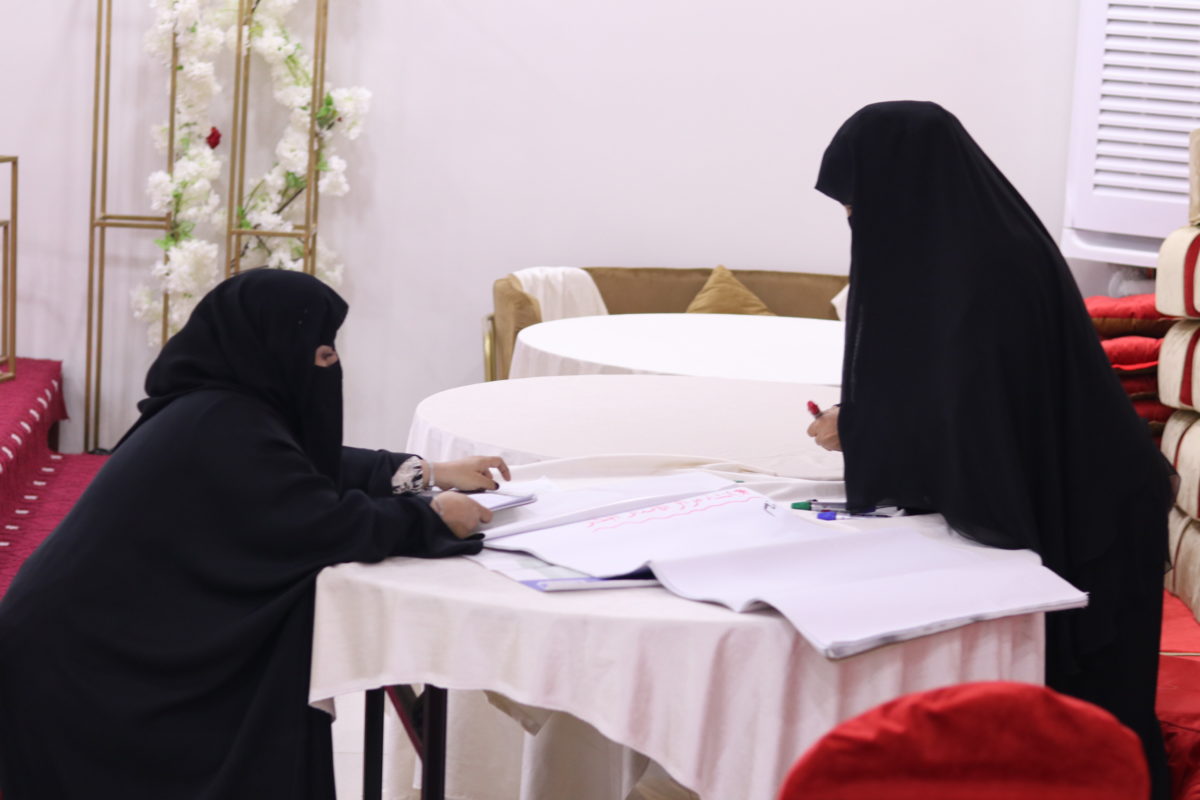
Engaging Climate Experts in Peacemaking
One of those initiatives was a complex survey that produced surprising results. The Institute’s Pathways for Reconciliation project asked nearly 16,000 Yemenis to voice their needs and priorities. This is the largest exercise of its kind ever undertaken in Yemen. The poll found that the environment ranked among the top three concerns in eight out of nine of Yemen’s governates. In four governates it was the number one concern, ranking even higher than the cessation of fighting.
In hindsight, this was not surprising. Yemen currently ranks 171 out of 182 for climate vulnerability. Over 70% of the country’s population rely directly or indirectly on agriculture. In recent years, Yemen has suffered drought, flooding, disease outbreaks, locust infestations and rising sea levels. In 2023, natural disasters forced close to 320,000 people from their homes. An estimated 19.5 million people depend on some form of humanitarian assistance at present, and many are having to resort to unsustainable well-drilling, cash crops and uncontrolled tree felling for fuel to secure their basic needs.
Capitalising on the insights gained from the Pathways for Reconciliation programme, the Institute launched a follow up initiative – the Environmental Pathways for Reconciliation.
Crowd-Sourcing Solutions to Climate and Conflict
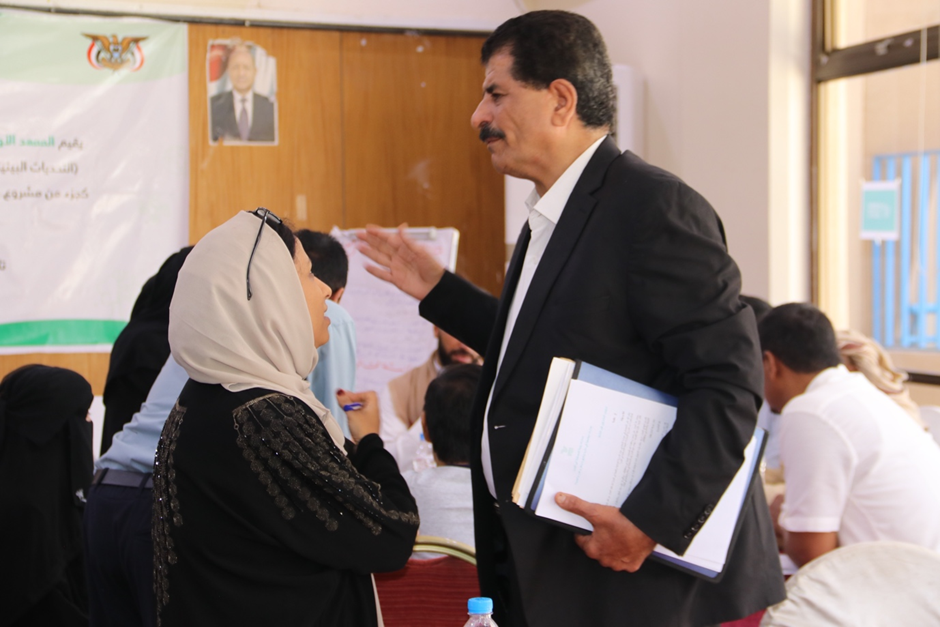
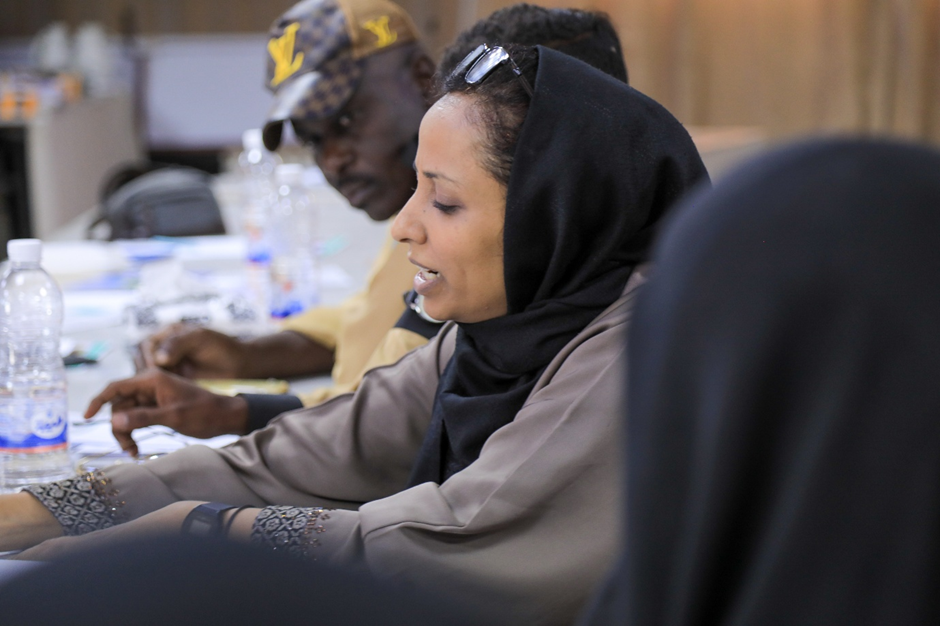
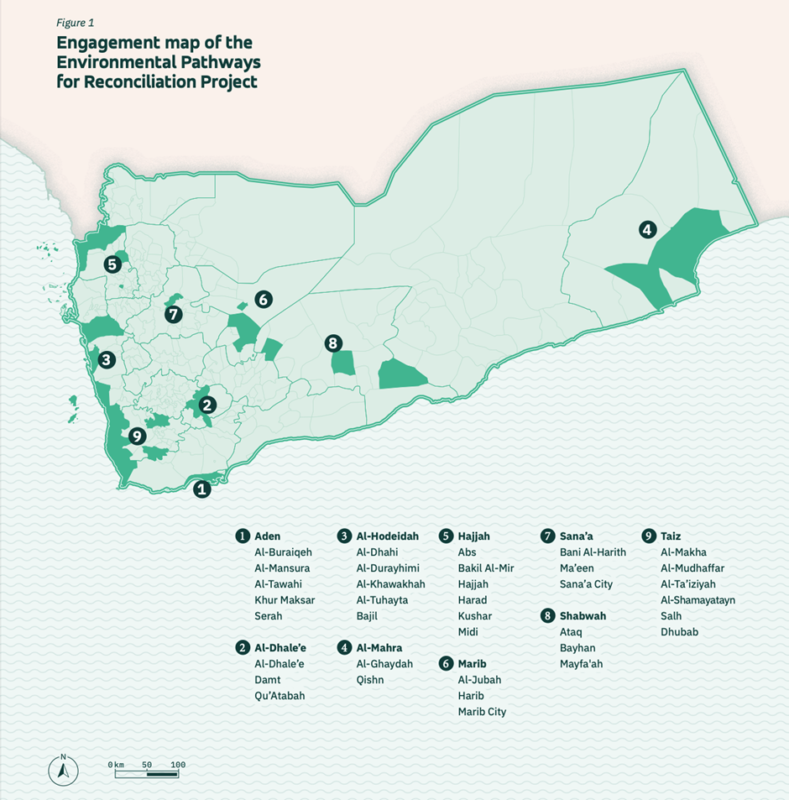
Yemeni journalist Suaad Abdullah supported a series of local consultations and dialogues on the interrelations between environmental challenges and the conflict. “When I joined the Environmental Peacemaking Programme I was afraid – how would I manage to gather all the stakeholders and different parties in one room?” she said. Travelling to sites across the country, Suaad Abdullah and her team engaged over 2,400 people across the nine governorates of Aden, Taiz, Marib, Al-Mahra, Al-Hodeidah, Shabwah, Sana’a, Al-Dhale’e, and Hajjah in a mixture of surveys, focus groups, key informant interviews, and community dialogues. The goal of Environmental Pathways for Reconciliation was to better understand and contextualise local perceptions of the challenges surrounding climate and conflict — and to identify opportunities and potential solutions.
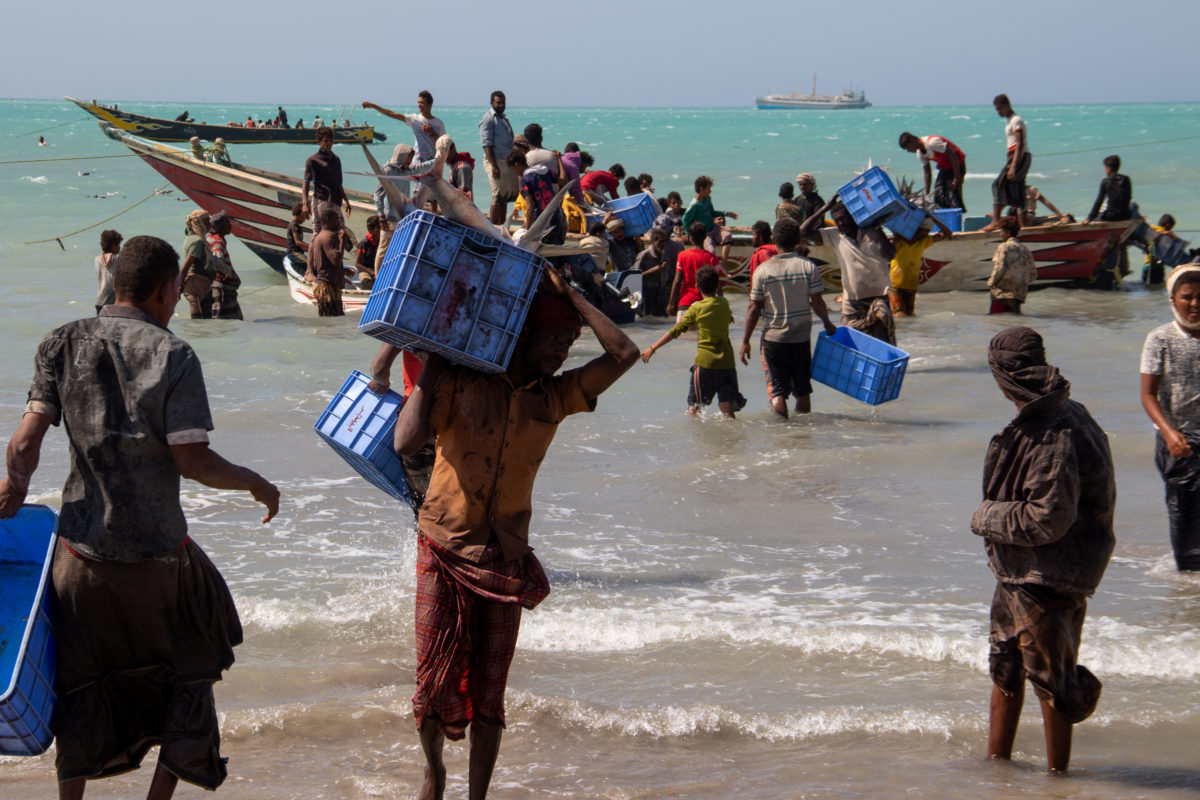
The results of the consultation confirmed how central environmental concerns were to any potential resolution of the war. 92% of respondents perceived a reduction in the availability of and access to natural resources in the past years. Critically, more than half said that they had experienced tensions or conflicts in their areas relating to environmental issues. 85% of those consulted considered it essential to address climate change in the short-term, with 60% insisting that environmental considerations be integrated into any conflict resolution in Yemen. Issues raised ranged from poor sanitation and access to clean water in IDP camps and informal settlements, desertification, flooding and droughts, and the decimation of local fishing.
While the initiative focused on Yemen’s general population, it was critical to not exclude decision-makers and local power holders in the dialogues. Suaad Abdullah says that it wasn’t always easy to convince local leaders to participate, but that the results when they did were often surprising and encouraging. She adds that even if local populations were acutely aware of how climate change was driving the conflict, in some cases it wasn’t always easy to get local elites to make the connection. But often she didn’t need to – communities themselves were ready and able to get the message across to local government and take advantage of rare opportunities for frank and open exchange with decision-makers. She recalls one instance in a community dialogue in Ma’rib –
“We had a real mix in the group, local sheikhs, academics, farmers. Some were confused and started arguing, asking what the connection was between climate and conflict. I wanted to reply to them, but before I could, a local farmer stood up and addressed the group. “If you don’t know about the link between the environment and peace,” he said, “it is a disaster, and you are driving conflict in this governorate.” The farmer went on to explain that years ago he was a rich man, earning 100,000 USD from his land cultivating and selling fruits and vegetables. With desertification in recent years his earnings were reduced to 20,000 USD. “What of someone who was already poor, what will they do, to whom will they turn?” he asked. At that moment I saw that the group understood, and even started to give their own similar examples – local conflicts over access to wells, all sorts of things. I understood then the power of these meetings.”
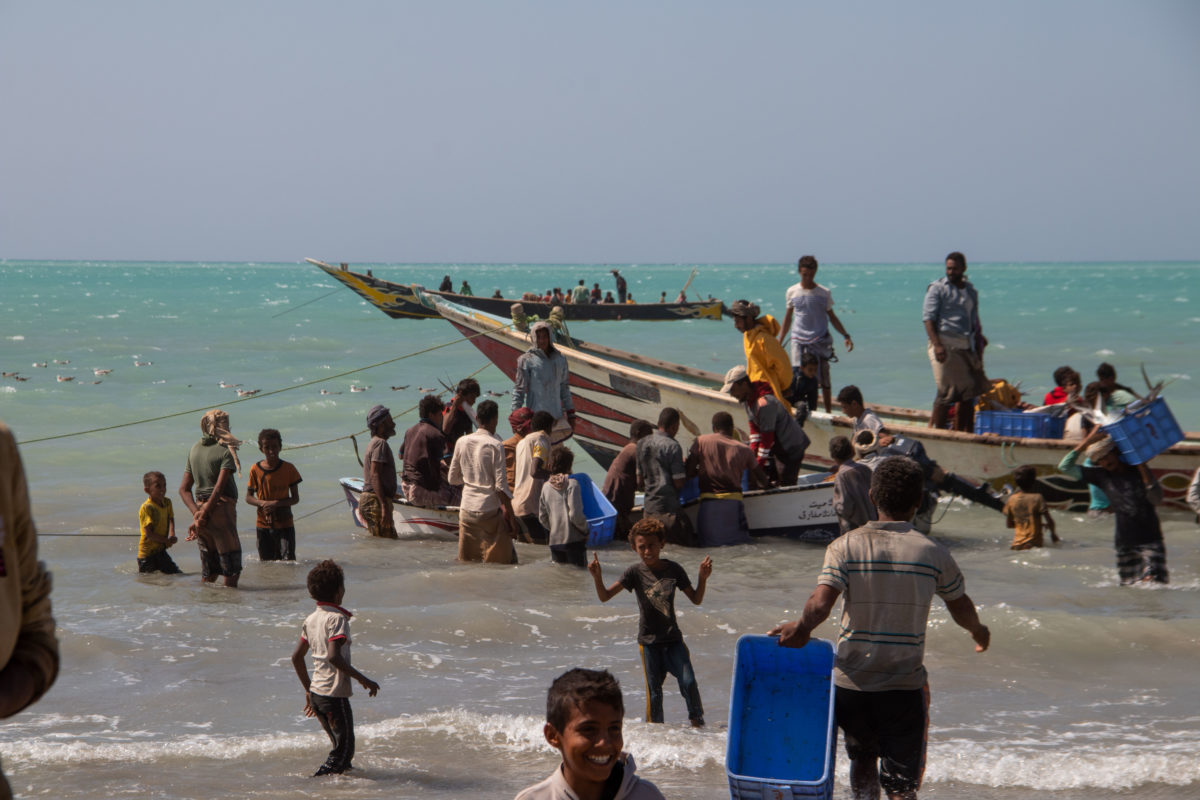
Local NGOs, tribal mediators, traditional elders and minorities were all able to take advantage of the shared space to connect and share resources, knowledge and contacts to help stimulate efforts to find solutions to shared environmental problems.
In Yemen, societal fragmentation and state collapse mean that environmental governance is virtually non-existent. “When it comes to preparations and capacity to manage the environment at the local and national level, for sure we are at zero,” Suaad says. In that context, instead of demanding for improved environmental governance as a precursor to sustainable peace, Environmental Pathways for Reconciliation works from the ground up, engaging the people most directly affected by the conflict and the environmental crises. After consultations across the country to understand the issues from a local perspective, the project continues its engagements at the governance level, to map solutions, connect these ideas to funding, and implement them on the ground.
It’s still early in the process, and there’s much work to be done, but already ideas are starting to surface: the use of clean fuel for cooking, green belts to fight desertification, local committees to mediate climate-related disputes, early warning systems, and the use of solar energy as an alternative to diesel and gas. The energy and passion is there, the challenge is only to direct and coordinate the huge potential of the collective intelligence of the Yemeni people. When organisations like the Institute are able to hold the space for local actors to come together and dialogue in a structured way, the possibilities are endless.
“In Al Mahrah, our commitment to protecting the environment, our people, and the sea knows no bounds. We stand ready to make sacrifices and take decisive action to safeguard our precious natural resources. But we recognize that we cannot do it alone. United as men and women committed to the betterment and safeguarding of our region, we stand ready to face the challenges ahead and forge a brighter future for Al Mahrah and its inhabitants.”
Radhwan Mohammed Saeed, a local fisherman from Al-Mahrah and participant in the Environmental Pathways for Reconciliation community dialogues.
Credits: Nazeh Mohammed, EIP 2023
Crossing the Gulf: Getting the Message to Power
The consultation in Yemen showed that while local communities may be experts on issues in their own regions, they don’t always possess the bigger picture at the broader level. Pushing for climate analysis when it comes to conflict resolution also means engaging institutions and governments.
Across the Gulf of Aden from Yemen, in Somalia, the Institute has been able to achieve notable progress in bringing climate change to the centre of the debate around peacemaking.
As in Yemen, Somalia grapples with the devastating impact of drought, flooding, desertification, biodiversity loss, sea level rises and extreme temperatures. These issues have wreaked havoc on Somali society and added further layers of complexity to local conflicts, giving rise to resource scarcity and competition, displacement and migration, livelihood disruption and humanitarian crises. In many cases these issues have made communities increasingly susceptible to recruitment by armed groups such as Al-Shabaab, clan militias, Ahlu Sunna Wa Al-Jama’a, and others.
Before the Institute began directly engaging with officials in Mogadishu, local government did not treat environmental issues as important conflict drivers. Three years ago, the programme responsible for climate issues was limited to a small desk in the prime minister’s office. Lack of coordination and at times competition between Somalia’s federal states meant that comprehensive approaches to climate were often complicated and stalled.
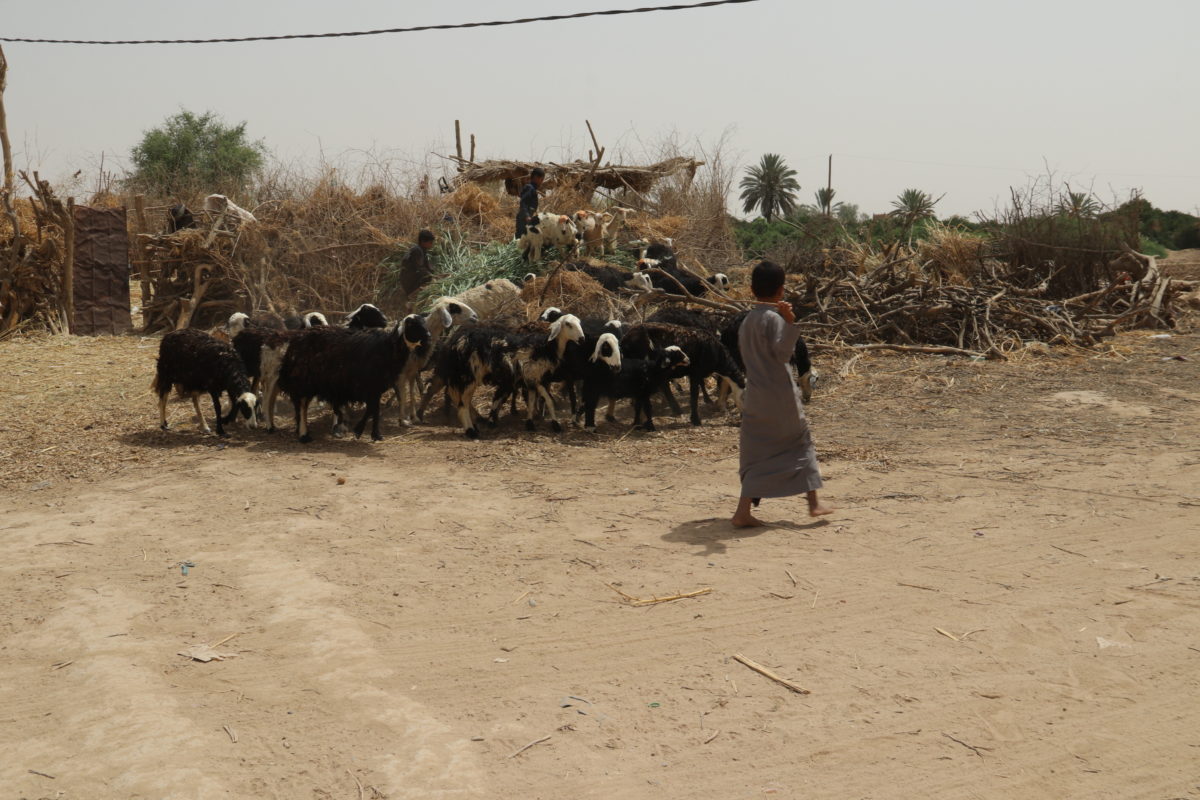
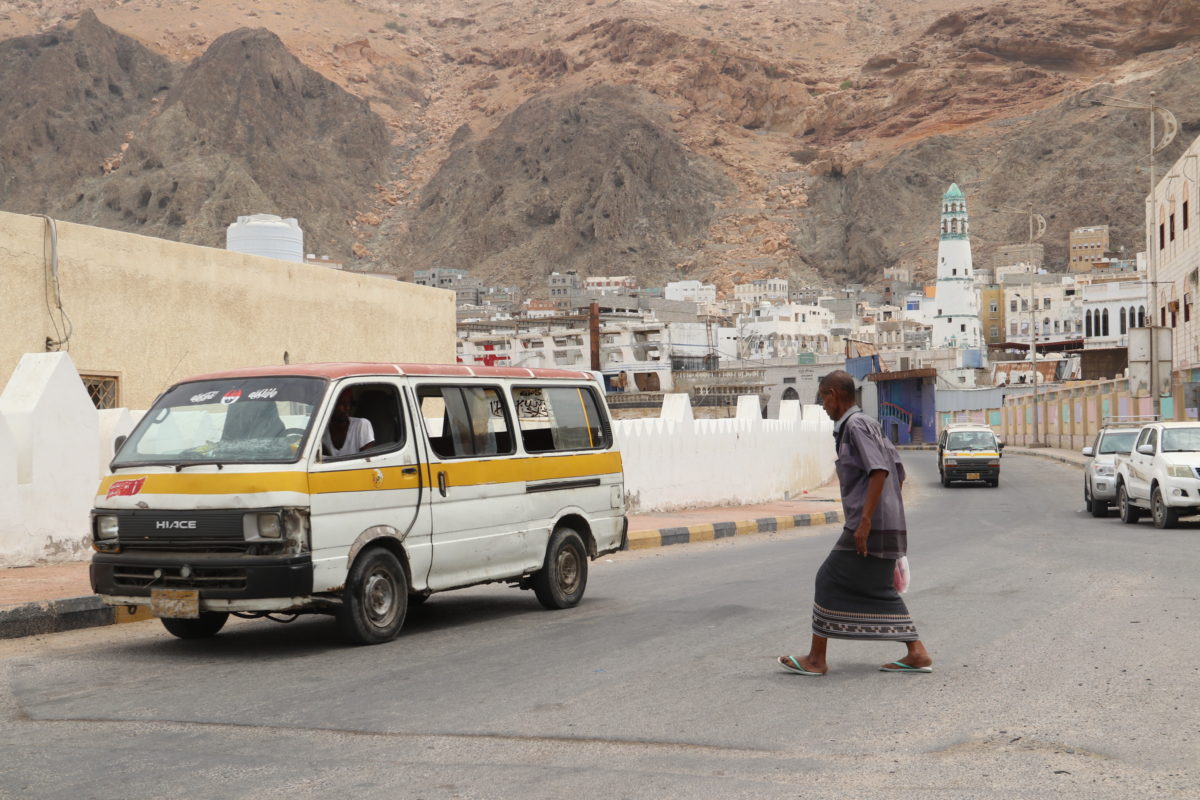
Engaging with governments on environmental matters
The process took time. Sensitising ministers about how to better engage on climate and conflict isn’t just about dealing with a lack of will or capacity. We are all collectively learning how to understand and tackle climate concerns today, and in many cases governments are also learning to adapt and require inputs not only from civil society, but also knowledge from other governments and international bodies.
With the support of the Federal Ministry of Environment and Climate Change of Somalia, the Institute facilitated three Cross-Ministerial Workshops. The workshops demonstrated the value of convening multiple governmental actors to discuss technical environmental matters, such as climate finance and climate security, as an entry point for dialogue and trust-building that can lead to greater cooperation in a context of political and institutional disagreement.
The direct engagement, coordination, and policy support that the Institute provided to federal and state-level actors, coupled with their active involvement in environmental peacemaking activities, have significantly shaped their understanding, capacity, and attitude towards addressing environmental and climate security risks. New policies implemented by different parts of the government now recognise the importance addressing these risks in collaboration with other actors who share similar mandates, notably the reviewed Nationally Determined Contributions to the Paris Climate Agreement.
Stepping up to the Challenge
Ensuring climate change is at the heart of peacemaking also requires financial support. Climate finance to help fragile and conflict-affected states mitigate the threat is still lagging far behind what it needs to be. In the cases of Somalia and Yemen, two of the most vulnerable countries, climate finance averaged only 2 USD per capita over the period 2014-2021.The situation is improving slowly, with global climate financing estimated at 1.3 trillion USD in 2023 – double that of 2019. But that’s still only 1% of GDP dedicated to a challenge that threatens humanity with civilisational collapse.
By 2031 it’s estimated that we’ll need to be putting at least 10 trillion USD into climate adaptation if we are to get anywhere close to staving off the worst impacts of ecological collapse. Conflict is often the driver of change, and the solutions arising from the frontlines of Yemen, Somalia and other countries facing the double crisis of climate change and armed conflict may yet lead the way for us all. But we need to be there to support them.

Somalia has for years been plagued by tensions and competition between Mogadishu and the regional government of Puntland to the North. Despite bitter conflict in the Galkayo Mudug region between the autonomous state of Puntland and neighbouring Galmudug state, (part of federal Somalia), severe drought in 2016 presented a rare opportunity for the two parties to cooperate. In response to the drought, authorities allowed herders from Galmudug state to bring livestock to graze deep inside Puntland territory.
Opportunities like that are rare. In this case, one was seized. It’s become a useful example of how efforts to confront climate change will now form part of any effort at peace building.
In December 2024, the European Institute of Peace concluded a series of unilateral meetings to discuss the status of environmental governance in Yemen and explore potential pathways for environmental dialogue and cooperation with technical and political representatives of the Ministry of Water and Environment (MOWE) and the Southern Transitional Council (STC). The “Technical Meetings on Climate and Environmental Peacemaking in Yemen” served to discuss approaches to addressing environmental issues in a way that contributes to conflict resolution and prevention. Together with the Institute, the delegations identified critical issues and geographic areas of priority to enhance environmental governance and cooperation within the Internationally Recognized Government of Yemen (IRGY).
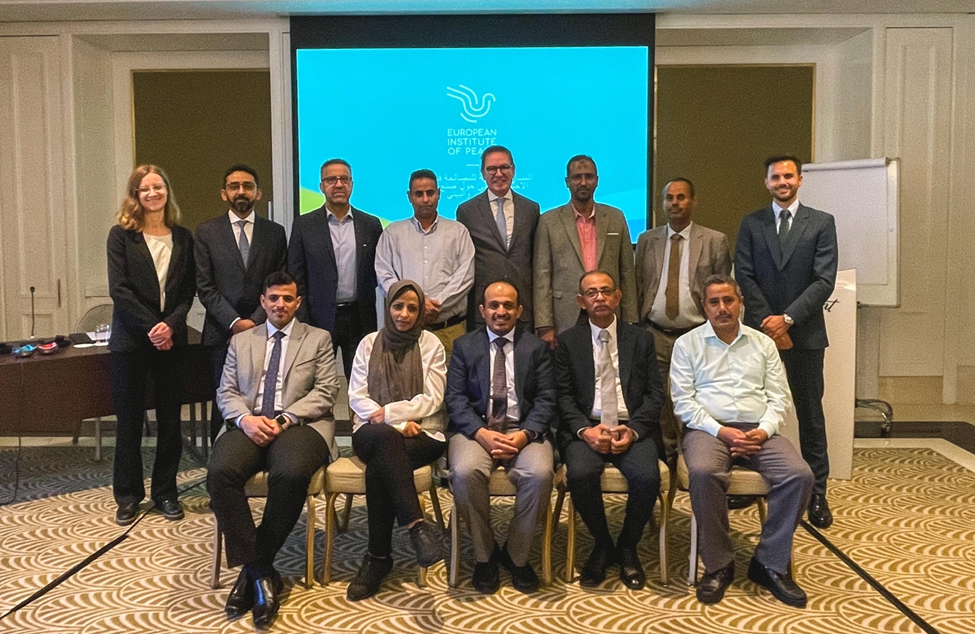
Delegates representing the Internationally Recognized Government of Yemen through the Ministry of Water and Environment at the First Technical Meeting on Climate and Environmental Peacemaking in Yemen, Amman, August 2024
Environmental impact of the conflict
Over the last decade, political crises in Yemen have escalated into full-scale, internationalized war. The conflict has become increasingly complex and intractable. It has had profound humanitarian, economic, and societal impacts, which also have harmed the country’s natural environment. Military activity has caused direct environmental damage, while other pressures such as the over-extraction of groundwater, challenges in public environmental management, and the escalating effects of climate change, have further intensified environmental issues. Coupled with a rapid population growth, these factors have led to large-scale environmental degradation, including the depletion of water resources, desertification of agricultural land, deforestation, and land and water pollution.
While the environmental consequences of the conflict are often overlooked in high-level discussions about peace and security, they leave a crucial imprint on the country’s social fabric. As natural resources become increasingly scarce, competition over water, land, fuel, and other essential resources intensifies. This affects individual livelihoods and community resilience to conflict and climate, undermining efforts to achieve sustainable peace and reconciliation. In an extensive consultation conducted by the Institute across nine governorates in 2023, more than half of respondents reported tensions and disputes linked to environmental issues in their area.

Delegates representing the Southern Transitional Council at the First Technical Meeting on Climate and Environmental Peacemaking in Yemen, Amman, August 2024
Environment and peace
Addressing environmental risks as part of conflict resolution and prevention efforts is not only key to reducing resource-related or degradation-driven tensions but can also serve as an entry point for enhanced collaboration, improved governance, and trust-building. Responding to these environmental risks through technical collaboration, data sharing, institutional capacity-building, and joint policy development can provide opportunities to foster dialogue and mutual understanding. The Institute’s engagement at the national level seeks to leverage shared environmental concerns as a new avenue for peace, framing discussions around common interests.
The first two rounds of unilateral meetings evolved from broad exchanges on environmental concerns and priorities into in-depth discussions on the technical, political, and administrative dimensions of environmental governance in Yemen. The delegates explored prevailing grievances and challenges related to natural resources management, risks arising from climatic change and demographic shifts, as well as structural, political, and financial constraints that obstruct effective responses. The discussions concluded with reflections on strengthening governmental cooperation, improving environmental governance, and fostering trust through collaborative environmental initiatives.
About the project
The Environmental Pathways for Reconciliation (EPfR) project aims to contribute to sustainable peace in Yemen by engaging different strata of the Yemeni society in environmental dialogue and cooperation. Through its bottom-up and inclusive approach, the project amplifies Yemeni voices in political and peace discussions, using environmental issues as entry points and elements for peace. By conducting consultations and facilitating dialogues at the community, governorate, and national levels, the project supports Yemenis to identify solutions to environmental and climate security risks with a peacemaking approach. The EPfR project is implemented by the Institute with support from the German Federal Foreign Office and is part of the Weathering Risk Peace Pillar led by adelphi.
This analysis assesses both the short and long-term impacts of environment- and climate-related security risks in the Newly Liberated Areas (NLA) of Somalia in Hirshabelle and Galmudug. The analysis had the objectives of (1) understanding the pathways in which environmental and climate risks can affect conflict better and (2) developing actionable recommendations for environmental peacemaking and peacebuilding in these states of Somalia.
This integrated climate and conflict analysis employed a methodology based on the conflict analysis guidance from the European External Action Service (EEAS) and the climate security guidance developed by the United Nations Environment Programme (UNEP).
The integrated analysis reveals linkages between climate risks and the underlying conflict drivers in the Newly Liberated Areas of Hirshabelle and Galmudug. While climate change should not be considered a direct root cause of conflict, climate-induced impacts such as prolonged droughts, erratic rainfall, flooding, and other extreme weather events exacerbate resource scarcity, disrupt livelihoods, and heighten competition among communities over diminishing natural resources, primarily land, water, and pastures for livestock grazing and agriculture. These socioeconomic impacts affect all parties to conflicts in the NLA, contributing to unrest and violence even after Al-Shabaab’s departure. As climate and security risks collide in the NLA, they generate additional challenges to building lasting peace between communities and opportunities to foster cohesion and strengthen state presence.
For environmental peacemaking initiatives to effectively address climate security risks and contribute to lasting peace in the NLA, it is crucial to implement comprehensive strategies that focus on immediate conflict resolution and relief and long-term resilience and reconciliation. Initiatives enhancing access and sustainable resource management and incorporating robust dispute resolution mechanisms offer promising avenues for building trust and cohesion. These efforts should be supported by coherent cross-sectoral institutional frameworks and active participation from local communities, development and humanitarian stakeholders to ensure their effectiveness and sustainability.
Building on these strategies, it is essential to identify key areas where climate and security risks intersect and to enhance dialogue among development, humanitarian, and government stakeholders. To facilitate this process, the European Institute of Peace’s report illustrates the climate-conflict nexus through four key pathways designed to pinpoint areas where collaboration can yield cross-cutting climate resilience and peace benefits. While these pathways alone cannot fully encapsulate the complex interrelations between climate, environment, and conflict in the Newly Liberated Areas of Somalia, they effectively highlight how climate risks compound socioeconomic vulnerabilities, intercommunal tensions, and historical grievances, amplifying the risk of conflict.
Based on the findings of the analysis, a set of recommendations are proposed in the report to inform and support institutional actors and partners to develop and implement policy and programme initiatives providing dual benefits in promoting peace and enhancing resilience to climate change. Altogether, the analysis underscores that environmental peacemaking approaches are pivotal for fostering sustainable peace, security, and resilience in the fragile NLA of Somalia.
Project context
This Integrated Climate and Conflict Analysis of the Newly Liberated Areas of Hirshabelle and Galmudug is part of the “Environmental Peacemaking Project in Somalia” led by the European Institute of Peace with support from the Ministry of Environment and Climate Change (MOECC) of the Federal Republic of Somalia and funded by the Norwegian Ministry of Foreign Affairs. From August 2023 to March 2024, the Institute conducted an integrated climate and conflict analysis in the Newly Liberated Areas of Somalia, which is described in this report.
This analysis assesses both the short and long-term impacts of environment- and climate-related security risks in the Newly Liberated Areas (NLA) of Somalia in Hirshabelle and Galmudug. The analysis had the objectives of (1) understanding the pathways in which environmental and climate risks can affect conflict better and (2) developing actionable recommendations for environmental peacemaking and peacebuilding in these states of Somalia.
This integrated climate and conflict analysis employed a methodology based on the conflict analysis guidance from the European External Action Service (EEAS) and the climate security guidance developed by the United Nations Environment Programme (UNEP).
The integrated analysis reveals linkages between climate risks and the underlying conflict drivers in the Newly Liberated Areas of Hirshabelle and Galmudug. While climate change should not be considered a direct root cause of conflict, climate-induced impacts such as prolonged droughts, erratic rainfall, flooding, and other extreme weather events exacerbate resource scarcity, disrupt livelihoods, and heighten competition among communities over diminishing natural resources, primarily land, water, and pastures for livestock grazing and agriculture. These socioeconomic impacts affect all parties to conflicts in the NLA, contributing to unrest and violence even after Al-Shabaab’s departure. As climate and security risks collide in the NLA, they generate additional challenges to building lasting peace between communities and opportunities to foster cohesion and strengthen state presence.
For environmental peacemaking initiatives to effectively address climate security risks and contribute to lasting peace in the NLA, it is crucial to implement comprehensive strategies that focus on immediate conflict resolution and relief and long-term resilience and reconciliation. Initiatives enhancing access and sustainable resource management and incorporating robust dispute resolution mechanisms offer promising avenues for building trust and cohesion. These efforts should be supported by coherent cross-sectoral institutional frameworks and active participation from local communities, development and humanitarian stakeholders to ensure their effectiveness and sustainability.
Building on these strategies, it is essential to identify key areas where climate and security risks intersect and to enhance dialogue among development, humanitarian, and government stakeholders. To facilitate this process, the European Institute of Peace’s report illustrates the climate-conflict nexus through four key pathways designed to pinpoint areas where collaboration can yield cross-cutting climate resilience and peace benefits. While these pathways alone cannot fully encapsulate the complex interrelations between climate, environment, and conflict in the Newly Liberated Areas of Somalia, they effectively highlight how climate risks compound socioeconomic vulnerabilities, intercommunal tensions, and historical grievances, amplifying the risk of conflict.
Based on the findings of the analysis, a set of recommendations are proposed in the report to inform and support institutional actors and partners to develop and implement policy and programme initiatives providing dual benefits in promoting peace and enhancing resilience to climate change. Altogether, the analysis underscores that environmental peacemaking approaches are pivotal for fostering sustainable peace, security, and resilience in the fragile NLA of Somalia.
Project context
This Integrated Climate and Conflict Analysis of the Newly Liberated Areas of Hirshabelle and Galmudug is part of the “Environmental Peacemaking Project in Somalia” led by the European Institute of Peace with support from the Ministry of Environment and Climate Change (MOECC) of the Federal Republic of Somalia and funded by the Norwegian Ministry of Foreign Affairs. From August 2023 to March 2024, the Institute conducted an integrated climate and conflict analysis in the Newly Liberated Areas of Somalia, which is described in this report.
This report presents the findings of an extensive Environmental Peacemaking Consultation carried out in 2023 with over 2,400 people across the nine Yemeni governorates of Aden, Taiz, Marib, Al-Mahra, Al-Hodeidah, Shabwah, Sana’a, Al-Dhale’e, and Hajjah. The consultation examined the environmental dimension of local grievances and conflict by exploring Yemenis’ perceptions of environmental issues, their impact on peace and security, and existing or potential environmental peacemaking solutions.
Key findings
The results expose, firstly, an urgency to implement conflict resolution and prevention approaches sensitive to the perspectives, needs and priorities of Yemenis in the context of multifaceted climate- and environment-related security risks and the national conflict. Secondly, they highlight unprecedented peacemaking opportunities for conflict-sensitive natural resources management, environmental protection, and climate change adaptation efforts. Key findings include:
1. Yemen’s population is highly aware of the impact of climate change in the country, which is being felt across its diverse geographies. While self-reported knowledge about climate change differs across socio-demographic groups, close to 70% of survey respondents acknowledged that climate change impacts their family and community lives. A significant 92% of Yemenis consulted perceived a reduction in the availability of and access to natural resources in the past years, notably in water, gas, and oil. Other environmental risks add to this, including different forms of pollution and extreme weather phenomena.
2. Tensions and disputes relating to environmental factors are prevalent, often driven by the limited availability of and access to natural resources. More than half of survey respondents indicated that they have experienced or heard of tensions or conflicts in their district in relation to environmental issues. About 25% even reported adverse impacts due to such conflicts escalating into violence. Natural resource scarcity, access, and distribution are widely recognised as a conflict driver throughout the survey sample. Close to 70% of respondents reported tensions and disputes over water resources within their communities.
3. Local voices indicate a clear imperative to address environmental risks and related conflicts more comprehensively, including as part of peace efforts. Despite the urgency posed by the impacts of the conflict, humanitarian, and economic crises, 85% of the Yemenis consulted considered it essential to address climate change in the short-term. Furthermore, over 60% of survey participants supported integrating environmental considerations into conflict resolution in Yemen.
Given the severity of the environmental and climate crisis in Yemen and the impact of the national conflict on governance and provision of basic services, it is no surprise that local institutions are weak, accessibility to those that exist is identified as limited, and local customary and community actors fill the gap for dispute resolution. In this context, rather than a demand for improved environmental governance as a precursor to sustainable peace, the issues identified in this report provide an opportunity to build an approach to environmental peacemaking that engages the agency of those most directly affected by the conflict and the environmental crises. The report provides a basis to inform action that helps build, rather than wait for, accountable governance structures.
Project context
The consultation underlying this report was part of the Environmental Pathways for Reconciliation in Yemen project, which aims to support locally led and sustainable peace by using the environment as an entry point and key element of peacemaking. It engages different strata of the Yemeni society to identify and act upon security issues and conflict risk emerging from the impacts of unsustainable natural resources practices, environmental degradation, and climate change. The project is implemented by the European Institute of Peace with support from the German Federal Foreign Office and is part of the Weathering Risk Peace Pillar led by adelphi.
The European Institute of Peace is delighted to publish the “Environmental Pathways for Reconciliation in Yemen: Consultation Report 2024”. The report presents the findings of an extensive Environmental Peacemaking Consultation carried out in 2023 with over 2,400 people across the nine Yemeni governorates of Aden, Taiz, Marib, Al-Mahra, Al-Hodeidah, Shabwah, Sana’a, Al-Dhale’e, and Hajjah. The consultation examined the environmental dimension of local grievances and conflict by exploring Yemenis’ perceptions of environmental issues, their impact on peace and security, and existing or potential environmental peacemaking solutions.
Key findings
The results expose, firstly, an urgency to implement conflict resolution and prevention approaches sensitive to the perspectives, needs and priorities of Yemenis in the context of multifaceted climate- and environment-related security risks and the national conflict. Secondly, they highlight unprecedented peacemaking opportunities for conflict-sensitive natural resources management, environmental protection, and climate change adaptation efforts. Key findings include:
- Yemen’s population is highly aware of the impact of climate change in the country, which is being felt across its diverse geographies. While self-reported knowledge about climate change differs across socio-demographic groups, close to 70% of survey respondents acknowledged that climate change impacts their family and community lives. A significant 92% of Yemenis consulted perceived a reduction in the availability of and access to natural resources in the past years, notably in water, gas, and oil. Other environmental risks add to this, including different forms of pollution and extreme weather phenomena. Variations become apparent with a view to government-specific results, urging for tailored programming.
- Tensions and disputes relating to environmental factors are prevalent, often driven by the limited availability of and access to natural resources. More than half of survey respondents indicated that they have experienced or heard of tensions or conflicts in their district in relation to environmental issues. About 25% even reported adverse impacts due to such conflicts escalating into violence. Natural resource scarcity, access, and distribution are widely recognised as a conflict driver throughout the survey sample. Close to 70% of respondents reported tensions and disputes over water resources within their communities.
- Local voices indicate a clear imperative to address environmental risks and related conflicts more comprehensively, including as part of peace efforts. Despite the urgency posed by the impacts of the conflict, humanitarian, and economic crises, 85% of the Yemenis consulted considered it essential to address climate change in the short-term. Furthermore, over 60% of survey participants supported integrating environmental considerations into conflict resolution in Yemen. Local authorities are attributed a pivotal role in addressing environment-related issues but largely remain opaque and unreachable to the local population. Filling this institutional gap, local community initiatives and customary leaders emerge for their important role in tackling environment-related challenges and disputes.
Given the severity of the environmental and climate crisis in Yemen and the impact of the national conflict on governance and provision of basic services, it is no surprise that local institutions are weak, accessibility to those that exist is identified as limited, and local customary and community actors fill the gap for dispute resolution. In this context, rather than a demand for improved environmental governance as a precursor to sustainable peace, the issues identified in this report provide an opportunity to build an approach to environmental peacemaking that engages the agency of those most directly affected by the conflict and the environmental crises. The report provides a basis to inform action that helps build, rather than wait for, accountable governance structures.
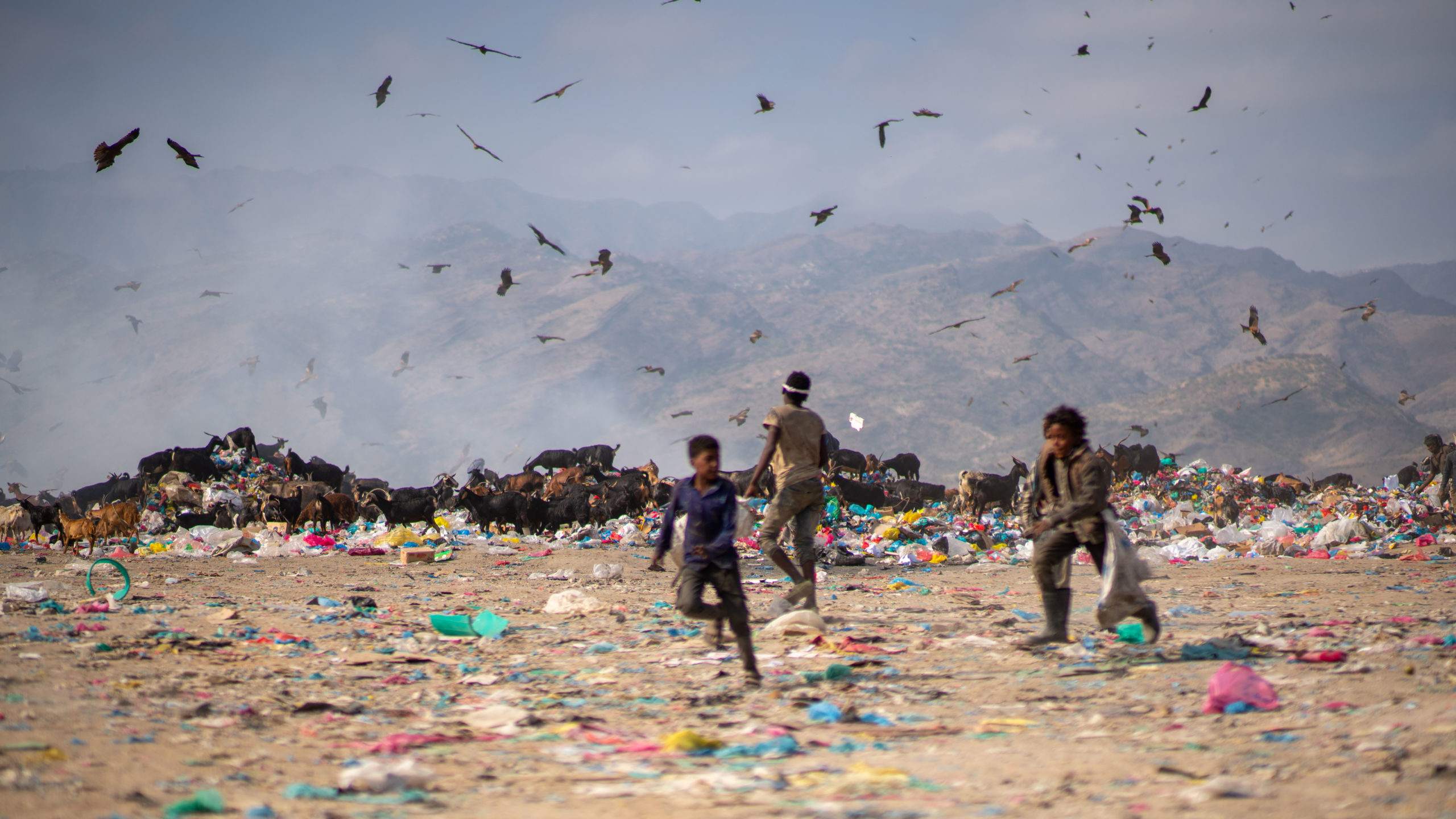
Project context
The consultation underlying this report was part of the Environmental Pathways for Reconciliation in Yemen project, which aims to support locally led and sustainable peace by using the environment as an entry point and key element of peacemaking. It engages different strata of the Yemeni society to identify and act upon security issues and conflict risk emerging from the impacts of unsustainable natural resources practices, environmental degradation, and climate change. The project is implemented by the European Institute of Peace with support from the German Federal Foreign Office and is part of the Weathering Risk Peace Pillar led by adelphi.
Read the full report: Environmental Pathways for Reconciliation in Yemen: Environmental Peacemaking Consultation Report
Feature image top right: Fisher from Mocha on the coast of Taiz governorate.
Nazeh Al-Hrefy (EIP, 2023)
Environmental peacemaking as an approach to conflict prevention and resolution
As climate change progressively emerges as an additional challenge to our collective capacity to prevent and manage crises, mediators must increasingly factor its implications on conflict, and recognise environmental issues as potential entry points to peacemaking. Incorporating environmental issues into a mediation process can contribute to its resolution by establishing the groundwork for a more sustainable peace and creating mechanisms for future collaboration. Environmental peacemaking aims to enhance the prevention and resolution of conflicts by specifically addressing underlying factors linked to climate, environmental issues, and natural resource drivers.
The Liptako Gourma region in the Sahel holds significant potential to benefit from the environmental peacemaking approach given its population’s dependency on shared natural resources, whose rapidly increasing scarcity contributes to threatening ancestral ways of life, exacerbating tensions between communities and functions both as a contributor to and a victim of the widespread insecurity prevailing across Mali, Burkina Faso and Niger.
Since 2015, the region has experienced a significant surge in armed conflict, primarily characterised by confrontations between communities and clashes between regular armed forces and Non-State Armed Groups, including jihadist organisations. The intricate security landscape in the region evolves against the backdrop of increasing political instability, made salient by successive military coups. Violence has manifested in various forms, all contributing to deepening social rifts between communities and between these communities and the States supposed to ensure their protection.
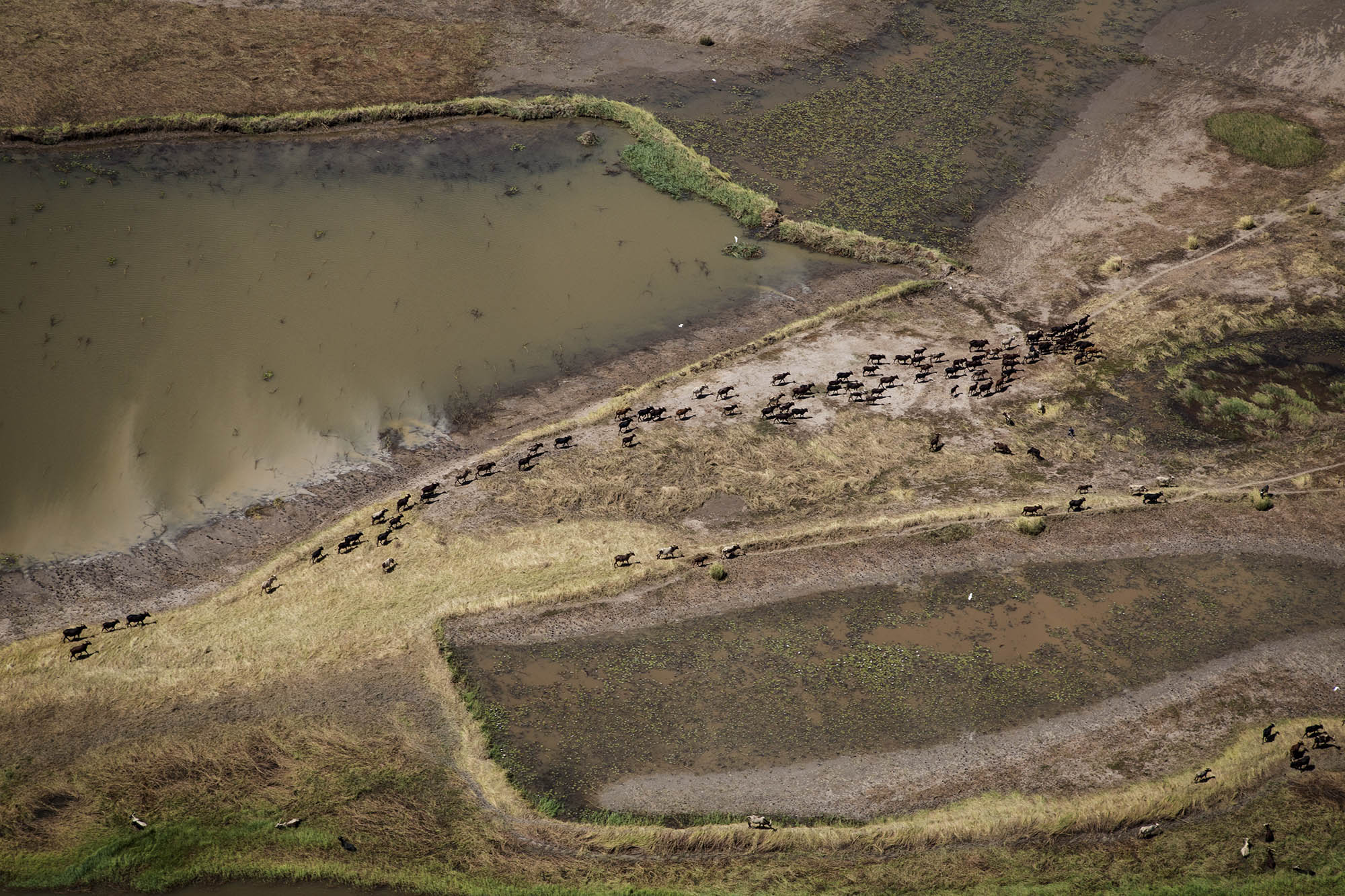
An innovative environmental peacemaking project in Liptako Gourma
In 2022, the ‘Environmental Peacemaking in Liptako-Gourma’ began being implemented in a partnership between TrustWorks Global (TWG) and the European Institute of Peace (EIP), with the generous support of the Grand Duchy of Luxembourg. The project aimed to contribute to a foundation for sustainable and lasting environmental peace through information-sharing, dialogue, mediation, and collaboration.
In this intricate background, the project’s ambitious environmental peacemaking approach strived to improve peacemaking and transboundary cooperation by recognising the interconnectedness of conflict and ecosystems and that natural resources, environmental degradation, and climate change contribute to the root causes of conflict in Mali Burkina Faso, and Niger.
Working closely with authorities and civil society partners from the three countries, the project opened new venues for transboundary collaboration to address the root causes of environmental conflict, support mediation over environmental disputes, and contribute to the integration of peace components in natural resources management practices.
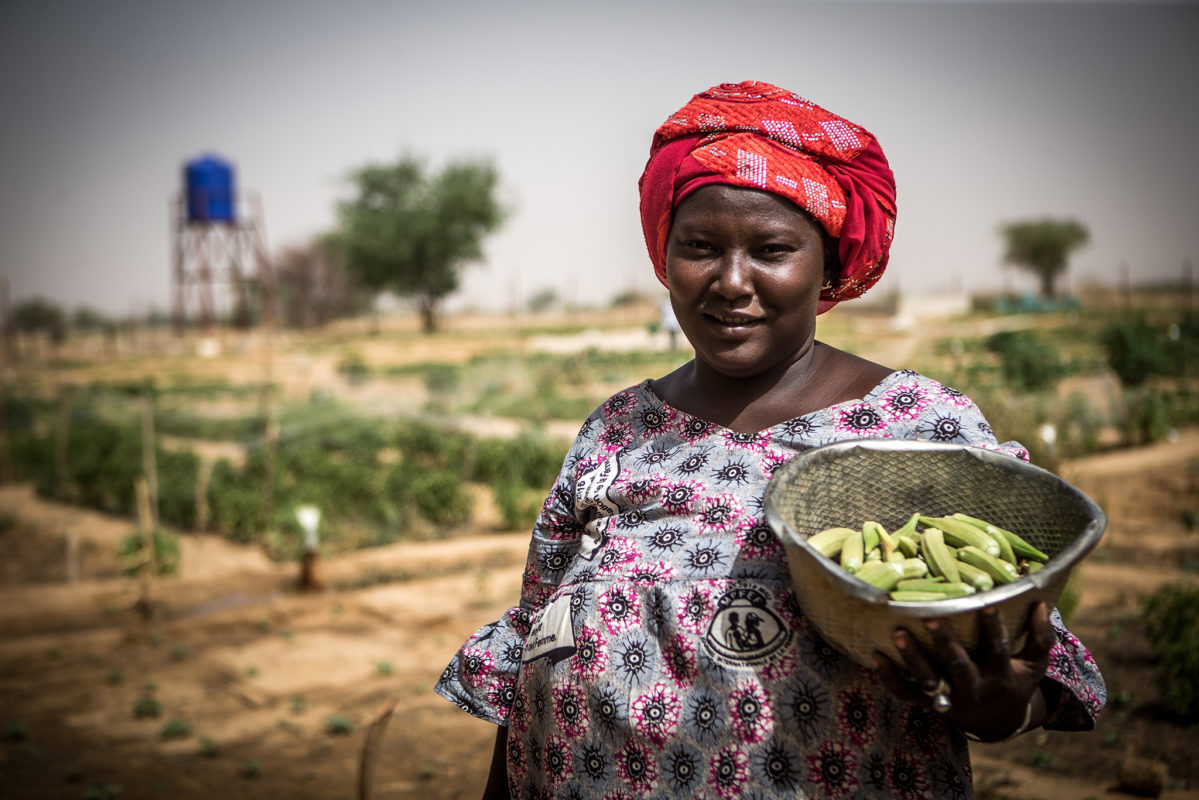
Best practice and approaches from local actors
Knowledge sharing was a key objective of the project, given the plethora of environmental peacemaking best practices already being implemented by tribal leaders, civil society organisations and authorities. The project compiled key examples in four practice notes supporting local actors in sharing their expertise with others in the region. It developed two approaches to environmental mediation and peace-positive natural resources management tailored to the Liptako Gourma region, inspiring local, national and regional actors to incorporate environmental components in strategies, roadmaps, and action plans related to the promotion of dialogue, practice of mediation, design of peace processes, and brokering of agreements.
This practice note series explores cultivating a peaceful coexistence and collaboration culture through agropastoral land management for sustainable resource use and dispute resolution, community-led resource management, and strategies to prevent forced displacement.
Visit our interactive microsite to comprehensively explore these initiatives and discover more about these innovative and locally rooted approaches to environmental peacemaking in Liptako Gourma.
We extend our thanks to our partners for their contribution to environmental peacemaking, who made possible the success of this project: His Majesty Ousmane-Amirou Dicko, the Emir of Liptako; Mamoudou Abdoulaye Diallo, Executive Director of the Malian Local Development Support Initiative (IMADEL); Issifou Ganou, Executive Secretary of the National Land Observatory of Burkina Faso (ONF-BF); and to Assoumane Abdourhamane, Technical Advisor to the High Authority for Peace in Niger (HACP).
Publications connected to this project are as follows:
Mediation by a customary authority, His Majesty Ousmane-Amirou Dicko, Emir of Liptako
A mapping of issues and environmental peacemaking initiatives in Liptako Gourma
An environmental peacemaking approach in Liptako Gourma
A peace-positive approach to natural resource management in Liptako Gourma
Supporting sustainable peace in the transboundary region of Mali, Burkina Faso, and Niger
Disputes over the ownership of, access to, and benefits from natural resources such as land for farming or itinerant livestock herding, water points, mineral resources, and forests – including protected areas – drive and prolong violent conflict in the Liptako Gourma border region between Mali, Burkina Faso and Niger. These countries have been battling increasingly widespread jihadist insurgencies since 2015 and have also experienced severe political instability, with five coup d’états across the three countries since 2020.
Just as the mismanagement of natural resources can drive conflict, better management of natural resources can support peace. These root causes are also exacerbated by the dynamics of climate change and environmental degradation. This paper outlines the rationale, principles, and entry-points for peace-positive natural resource management in the Liptako Gourma region. ‘Peace-positive’ approaches can foster non-violent ways to resolve disputes
over who has control over, access to and benefits from resources, reassert the role of the state and/or traditional authorities in resolving resource disputes, support ‘infrastructures for peace’ (i.e. the social norms and institutions that help to prevent and resolve violence), and address core factors behind livelihood insecurity in the Liptako Gourma region.
This paper is not a “roadmap” and nor it is meant to be provide a “silver bullet”. Moreover, peace-positive natural resource management alone cannot resolve deeply rooted political, economic and social governance issues nor deliver lasting peace to this region. In the face of the extreme levels of violence present in some areas of Liptako Gourma, peace-positive natural resource management may be more effective as a conflict prevention mechanism
ensuring that high-intensity conflict doesn’t spread further, and to support coping and resiliency mechanism, as well as a means to accompany transitions towards stability.
The following is a collection of principles, best practices, and programmatic entry points to inform the participatory, multilevel design of such a strategy by local, national and regional actors in Mali, Burkina Faso and Niger as well as their international partners to better govern natural resources in the Liptako Gourma region. The hope is that these incremental changes, in conjunction with environmentally-informed mediation strategies – outlined in the
accompanying strategic note – may ultimately contribute to more grounded mediation efforts, and to more sustainable and lasting peace in this troubled region.
The present “mapping report” is the result of the first phase of the project “Environmental Peacemaking in Liptako Gourma”, implemented jointly by the European Institute of Peace (EIP) and TrustWorks Global (TWG) with the support of the Directorate of Defence of the Grand Duchy of Luxembourg. The project assists peace initiatives in the Liptako Gourma region on the borders of Burkina Faso, Mali, and Niger. It aims to work with these initiatives to better address the environment-related drivers of conflict and harness cooperation over shared natural resources and common environmental challenges as a way to promote peace.
The mapping draws upon: in-person consultations conducted in Bamako, Ouagadougou and Niamey between March and June 2022; a literature review; and, a first regional workshop held in Niamey in December 2022. Rather than an exhaustive list of environment-related conflicts and initiatives, the mapping provides an overview and analysis of environmental and natural resources-related conflicts in the region as well as a typology of actors involved. It also offers a sample of initiatives deemed relevant to the “environmental peacemaking” concept and practice – either because they are peacemaking processes in which an environmental approach could be strengthened, or because they are environmental (and natural resource-related) initiatives on which a peace approach could be strengthened.
Preliminary consultations with local actors emphasized the relevance of applying an environmental and natural resources lens to peacemaking efforts in the Liptako Gourma region. Many mediation actors active in the region recognize that while they largely focus their efforts on “putting out fires” and brokering local agreements to halt violence, the root causes of many local conflicts related to access to and sharing of natural resources often remain unaddressed. While there is an intuition that focusing on including natural resources can lead to better mediation outcomes and natural resource management, mediation actors do not necessarily have the relevant tools and resources to achieve environmental peace dividends.
These consultations also highlighted the fact that there are already many peacemaking actors and initiatives –notably at the local level – and that there is little appetite for more stand-alone peacemaking initiatives or strategies. However, there is a need to complement existing initiatives with mediation tools and expertise in environmental and natural resources governance. Many local actors consulted also cautioned that while an increased focus on environmental and natural resources in peacemaking is needed, it should not overlook the structural political, security and economic drivers of conflict. A greater focus on environment and natural resources should not lead to “depoliticizing” conflicts and or weakening peacemaking efforts but should instead strengthen efforts to address the drivers of conflict.
This paper outlines a rationale, a set of principles and possible entry points for an environmental peacemaking approach in The Liptako Gourma region of the Sahel. This strategy aims to foster peace by addressing and mitigating environmental conflicts.
As climate change progressively emerges as an additional challenge to our collective capacity to prevent and manage crises, mediators must increasingly factor in its short-, medium-, and long-term implications on conflict. It is, therefore, crucial to recognise environmental issues as potentially constructive entry points to peacemaking approaches. Incorporating environmental issues into a mediation process can contribute to its resolution by establishing the groundwork for a more sustainable peace and creating mechanisms for future collaboration. In this context, Environmental Peacemaking aims to enhance the prevention and resolution of conflicts by specifically addressing underlying factors linked to climate, environmental issues, and natural resource drivers.
The Sahel’s Liptako Gourma region holds significant potential to benefit from the environmental peacemaking approach given its population’s dependency on shared natural resources, whose rapidly increasing scarcity contributes to threatening ancestral ways of life, exacerbating tensions between communities and functions both as a contributor to and a victim of the widespread insecurity prevailing across the Sahel.
Based on this concept, the approach strives to improve peacemaking and cooperation by recognising the interconnectedness of conflict and ecosystems on the one hand, and that natural resources, environmental degradation, and climate change contribute to the root causes of conflict in Mali, Burkina Faso, and Niger on the other. The approach aims to contribute to a foundation for sustainable and lasting environmental peace through information-sharing,
dialogue, mediation, and collaboration.
This document should not be considered a roadmap. It intends to serve as a source of inspiration for local, national, and regional actors to draw upon, tailor and incorporate environmental components in the design and implementations of strategies, roadmaps, and action plans related to the promotion of dialogue, practice of mediation, design of peace processes, and brokering of agreements.
A case study on peacebuilding and strengthening livelihoods, circle of Koro (Mopti region, Mali).
This is an outcome of the “Environmental Peacemaking in Liptako Gourma” project implemented by the European Institute of Peace and TrustWorks Global with the support of the Ministry of Foreign and European Affairs, Luxembourg.
A holistic approach to peace and the specific case of the Banibangou Agreement of 23 January 2023 (Tillabéri Region, Niger).
This is an outcome of the “Environmental Peacemaking in Liptako Gourma” project implemented by the European Institute of Peace and TrustWorks Global with the support of the Ministry of Foreign and European Affairs, Luxembourg.